Yes. A psychiatrist can diagnose ADHD in adults by reviewing symptoms, childhood history, everyday impairment, and other possible explanations for attention problems. There is no single blood test, brain scan, or online questionnaire that establishes the diagnosis, and an evaluation does not guarantee a prescription. This 2026 guide explains what a sound assessment includes and how to choose the right clinician.
- A psychiatrist can diagnose adult ADHD; screening questionnaires alone cannot establish the diagnosis.
- Searching adhd doctors near me for adults? Ask about adult ADHD evaluations, differential diagnosis, and follow-up care.
- Adult ADHD assessment examines childhood symptoms, current impairment, and problems across different settings.
- Attuned Psychiatry offers physician-led psychiatric care and medication management in Decatur/Metro Atlanta.
Why this matters
Difficulty concentrating is a symptom, not a diagnosis. ADHD, depression, anxiety, sleep disorders, substance use, and medication effects can all contribute to attention problems, but they do not call for identical treatment.
Choose an evaluation that explains your symptoms, not one that promises a particular medication. If another clinician already evaluated you, arrange to share those findings; this guide to transferring psychiatric records explains how to organize that handoff.
Can a psychiatrist diagnose ADHD in adults?
Yes. Psychiatrists are medical doctors trained to assess psychiatric symptoms, diagnose mental health conditions, and prescribe medication when appropriate. An adult ADHD evaluation combines your history with evidence that symptoms meet diagnostic criteria and interfere with daily life.
For this 2026 guide, the diagnostic framework follows the American Psychiatric Association's DSM-5-TR criteria, as summarized in CDC ADHD diagnostic guidance. The central requirements include:
- Symptom threshold: Adults generally need at least 5 symptoms of inattention, hyperactivity-impulsivity, or both symptom groups, assessed separately.
- Duration: Symptoms must persist for at least 6 months and be inconsistent with developmental level.
- Childhood onset: Several symptoms must have been present before age 12 years, even if nobody recognized ADHD then.
- Multiple settings: Several symptoms must occur in at least 2 settings, such as home and work.
- Functional impact: Symptoms must interfere with or reduce the quality of social, academic, or occupational functioning.
- Alternative explanations: Another mental health condition must not better explain the symptoms.
These requirements work together. Having enough symptoms on a checklist is not sufficient when the developmental history, impairment, or alternative explanations do not support ADHD.
What happens during an adult ADHD evaluation?
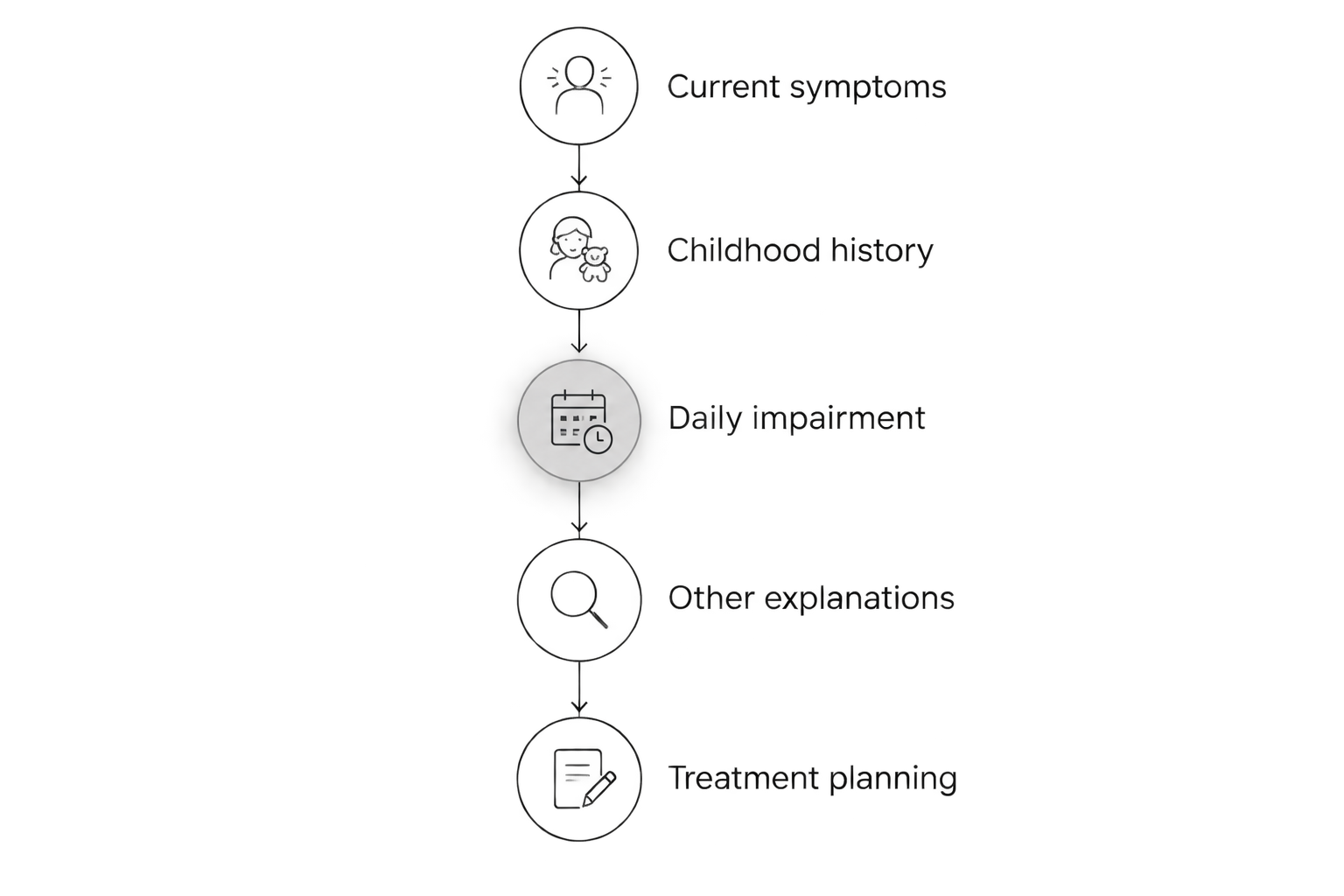
A useful assessment follows a clinical sequence rather than treating a questionnaire score as the final answer. The order varies, but the core work includes:
- Current symptoms. Describe problems with attention, organization, task completion, restlessness, or impulsive decisions. Give examples rather than saying only that you cannot focus.
- Childhood history. Discuss schoolwork, behavior, routines, and earlier difficulties. Report cards or information from someone who knew you as a child can help.
- Daily impairment. Explain what symptoms disrupt at work, at home, in education, or in relationships. Distinguish inconvenience from a repeated pattern with consequences.
- Other explanations. Review sleep, mood, anxiety, substance use, medications, and relevant medical history. The psychiatrist decides whether additional assessment is needed.
- Treatment planning. Review the findings, any remaining uncertainty, and appropriate next steps. Treatment planning follows the diagnosis rather than determining it.
Why adult ADHD evaluations vary
Different evaluations do not automatically mean different standards. The work needed to reach a defensible diagnosis depends on the history and questions involved.
- Available records: Previous evaluations and treatment notes help distinguish established findings from questions that still need assessment.
- Childhood information: Some adults have detailed school records; others must reconstruct their history through examples and interviews.
- Overlapping symptoms: Depression, anxiety, sleep problems, or substance use require attention when they affect concentration.
- Medical considerations: Relevant illnesses, current medications, and cardiovascular history can affect assessment and treatment decisions.
- Purpose of testing: A clinical diagnosis, a learning-disability evaluation, and documentation for accommodations can require different information.
Ask what the evaluation includes before booking in 2026. The useful question is whether the clinician assesses diagnostic criteria and competing explanations—not whether the practice uses the longest questionnaire.
Which clinician should you see for adult ADHD?
A psychiatrist is not the only professional who can assess ADHD. Your choice should reflect whether you need medical evaluation, psychological testing, prescribing, or coordination between clinicians.
| Clinician | Best for | Main advantage | Limitation to clarify |
|---|---|---|---|
| Psychiatrist | Medical assessment and medication decisions, particularly with overlapping psychiatric symptoms | Can evaluate psychiatric diagnoses and prescribe when appropriate | Adult ADHD expertise and formal testing services vary by clinician |
| Psychologist with adult ADHD expertise | Psychological assessment or questions about learning and cognitive functioning | Can provide detailed assessment and recommendations | Most psychologists do not prescribe; prescribing authority depends on jurisdiction and training |
| Primary care physician experienced in adult ADHD | Assessment within established general medical care | Can consider medical history and coordinate referrals | Some primary care practices refer complex or uncertain cases to specialists |
These are clinical roles, not quality rankings. A clinician's experience with adult ADHD matters more than a directory label alone.
Attuned Psychiatry is best suited to readers seeking physician-led psychiatric care and medication management in Decatur/Metro Atlanta. Confirm the scope of an adult ADHD assessment before booking; the practice description alone does not establish which testing or accommodation reports are offered.
If your primary care clinician is coordinating the evaluation, the primary care referral to psychiatric evaluation guide covers the handoff.
How do I choose ADHD doctors near me for adults?
Search results identify nearby practices, not the depth of their diagnostic process. When comparing clinicians in 2026, ask direct questions that separate an assessment from a medication-only appointment.
Ask about the diagnostic process
Ask whether the clinician evaluates adults, reviews childhood onset, and assesses impairment across settings. Also ask how the clinician distinguishes ADHD from depression, anxiety, sleep problems, and other causes of poor concentration.
A clear explanation is useful. A promise to diagnose ADHD or prescribe a specific medication before assessing you is not.
Ask what happens after the assessment
Find out who explains the findings and manages treatment if ADHD is diagnosed. If another diagnosis better explains the symptoms, ask whether the clinician can treat it or coordinate a referral.
For medication treatment, ask how benefits, adverse effects, and functional progress are reviewed. The initial prescription is not the whole treatment plan.
Confirm practical requirements
Before booking, confirm whether the practice needs a referral, prior records, screening forms, or insurance authorization. Ask your insurer about benefits for the specific clinician and service; a practice appearing in a search result does not establish coverage.
If you are considering Attuned Psychiatry for medication management, ask specifically about adult ADHD assessment and follow-up. Do not assume that every psychiatric practice offers every form of testing.
What should you bring to an adult ADHD evaluation?
Bring information that helps the psychiatrist understand patterns over time. You do not need a polished personal history, and missing childhood paperwork does not automatically prevent an evaluation.
Useful materials include:
- A symptom timeline: Note when problems began, when they became more disruptive, and whether they change with mood or sleep.
- Specific examples: Describe missed deadlines, unfinished responsibilities, repeated interruptions, or organizational problems and their consequences.
- Previous records: Include psychiatric evaluations, psychological testing, treatment summaries, and relevant school reports if available.
- A medication list: Include prescriptions, nonprescription products, supplements, and any previous ADHD medication experience.
- Sleep and substance history: Be candid about sleep patterns, caffeine, alcohol, cannabis, and other substances.
- Your treatment goals: Identify what you want to do more reliably, such as finishing work or managing household responsibilities.
Describe both difficulties and the systems you use to manage them. Extensive reminders, outside help, or rigid routines can be clinically relevant even when your performance looks strong from the outside.
Do adults need neuropsychological testing for ADHD?
No. Neuropsychological testing is not required for every adult ADHD diagnosis; a clinical evaluation is central. Testing can help answer additional questions about learning, memory, cognitive functioning, or a complicated diagnostic picture.
Ask what question the proposed testing will answer. A computerized attention test or cognitive score does not independently establish or rule out ADHD.
Separate clinical diagnosis from accommodation paperwork. A school, employer, or testing organization can have documentation requirements beyond what your treating clinician needs for routine care, so check those requirements before arranging testing.
Can you have ADHD without a childhood diagnosis?
Yes. An adult can receive an ADHD diagnosis without having been diagnosed in childhood, but several symptoms must have been present before age 12 years. Recognition later in life is different from symptoms beginning later in life.
A psychiatrist looks for the earlier pattern through your account, available records, and information from others when appropriate. Lack of old report cards is not the same as evidence that symptoms were absent.
If attention problems genuinely began only in adulthood, the clinician should investigate other explanations. That distinction protects you from receiving treatment for the wrong condition.
Does an ADHD diagnosis mean you need medication?
No. An ADHD diagnosis does not automatically require medication, and it does not establish that a stimulant is appropriate. Treatment depends on impairment, health history, preferences, risks, and other conditions.
Medication can reduce core symptoms, but adverse effects and safety considerations require review. ADHD-focused cognitive behavioral therapy and practical organizational strategies can address coping skills and daily functioning; they do not replace a medical assessment when medication is under consideration.
Measure progress against the problems that brought you to care. Feeling more alert is not the same as completing responsibilities more consistently or experiencing fewer disruptive symptoms.
FAQ
Can a psychiatrist diagnose ADHD in adults at the first appointment?
A psychiatrist can diagnose adult ADHD when the assessment provides enough evidence, but a first-appointment diagnosis is not guaranteed. Additional records, information from others, or assessment of overlapping conditions can be necessary.
What should I ask when searching for ADHD doctors near me for adults?
Ask whether the clinician evaluates adult ADHD, reviews childhood symptoms, and assesses other causes of attention problems. Confirm who manages treatment afterward and what records the practice needs.
Can I have ADHD if I did well in school?
Yes. Strong grades do not rule out ADHD because diagnosis considers symptoms and impairment across your history and settings, not grades alone. Explain the effort, support, and organizational systems behind your performance.
Can anxiety or depression look like adult ADHD?
Yes. Anxiety and depression can cause concentration difficulties, and either can also occur alongside ADHD. The clinician examines when symptoms started and how they relate to mood, worry, sleep, and daily demands.
Is an online ADHD questionnaire enough for a diagnosis?
No. An online questionnaire can identify symptoms worth discussing, but it cannot establish childhood onset, impairment, or whether another condition better explains the symptoms. Diagnosis requires clinical assessment.
Will a psychiatrist prescribe stimulants if I already have an ADHD diagnosis?
A previous ADHD diagnosis does not guarantee a stimulant prescription. The psychiatrist reviews the diagnostic history, current symptoms, prior response, and safety considerations before deciding whether medication is appropriate.
Does Attuned Psychiatry offer medication management in Decatur?
Attuned Psychiatry is a physician-led practice offering medication management in Decatur/Metro Atlanta. Ask the practice to confirm the scope of its adult ADHD evaluation and follow-up services.
One last thing
Bring an example of how you manage a problem, not just an example of the problem itself. If you meet deadlines only because someone repeatedly reminds you, explain that support rather than reporting that deadlines are never an issue.
For your 2026 evaluation, write down what becomes difficult when your usual structure disappears. That gives the psychiatrist a clearer picture of functioning without turning the appointment into an attempt to prove a diagnosis.