You need closer follow-up when you start or change psychiatric medication, develop side effects, or have worsening symptoms; once treatment is stable, your psychiatrist can space appointments farther apart. There is no single appointment interval for every medication or diagnosis in 2026. Your follow-up plan should also cover required monitoring, prescription renewals, and what to do if you need help before the next visit.
- How often do you see a psychiatrist for medication management? Treatment changes, symptoms, and safety determine your schedule.
- NICE recommends an initial antidepressant review usually within 2 weeks for adults with depression; higher-risk situations need earlier review.
- Stable symptoms do not eliminate the need for medication reviews, side-effect checks, or required monitoring.
- Attuned Psychiatry offers medication management in Decatur/Metro Atlanta; confirm your individual follow-up plan during evaluation.
Why this matters
A refill date is not a treatment plan. You need a clear agreement about when your psychiatrist will reassess symptoms, what monitoring your medication requires, and which changes warrant earlier contact.
For your 2026 care plan, distinguish scheduled appointments from prescription tasks and urgent concerns. Attuned Psychiatry's psychiatric services include medication management, but your diagnosis and clinical needs determine the appropriate follow-up schedule—not a general calendar rule.
How often do you need to see a psychiatrist for meds?
Your psychiatrist should set the next appointment around the treatment decision being evaluated. Starting a medication requires a different review plan from continuing a medication that has kept symptoms controlled without troublesome side effects.
The table below compares clinical situations, not appointment packages. Best for describes when each follow-up approach fits; it does not establish a required interval or replace your prescriber's instructions.
| Follow-up approach | Best for | What the review addresses | Benefit | Limitation |
|---|---|---|---|---|
| Closer follow-up | Starting medication or changing a dose | Early side effects, safety, adherence, and emerging response | Identifies problems while treatment is changing | An early review does not establish the medication's full benefit |
| Continued adjustment visits | Symptoms that remain disruptive | Whether to continue, adjust, or reconsider treatment | Keeps unresolved symptoms under active review | Repeated changes without a clear assessment can obscure what helps |
| Maintenance reviews | Stable symptoms on an established regimen | Ongoing benefit, side effects, physical monitoring, and relapse prevention | Supports continuity without unnecessary changes | Stability does not mean monitoring can stop |
| Earlier clinical contact | New safety concerns or significant worsening | Whether the existing plan remains appropriate | Brings new concerns to the prescriber's attention | Routine messages are not an emergency service |
For a concrete example, NICE guideline NG222, Depression in adults: treatment and management, recommends that the first antidepressant review usually occur within 2 weeks. It recommends review after 1 week when the person is aged 18 to 25 or there is particular concern about suicide risk.
These are adult-depression recommendations relevant to 2026 care planning—not a universal schedule for every psychiatric medication. The same guideline recommends reviewing antidepressant treatment used to prevent relapse at least every 6 months, including mood, side effects, and factors affecting relapse risk.
Do not translate a depression guideline into a schedule for every diagnosis. Bipolar disorder, ADHD, psychotic disorders, and other conditions require medication-specific decisions and monitoring.
Starting medication: agree on the first review before leaving
The first follow-up should have a purpose beyond obtaining another prescription. Your psychiatrist needs to assess whether you are taking the medication as directed, whether adverse effects are developing, and whether the treatment remains appropriate.
Ask what improvement to watch for and which symptoms need earlier contact. An early review often focuses on tolerability and safety; it does not necessarily mean enough time has passed to judge the medication's full effect.
Bring a current medication list, including nonprescription medicines and supplements. Tell your psychiatrist about previous treatment responses, medication allergies, substance use, and relevant medical conditions.
Before leaving, confirm:
- The next review: When should it happen, and what will it assess?
- Expected changes: Which symptoms should you track?
- Safety instructions: Which effects require prompt advice or emergency care?
- Prescription arrangements: What should you do if a pharmacy problem interrupts access?
- Required monitoring: Are laboratory tests, vital signs, or other checks needed?
Do not change the dose yourself to reach improvement faster. Contact the prescriber if the instructions are unclear or the medication is difficult to take as directed.
Changing treatment: review the change, not just the calendar
A dose increase, medication switch, or taper creates a new monitoring question. Your psychiatrist should explain what the change is intended to accomplish and when the result will be reassessed.
A previous maintenance schedule does not automatically remain appropriate after a medication change. Ask whether you need an earlier appointment, a test, or another form of clinical check-in.
Keep a brief record of when the change occurred and what happened afterward. Include sleep, mood, anxiety, concentration, functioning, and any side effects relevant to your treatment.
Report missed doses accurately. Your psychiatrist needs to distinguish a medication that is not helping from a medication you have been unable to take consistently; the next decision depends on that distinction.
Stable treatment: fewer changes, continued oversight
When symptoms are controlled and treatment is well tolerated, your psychiatrist can consider a longer interval between appointments. That decision still depends on the medication, diagnosis, medical history, and monitoring requirements.
Feeling better is a reason to discuss the maintenance plan, not to stop treatment independently. Some psychiatric medications cause withdrawal symptoms or other problems when stopped abruptly, and stopping treatment can allow symptoms to return.
A maintenance review should address more than whether you want a refill. Discuss whether benefits continue, whether side effects affect daily life, and whether new medications or health changes alter the plan.
The goal is the least burdensome schedule that still supports safe, effective care. Fewer appointments are not automatically better, and frequent appointments need a clear clinical purpose.
Why medication-management visit frequency varies
The right interval depends on what needs monitoring. These factors explain why your schedule can differ from someone taking the same medication:
- Treatment stage: Starting, switching, tapering, and continuing medication involve different decisions.
- Symptoms and safety: Worsening depression, suicidal thoughts, severe agitation, or possible mania require reassessment rather than waiting for routine follow-up.
- Side effects: New or disruptive effects can change the urgency and content of the next review.
- Medication requirements: Some medicines require blood tests, vital-sign checks, or other specific monitoring.
- Health changes: Pregnancy, new medical conditions, and newly prescribed medicines can affect treatment decisions.
- Treatment response: Persistent symptoms require a different discussion from sustained improvement with acceptable tolerability.
Your 2026 follow-up schedule should reflect your current situation. Tell your psychiatrist when something changes between visits; a plan made before that change needs reconsideration.
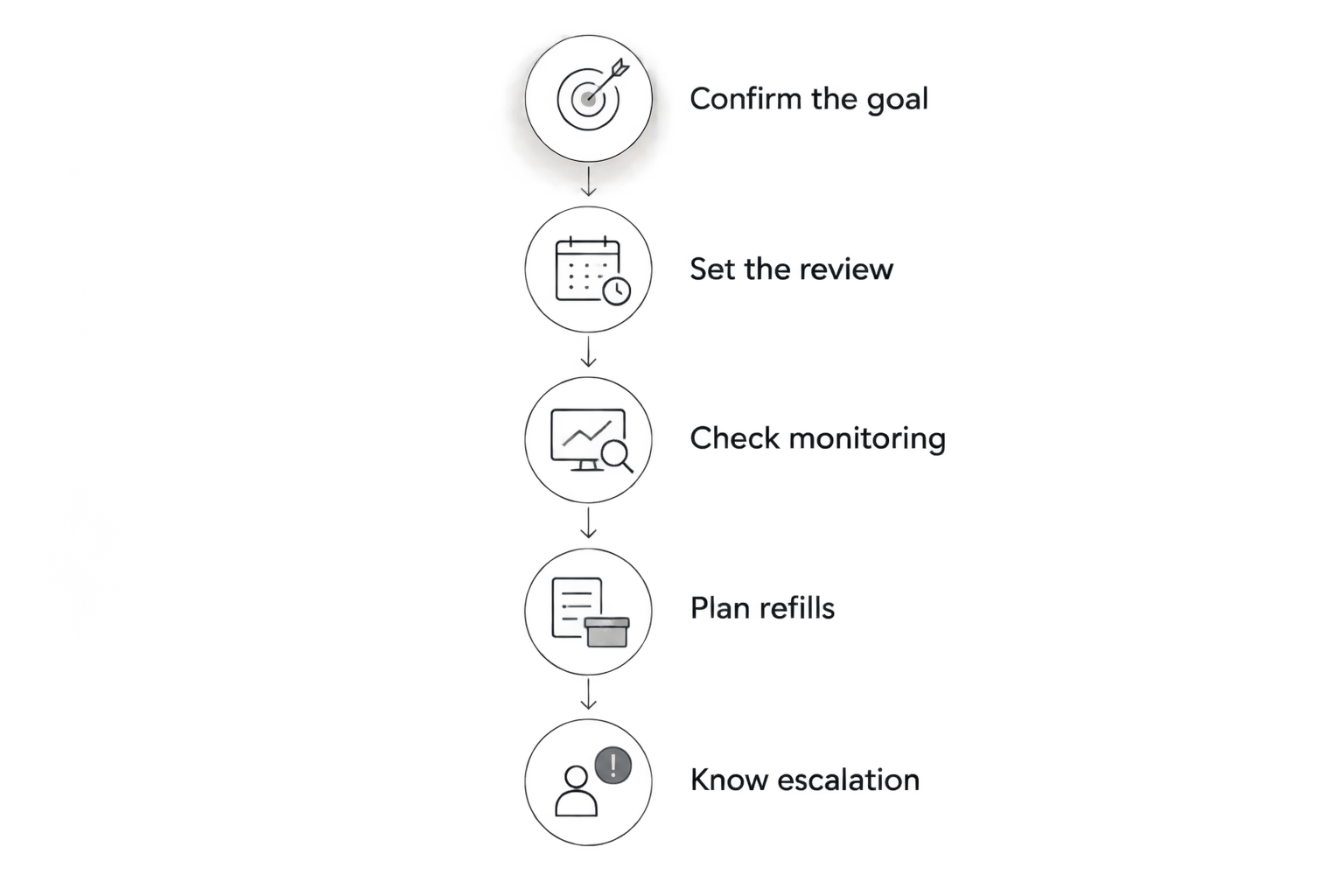
How do you set a workable follow-up plan?
Before your next appointment, write down the information you need to leave with. An appointment date alone is not enough if you do not know what happens between visits.
- Confirm the goal. State the symptom or functional problem treatment is meant to improve.
- Set the review. Ask when the psychiatrist needs to assess response, side effects, and safety.
- Check monitoring. Confirm any tests or physical measurements and who will arrange them.
- Plan refills. Ask how renewal requests work and what to do about pharmacy difficulties.
- Know escalation. Get clear instructions for routine questions, worsening symptoms, and emergencies.
These steps help separate clinical follow-up from administrative tasks. A refill request communicates that you need medication; it does not necessarily provide enough information for a safe treatment review.
Do I need an appointment every time I need a refill?
Not necessarily; prescription renewals and clinical appointments serve different purposes. Your medication, treatment plan, applicable prescribing rules, and practice procedures determine whether a visit is needed before a renewal.
Ask before your supply runs low, especially when travel or a pharmacy change is approaching. Do not assume a pharmacy request guarantees a refill or replaces required monitoring.
Can I see my psychiatrist less often if I feel better?
Yes, a longer interval can be appropriate when symptoms are stable, treatment is tolerated, and monitoring needs are met. Agree on the change with your psychiatrist rather than canceling follow-ups independently.
Ask what would trigger an earlier review. A return of symptoms, new side effects, or a major health change should not wait simply because the next appointment is already scheduled.
What if medication is not helping despite regular visits?
Persistent symptoms call for a treatment review, not just another refill. Your psychiatrist should reassess the diagnosis, medication history, adherence, side effects, and other factors affecting response.
Attuned Psychiatry is best suited to Decatur/Metro Atlanta patients seeking physician-led psychiatric care with medication management and access to TMS and SPRAVATO®. Those services do not make every treatment appropriate for every patient; evaluation determines which options fit, and no treatment guarantees improvement.
Discuss your medication follow-up plan
Ask about medication management and an individualized psychiatric treatment plan in Decatur/Metro Atlanta.
When should you seek help before the next appointment?
Contact your prescriber promptly for worsening symptoms, new side effects, medication-access problems, or a change that makes the current plan difficult to follow. Describe what changed, when it started, and which medications you are taking.
Markedly reduced need for sleep with unusual energy, racing thoughts, or risky behavior warrants prompt assessment. So do new suicidal thoughts, severe restlessness, or an abrupt decline in functioning.
Do not wait for a routine appointment or portal reply during an emergency. In the United States, call 911 or go to the nearest emergency department for immediate danger or a life-threatening reaction; call or text 988 for suicide or mental health crisis support.
FAQ
How often do you see a psychiatrist for medication management?
Your schedule depends on treatment changes, symptoms, side effects, and required monitoring. Expect closer review when treatment starts or changes, with longer intervals considered after stability is established.
How soon should I be reviewed after starting an antidepressant?
NICE guidance for adults with depression recommends a first review usually within 2 weeks. It recommends review after 1 week for people aged 18 to 25 or when suicide risk is a particular concern; your prescriber should set your individual plan.
Do I still need medication appointments when I feel well?
Yes, feeling well does not remove the need to review ongoing benefit, side effects, and required monitoring. Ask your psychiatrist whether your current stability supports a longer interval between visits.
Can I stop medication because I cannot attend my appointment?
Do not stop or change psychiatric medication on your own because an appointment is difficult to attend. Contact your prescriber promptly to discuss a safe plan and any prescription-access problem.
Will every psychiatric medication require blood tests?
No, blood-test requirements depend on the medication and your clinical situation. Ask which monitoring applies to your prescription and when it needs to be completed.
What should I bring to a medication follow-up?
Bring your current medication list and a brief account of symptoms, side effects, missed doses, and changes in daily functioning. Include new prescriptions, supplements, and relevant health changes.
Does a refill mean I can skip my next psychiatric appointment?
No, receiving a refill does not cancel your follow-up plan. Confirm any appointment change with your prescriber, particularly if monitoring or a treatment decision is due.
One last thing
For your next medication review in 2026, bring a description of daily functioning—not just a symptom label. Explain whether you are sleeping, completing work, managing responsibilities, or withdrawing from activities, and what changed after treatment changed.
Ask: What decision will the next appointment help us make? A clear answer connects the timing of your visit to your care, rather than treating follow-up as a refill requirement alone.