

Instead of repeating medication changes and therapy updates at every appointment, use a psychiatrist and therapist coordination workflow that assigns responsibilities, sets sharing boundaries, and closes the loop after changes. This 2026 guide explains how to request that coordination with Attuned Psychiatry or your existing clinicians without becoming the messenger between them.
- Psychiatrist and therapist coordination needs clear roles, appropriate information sharing, and a plan for follow-up.
- Attuned Psychiatry offers physician-led psychiatric care in Decatur/Metro Atlanta, including medication management.
- Share treatment goals, medication changes, and relevant symptoms; do not assume full therapy notes are necessary.
- Use routine updates for progress and direct clinical contact for concerns that cannot wait.
Why this matters
Your psychiatrist and therapist often see different parts of the same problem. A psychiatrist evaluates symptoms and medical factors and manages prescribed treatment; a therapist provides psychotherapy and tracks patterns that emerge during sessions. Their responsibilities overlap, but their appointments are not interchangeable.
Coordination gives both clinicians access to relevant changes rather than separate versions of your treatment history. A sleep change discussed in therapy, for example, can matter to a medication assessment. A medication change can also affect what your therapist needs to monitor.
Attuned Psychiatry is best for patients seeking physician-led psychiatric care in Decatur/Metro Atlanta. The practice offers medication management, TMS, and SPRAVATO® treatment; any coordination arrangements need to be confirmed with the clinicians involved.
For your 2026 care plan, the goal is not constant communication. It is getting the right information to the right clinician when it changes a treatment decision.
Before you start
- Gather the basics. Have both clinicians’ names, practice contact details, your current medication list, and your preferred contact method. Include supplements and medications prescribed elsewhere.
- Clarify permission and boundaries. Ask each practice how it handles treatment-related information sharing and whether it requests an authorization form. Name any information you want to discuss before it is shared.
- Check the non-obvious obstacle: separate psychotherapy notes. Under HIPAA, separately maintained psychotherapy notes have different protections from ordinary treatment information. Do not assume a general records request includes them—or that coordination requires them.
For a 2026 coordination request, use each practice’s current instructions rather than an old form. There is no universal portal button or authorization screen: follow the actual form and communication process each office provides.
Routine treatment disclosures between covered healthcare providers are generally permitted under HIPAA without a separate authorization, but exceptions, state requirements, and practice procedures matter. Ask your clinicians what applies to your situation instead of treating a signed release as either always required or always sufficient.
Shared goals and responsibilities
Agree on the purpose
- State the problem you want coordination to solve. Tell both clinicians whether the issue is conflicting advice, medication side effects, repeated history-taking, worsening symptoms, or unclear responsibilities. A specific concern gives the exchange a useful purpose.
- Write a shared goal. Use a sentence such as improving daily functioning while monitoring sleep and treatment tolerability. Choose wording that reflects your actual priorities, not a goal supplied by someone else.
- Assign responsibilities. Confirm who prescribes, who provides psychotherapy, and who handles questions involving another medical condition. If more than one clinician prescribes psychiatric medication, ask who reconciles the full medication list.
- Identify the point of contact. Ask which clinician should receive routine updates and which office handles medication concerns. Do not assume your therapist can approve a prescription change.
Expected result: You can explain what each clinician handles and why they need to communicate. You also know where to send a question without asking both offices to guess who owns it.
Keep the shared plan to 1 page if that helps you use it. This is an organizational recommendation, not a requirement to compress complicated medical history or omit safety information.
Choose the communication method
Ask the practices which channels they support. A patient-facing portal does not automatically allow one clinician to message another, and an uploaded document does not establish that a clinician reviewed it.
| Communication method | Best for | Advantage | Limitation |
|---|---|---|---|
| Secure written summary | Routine progress updates and medication reconciliation | Gives clinicians a reference they can review | Receipt and review need confirmation |
| Scheduled clinician conversation | Conflicting recommendations or complex decisions | Allows questions and clarification during the exchange | Requires both clinicians to arrange time |
| Patient-carried summary | Preparing for appointments or bridging a communication gap | Lets you highlight your priorities | Leaves you responsible for transferring information accurately |
Use a patient-carried summary as a backup, not as a substitute for direct clinical discussion when recommendations conflict. Choose the channel based on the issue and the practices’ procedures, not convenience alone.
Permission and information sharing
- Ask both offices for their process. Find out whether either practice needs its own authorization, identity verification, or recipient details. If you are requesting care through Attuned Psychiatry, use the care starting-point guide to ask how to begin; do not assume a general inquiry form is a clinical messaging channel.
- Check the recipient and scope. On any authorization you are asked to sign, verify the clinician or practice name, information covered, purpose, and expiration terms. Ask questions before signing anything you do not understand.
- Specify relevant information. Discuss sharing diagnoses, current medications, treatment response, side effects, safety concerns, and agreed goals. Ask whether a focused treatment summary will meet the need instead of requesting an entire record.
- Confirm the route and receipt process. Ask how the offices will transmit information and how you can confirm it reached the intended recipient. Use the practices’ approved channels rather than sending sensitive records through an unconfirmed email address.
Expected result: Both offices understand what information is being requested, how it will travel, and what permissions or safeguards apply. You know whether anything remains unfinished before communication can begin.
You can ask about limiting or withdrawing an authorization. Have the practice explain how that works, including what withdrawal cannot undo once information has already been disclosed.
Clinical handoff
- Prepare the treatment snapshot. List current medications, how you actually take them, relevant side effects, recent changes, and the symptoms affecting your daily life. Note uncertainties instead of filling gaps from memory.
- Separate observations from explanations. Report that sleep changed after a medication adjustment rather than deciding the medication caused it. Timing is useful clinical information; causation requires assessment.
- Name the decision. Ask what the clinicians need to resolve: whether to reassess treatment, clarify differing recommendations, or monitor a particular symptom. Avoid requesting a general update with no question attached.
- Ask for a closed loop. Confirm who will review the information, who will respond to you, and how any change will reach the other clinician. Do not interpret silence as agreement.
Expected result: The handoff contains an actionable question, not just a stack of records. You know who owns the next decision and how you will hear the outcome.
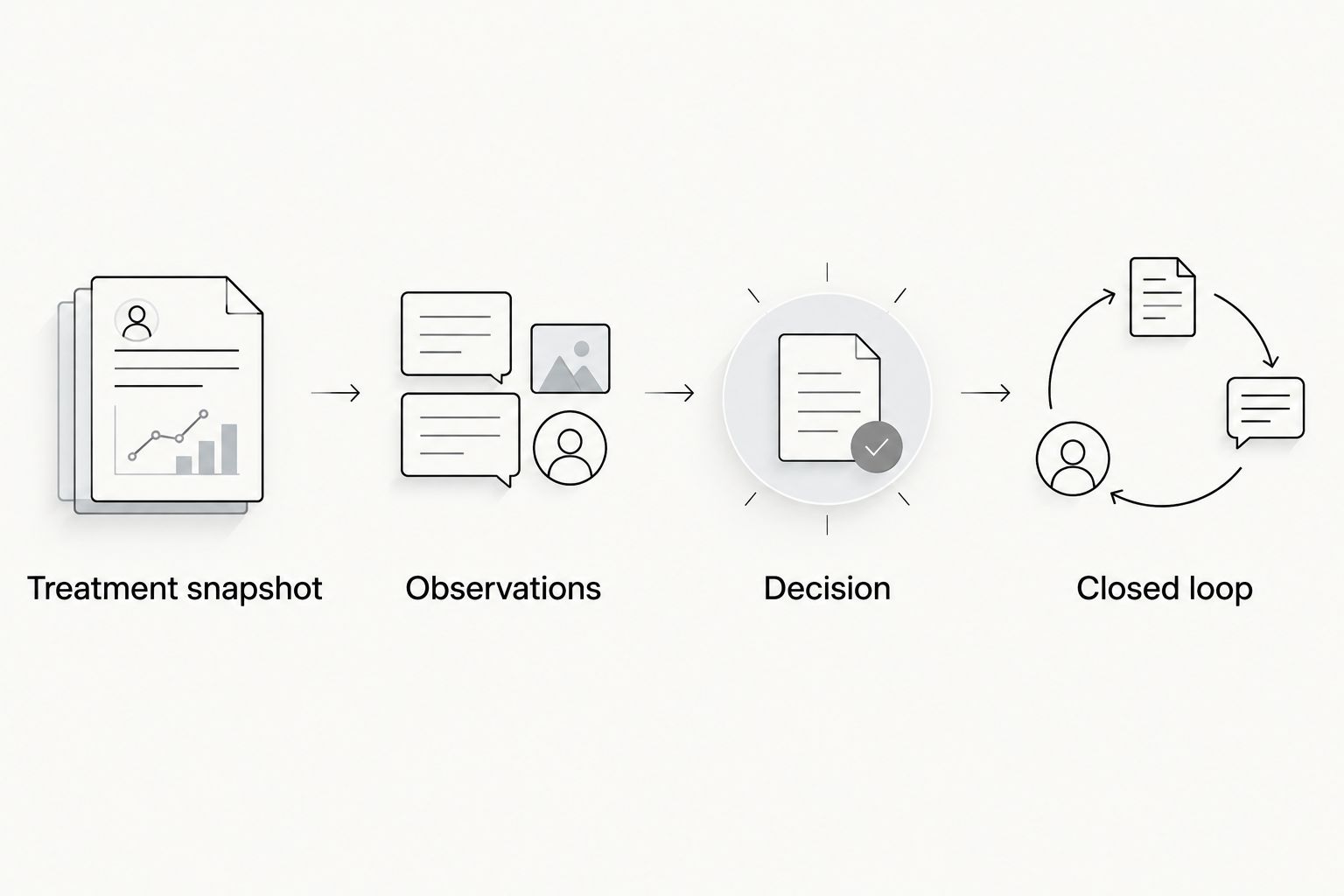
For a short appointment message, start with 2 sentences: what changed and what you need help deciding. Add the clinical details the office requests. Brevity should make the concern easier to identify, not hide its severity.
Follow-up and safety plan
- Agree on update triggers. Ask which changes warrant contact between appointments, such as new side effects, a substantial sleep change, worsening depression, or difficulty following the treatment plan. Let your clinicians set the relevant thresholds.
- Set the follow-up expectation. Confirm when you should expect a response and what to do if none arrives. Do not assume portal messages are read continuously or that both practices use the same response process.
- Repeat back the plan. Before the appointment ends, state who is doing what and what you should do next. Ask for clarification if the psychiatrist’s and therapist’s instructions do not match.
- Separate urgent help from routine coordination. Obtain each practice’s urgent-contact instructions. A routine records request or portal message is not an emergency service.
Expected result: You leave with a next action, a responsible clinician, and a backup route for concerns that cannot wait.
If you are in the United States and experiencing suicidal thoughts or a mental health crisis, call or text 988. Call 911 or go to the nearest emergency department for immediate danger or a medical emergency. Do not wait for clinicians to complete a coordination exchange.
Update the plan whenever treatment changes
A useful second workflow starts after a prescription adjustment, a new therapy goal, or a transition to another clinician. Rather than recreating your 2026 care plan, update the part that changed and confirm who needs it.
- Medication change: Ask the prescriber what your therapist should know and which symptoms or side effects to report. Do not change the dose based on a coordination summary alone.
- Therapy concern: Ask your therapist whether the concern warrants direct communication with the psychiatrist. Request that the message distinguish observed changes from possible explanations.
- New clinician: Confirm who is responsible during the handoff, which records are needed, and how prescription questions will be handled. A records transfer alone does not assign ongoing prescribing responsibility.
The advantage is a focused update rather than another full history. The limitation is that focused messages can miss context, so clinicians still need access to relevant records and your own account.
Troubleshooting
One office says it never received the information
Confirm the recipient details and transmission route with the sending office. Then ask the receiving office to check for the document. If it needs to be resent, use the approved process; repeatedly sending sensitive information to an unverified address does not solve the problem.
Your psychiatrist and therapist give different advice
Identify the exact disagreement and ask for direct clarification between clinicians. Separate a medication instruction from a coping strategy or therapy recommendation. Do not resolve conflicting prescription instructions by averaging doses, alternating plans, or stopping treatment on your own.
You signed a release, but nobody has communicated
A release authorizes an exchange when applicable; it does not schedule one. Ask who will initiate contact, what question needs answering, and how completion will be confirmed. Permission and follow-through are separate tasks.
You want coordination without sharing private session details
Tell your therapist what concerns you about disclosure. Ask whether a focused summary of symptoms, goals, and treatment-relevant observations meets the clinical need. Do not assume detailed session content is necessary for every exchange.
You cannot get a timely routine response
Follow the office’s stated escalation instructions and explain whether the concern has changed. Use urgent or emergency services when the situation requires them rather than sending repeated routine messages and waiting.
Customize your workflow
Match communication to decisions, not a fixed messaging quota. Stable treatment and a complicated medication change do not call for the same exchange. Ask your clinicians what level of contact serves your situation.
Before your next appointment, prepare 3 questions: What changed? Who needs to know? Who owns the next action? These questions keep coordination focused without asking you to manage the clinical decisions yourself.
Attuned Psychiatry offers medication management, TMS, and SPRAVATO® treatment. If your treatment plan includes more than one approach, ask which updates your therapist needs and who will communicate them; do not assume every treatment requires the same workflow.
FAQ
How do I get my psychiatrist and therapist to coordinate care?
Ask both clinicians to agree on the purpose, communication method, and responsibility for follow-up. Complete any required permissions and confirm who will initiate the exchange.
Do I always need to sign a release for my psychiatrist and therapist to talk?
No, a separate authorization is not always required for routine treatment disclosures under HIPAA. Exceptions, state requirements, and practice procedures matter, so ask both offices what applies to your care.
Does coordination mean sharing everything I say in therapy?
No, coordination does not automatically require sharing every detail of therapy. Ask whether a focused treatment summary meets the need; separately maintained psychotherapy notes have additional protections.
What should my therapist tell my psychiatrist?
Your therapist should share information relevant to the clinical question, within applicable permissions and confidentiality rules. That can include symptom changes, functioning, treatment goals, and safety concerns.
What should I do if my psychiatrist and therapist disagree?
Ask them to clarify the specific disagreement directly and identify who owns the treatment decision. Do not independently change prescribed medication to reconcile conflicting instructions.
Can Attuned Psychiatry coordinate with my current therapist?
Ask Attuned Psychiatry to confirm its coordination process for your situation. Provide your therapist’s contact information and ask about permissions, communication channels, and follow-up responsibilities.
Should I wait for my providers to communicate if I feel unsafe?
No, do not wait for routine care coordination if you feel unsafe. In the United States, call or text 988 for crisis support; call 911 for immediate danger or a medical emergency.
One last thing
A signed release is not a completed handoff. Before closing your 2026 coordination request, confirm that the information reached the intended clinician and that someone owns the response. That final check separates permission to communicate from an actual shared plan.
Related guides
Discuss coordinated psychiatric care
Request an evaluation and ask how treatment coordination and records sharing work between clinicians.


