
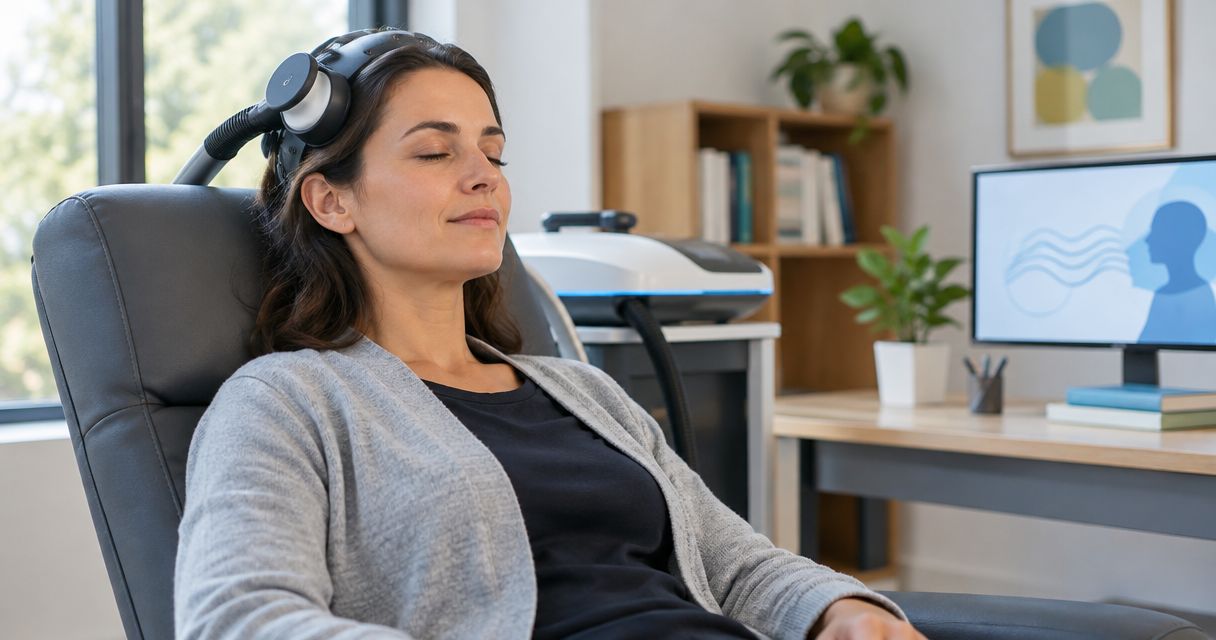
Teachers’ TMS therapy is noninvasive brain stimulation for depression, with the aim of reducing symptoms when appropriate after a psychiatric evaluation. This 2026 guide explains how to assess treatment fit, plan around the school day, and distinguish depression care from support for workplace stress.
- TMS therapy for teachers treats depression, not workplace burnout alone; a psychiatric evaluation determines whether treatment fits.
- Attuned Psychiatry offers physician-led depression care, including TMS, for patients in Decatur/Metro Atlanta.
- Plan repeated treatment visits around teaching duties, travel, and classroom coverage before starting.
- Compare TMS, medication management, psychotherapy, and SPRAVATO® by clinical fit and practical requirements.
Why TMS therapy matters for teachers
Depression can affect concentration, sleep, energy, and the ability to function at work. Teaching adds practical constraints: you cannot simply leave a classroom for an appointment without arranging coverage, and a free planning period is not necessarily long enough for treatment and travel.
TMS uses magnetic pulses delivered through a coil placed against the scalp to stimulate brain regions involved in mood regulation. It does not require general anesthesia, and you remain awake during treatment. It is different from electroconvulsive therapy, which is performed under anesthesia.
Attuned Psychiatry is best for Decatur/Metro Atlanta educators seeking physician-led depression care that includes TMS evaluation. Attuned Psychiatry offers medication management, TMS, and SPRAVATO® treatment; the appropriate treatment depends on your diagnosis, history, and safety assessment.
For your 2026 treatment plan, separate two questions: whether TMS is clinically appropriate and whether you can attend the prescribed course. A workable calendar does not establish eligibility, and eligibility alone does not solve classroom coverage.
How to plan TMS therapy around teaching
1. Separate depression symptoms from work stress
Start by writing down what you notice outside school as well as during the workday. Include changes in enjoyment, appetite, sleep, concentration, and relationships rather than limiting your description to difficult classes or administrative demands.
Burnout and depression can overlap, but they are not interchangeable diagnoses. Feeling better during a school break does not, by itself, rule depression in or out. A clinician needs the broader pattern, including symptoms during weekends and time away from work.
Use a simple notebook before your appointment. Bring observations, not a self-diagnosis, and do not wait to complete a diary if symptoms are severe or your safety is at risk.
- Record when symptoms began and whether they persist away from school.
- Note changes in sleep, appetite, interest, and concentration.
- Describe effects on lesson preparation, relationships, and daily tasks.
- List current counseling, medications, and other support.
2. Build a clear treatment history
Create a medication and therapy timeline from records you already have. Pharmacy records, previous visit summaries, and your own notes can help distinguish a treatment that did not help from one stopped early because of side effects.
Treatment-resistant depression commonly describes depression that has not improved adequately after at least 2 antidepressant trials of adequate dose and duration. Your psychiatrist must assess what those trials involved; the label is not something to assign from a medication count alone.
For a 2026 TMS evaluation, include previous diagnoses and episodes of unusually elevated mood, reduced need for sleep, or impulsive behavior. These details influence diagnosis and treatment planning. Attuned Psychiatry’s TMS evaluation belongs within that broader psychiatric review, not outside it.
- List medication names, doses, approximate treatment dates, and outcomes.
- Identify side effects and why each medication was stopped.
- Summarize psychotherapy and other depression treatments.
- Bring records of hospitalizations or previous brain-stimulation treatment.
- Tell the clinician about past mania, hypomania, or seizures.
3. Map the full appointment into your school day
Start with your actual bell schedule and commute rather than assuming treatment will fit into lunch. Traditional TMS courses often involve appointments 5 days per week over several weeks, while the prescribed schedule depends on the treatment protocol and your clinical needs.
Ask the treating clinic for the expected visit frequency and total appointment time, including setup. Do not assume the first assessment takes the same time as later sessions, or that every TMS protocol has the same schedule.
Build your calendar around Treatment visits, Travel time, and Class coverage. These are separate commitments; a short treatment session can still create a substantial interruption when travel and handover are included.
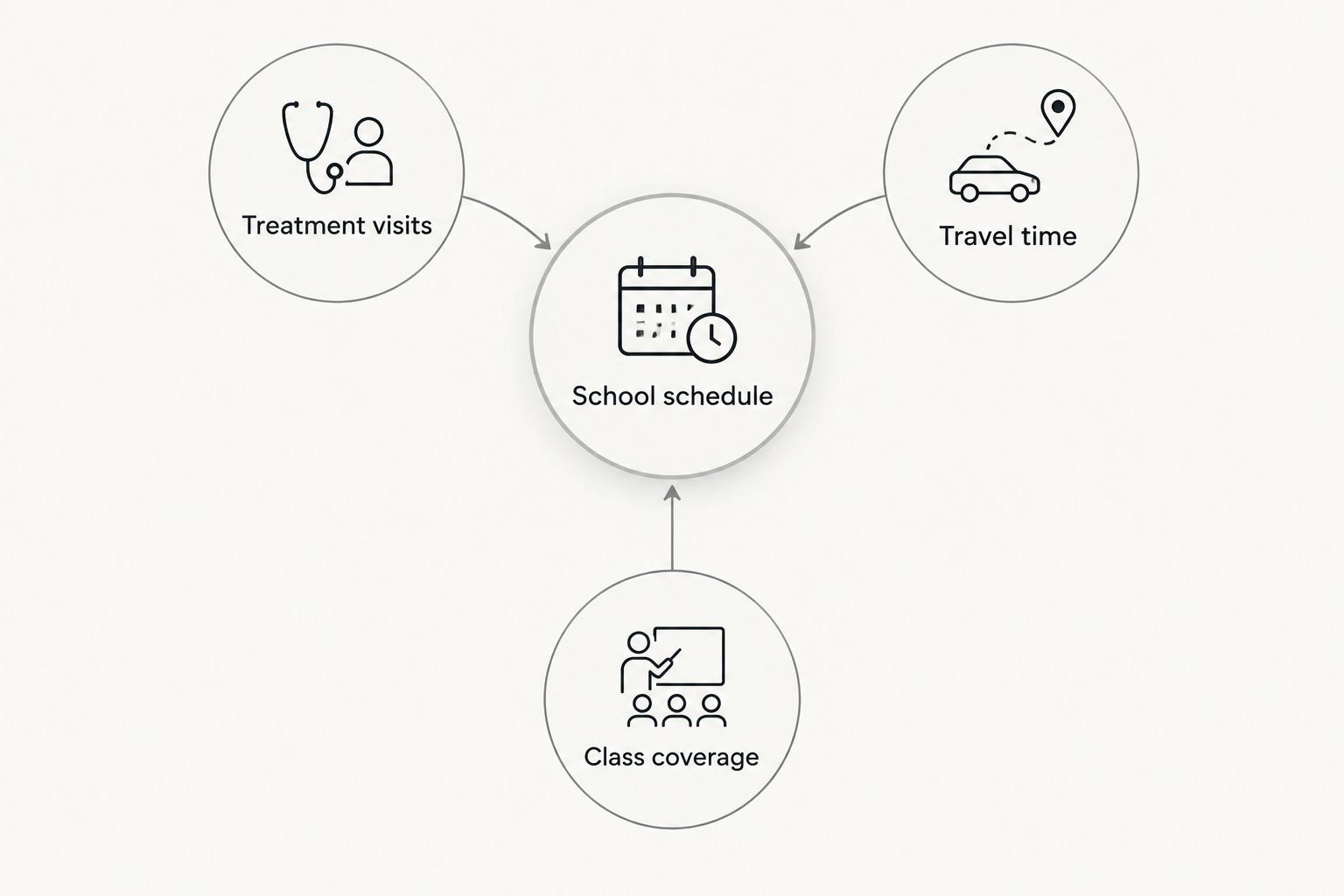
Use your school schedule as the starting point for the appointment discussion. Ask what happens when testing, conferences, illness, or a school closure disrupts a planned visit rather than deciding on your own to compress or skip treatment.
- Confirm the prescribed appointment frequency and expected visit length.
- Add travel, parking, and time to return to your classroom.
- Identify duties that require another staff member’s coverage.
- Discuss missed appointments and school-calendar interruptions with the clinic.
- Ask how the plan changes if your symptoms or tolerability change.
4. Review safety before arranging leave
Write down your medical history and bring an updated medication list. Include nonprescription products and substances, because the safety review depends on more than your psychiatric prescriptions.
TMS commonly causes scalp discomfort or headache, particularly early in treatment. Seizure is a rare but serious risk. Certain implanted devices or metal near the treatment area require specific assessment; do not assume that all implants are either safe or disqualifying.
A 2026 safety discussion should also cover hearing protection, sleep, alcohol use, and any changes in medication. Do not stop antidepressants or change doses to prepare for TMS without instructions from your prescriber.
- Disclose implanted devices, metal implants, and relevant procedures.
- Report any seizure history or significant head injury.
- Provide a complete medication and supplement list.
- Ask which symptoms require an immediate call to the treatment team.
- Confirm guidance about driving and returning to work after treatment.
5. Compare clinical options and work requirements
Prepare a written list of what has helped, what has not, and what you need treatment to improve. Start there rather than choosing a treatment solely because its appointment schedule looks convenient.
Medication management, psychotherapy, TMS, and SPRAVATO® have different roles. Some are used together. TMS does not automatically replace medication or psychotherapy, and a treatment change should follow a clinical discussion rather than a wish to simplify the school calendar.
SPRAVATO® is esketamine administered under supervision in a certified healthcare setting. It requires monitoring for at least 2 hours after administration, and patients must not drive until the next day after restful sleep. Those requirements deserve particular attention if you supervise students or drive yourself to work.
- Ask why each option fits your diagnosis and treatment history.
- Compare monitoring, transportation, and appointment requirements.
- Discuss side effects that could affect classroom responsibilities.
- Confirm which existing treatments should continue.
- Request an explanation of benefits, limitations, and alternatives.
6. Agree on how you will measure progress
Before treatment, describe the specific changes you want to notice: preparing lessons without prolonged difficulty, enjoying time outside work, or sleeping more consistently. Track symptoms and functioning together so that productivity does not become your only measure of recovery.
Use the same symptom measure over time when your clinician recommends one. A tool such as the PHQ-9 supports monitoring but does not replace assessment, and an isolated good or bad day does not establish the overall treatment response.
Agree on review points before starting. Your treatment team should explain how response, side effects, and attendance influence decisions about continuing or changing care.
- Record a baseline description of symptoms and daily functioning.
- Use the same clinician-recommended symptom questionnaire over time.
- Track sleep, side effects, and missed appointments.
- Report worsening mood or unusual changes in energy promptly.
- Discuss follow-up care and what to do if symptoms return.
Compare depression treatment options for educators
For your 2026 decision, compare clinical purpose first and calendar impact second. The options below are not interchangeable, and none guarantees remission. A psychiatrist can explain where medication management, TMS, or SPRAVATO® fits within your care; psychotherapy can address additional treatment goals.
| Option | Best for | Main advantage | Key limitation for educators |
|---|---|---|---|
| Medication management | Patients who need medication selection, adjustment, or monitoring | Allows a prescriber to assess benefits and side effects over time | Medication trials take follow-up, and side effects can affect daily functioning |
| Psychotherapy | Patients whose treatment goals include coping, behavior patterns, or relationships | Provides structured work on symptoms and practical coping skills | Requires ongoing participation and is not a substitute for urgent assessment |
| TMS | Patients with depression whose clinical history supports brain-stimulation treatment | Does not require general anesthesia | Repeated visits can conflict with teaching and coverage duties |
| SPRAVATO® | Patients who meet clinical criteria for supervised esketamine treatment | Provides another treatment pathway for eligible patients | Requires supervised administration, observation, and transportation planning |
Choose the treatment that fits your clinical needs, then test whether the attendance plan is realistic. If a proposed schedule conflicts with teaching, raise that conflict before treatment begins rather than quietly reducing attendance.
Common mistakes teachers make when considering TMS
Treating summer break as proof of diagnosis
Improvement away from school is useful information, not a diagnostic test. Tell your clinician what changes during breaks and what remains difficult; persistent symptoms outside work deserve attention too.
Waiting for a perfect gap in the calendar
Do not postpone a psychiatric assessment until summer simply because appointments seem easier then. Assessment can clarify your options before you choose treatment dates, and significant symptoms need attention regardless of the academic calendar.
Counting only the treatment session
A planning period must cover more than time in the treatment chair. Include travel, arrival procedures, and a realistic return to student responsibilities before deciding that a particular appointment time works.
Assuming treatment requires broad disclosure at school
Ask your human resources contact what documentation a leave or accommodation request requires. Share relevant functional needs through the appropriate process rather than assuming colleagues, students, or parents need your diagnosis. Eligibility depends on your employment circumstances and applicable rules.
Judging success only by classroom performance
Getting through lessons does not necessarily mean depression has resolved. Include enjoyment, relationships, sleep, and safety in your review of progress, and tell your clinician if work performance improves while other symptoms remain.
FAQ
Is TMS therapy for teachers different from regular TMS?
TMS therapy for teachers uses the same clinical principles as TMS for other patients with depression. The educator-specific work is planning visits around classroom responsibilities, coverage, and travel—not a separate treatment protocol.
Can I teach after a TMS appointment?
Many patients return to usual activities after TMS because it does not require general anesthesia. Your clinician should give individual guidance, especially if headache, scalp discomfort, or other symptoms interfere with teaching or driving.
Does TMS treat teacher burnout?
TMS is a treatment for specific psychiatric conditions, including depression, not a general treatment for workplace burnout. A psychiatric evaluation helps distinguish depression from occupational stress and identifies when both need attention.
How often would I need TMS appointments during the school year?
Traditional TMS courses often involve treatment 5 days per week over several weeks, but schedules vary by protocol. Confirm the prescribed frequency, appointment length, and missed-visit plan with your treating clinic before arranging classroom coverage.
Is TMS better than SPRAVATO® for teachers?
Neither TMS nor SPRAVATO® is automatically better for teachers; diagnosis, treatment history, safety, and practical requirements determine the choice. SPRAVATO® requires supervised administration and post-treatment monitoring, while TMS requires repeated visits and its own safety screening.
Can I stop my antidepressant when I begin TMS?
Do not stop an antidepressant when beginning TMS unless your prescriber directs the change. Your clinician will decide whether medication should continue and will review any proposed changes during treatment.
Where can educators seek TMS evaluation near Decatur?
Attuned Psychiatry offers TMS as part of physician-led psychiatric care in Decatur/Metro Atlanta. An evaluation determines whether TMS fits your symptoms, previous treatments, medical history, and treatment goals.
Should I wait until summer 2026 to seek help?
Do not delay a psychiatric assessment solely to reach summer 2026. If you are in immediate danger or cannot stay safe, call 911 or go to the nearest emergency department; in the United States, call or text 988 for crisis support.
One last thing
Before requesting leave, ask for the complete attendance plan—not just the session length. Bring your bell schedule to the consultation and identify the duties you cannot leave uncovered. That practical detail helps turn a clinically appropriate recommendation into a treatment plan you can actually attend.
Related guides
Discuss TMS around a school schedule
Request an evaluation and ask how the treatment schedule fits your teaching day and duties.


