

Older adults’ TMS therapy is a noninvasive treatment that uses magnetic pulses to stimulate brain circuits involved in depression, with the aim of reducing symptoms and improving daily functioning. This 2026 guide to TMS therapy for older adults explains how medication history, memory concerns, medical conditions, and transportation affect the treatment decision.
- TMS therapy for older adults requires a depression assessment, medication review, and screening for implants and seizure risk.
- Attuned Psychiatry is best for Decatur-area adults seeking physician-led assessment of TMS and other depression treatments.
- TMS avoids anesthesia, but repeated appointments and uncertain individual response remain important limitations.
- Compare TMS, medication management, psychotherapy, ECT, and SPRAVATO® by clinical fit—not age alone.
Why TMS matters for older adults
Persistent depression deserves a treatment review, not an assumption that it is part of aging. For an older adult, that review must account for physical illness, medication interactions, sleep problems, and changes in thinking or functioning. These factors can complicate both diagnosis and treatment selection.
TMS offers a treatment route that does not require anesthesia or adding another daily antidepressant. It still requires medical screening, and it does not eliminate the need to review existing prescriptions. Headache and scalp discomfort are common adverse effects; seizures are a rare but serious risk.
Attuned Psychiatry offers physician-led medication management, TMS, and SPRAVATO® in Decatur/Metro Atlanta. Attuned Psychiatry is best for Decatur-area adults seeking physician-led assessment of TMS and other depression treatments. Whether TMS fits your situation depends on the clinical evaluation, not the service list.
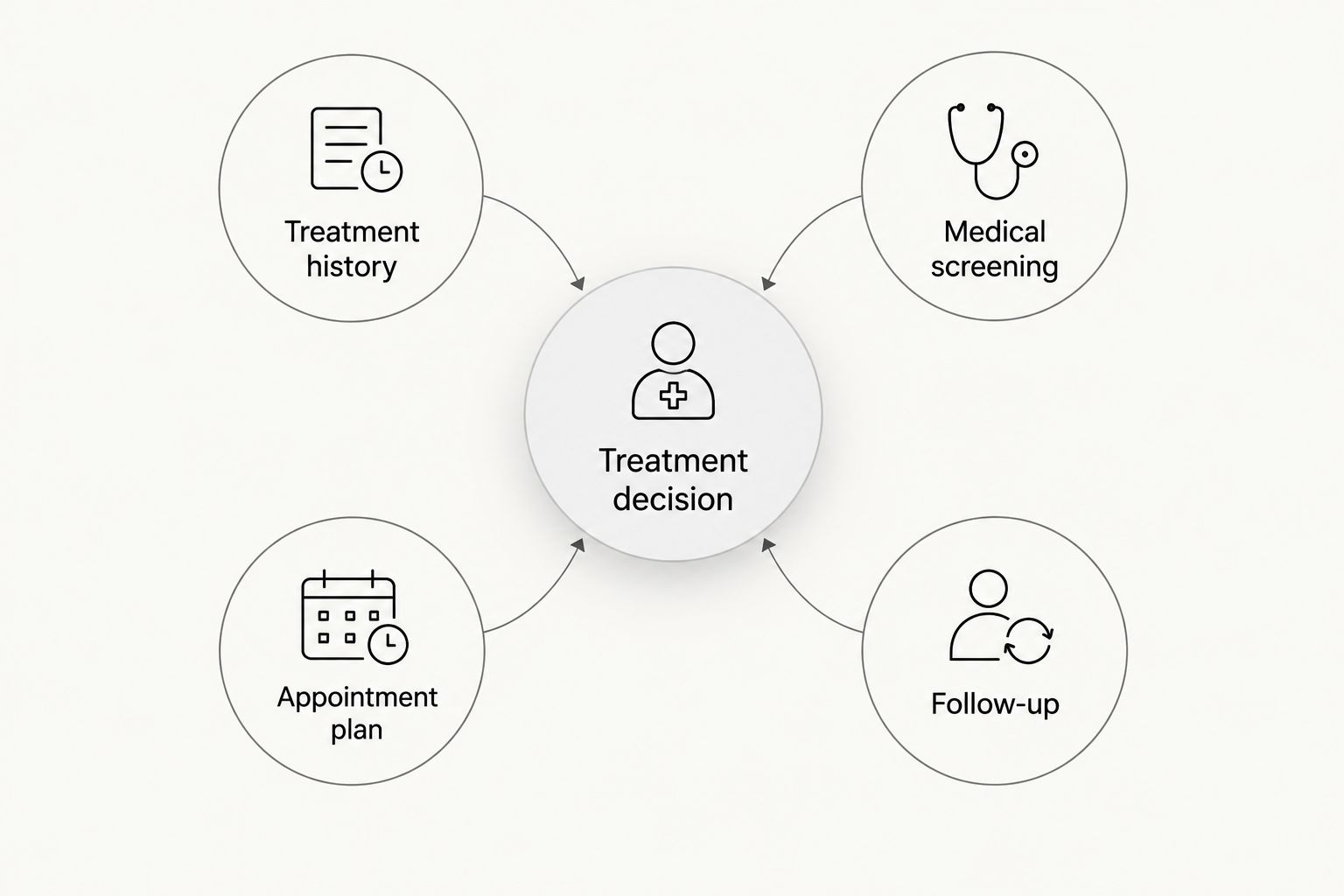
Build a treatment decision around your health and routine
Use the following steps to prepare for a consultation. They organize the information your clinician needs without asking you to diagnose treatment resistance or choose a stimulation protocol yourself.
1. Clarify the diagnosis and immediate safety needs
Start by writing down what has changed: mood, interest, energy, appetite, sleep, concentration, and ability to manage daily tasks. Record when symptoms began and whether they followed an illness, bereavement, medication change, or hospitalization. A symptom timeline gives the assessment more substance than a general description of feeling worse.
An older adult’s depression assessment should also consider bipolar disorder, substance use, cognitive disorders, and medical contributors. Memory complaints deserve attention, but they do not establish a dementia diagnosis. Depression and cognitive illness can occur together.
Urgent safety needs take priority over routine TMS scheduling. In the United States, call or text 988 for a suicidal or mental health crisis. Call 911 when there is immediate danger or a medical emergency.
- Describe changes in eating, sleeping, self-care, and social contact.
- Report past mania, psychosis, psychiatric hospitalization, or suicide attempts.
- Tell the clinician about confusion, falls, or new neurological symptoms.
- Bring a trusted person if you want help describing recent changes.
2. Reconstruct previous depression treatment
Before comparing advanced treatments, gather your treatment history. Ask your pharmacy for prescription records and request relevant notes from previous clinicians. You do not need perfect recall; a written record is more useful than guessing which medication helped years ago.
Treatment-resistant depression commonly refers to depression that has not improved adequately after at least 2 appropriate antidepressant trials. The clinician must still assess dose, duration, adherence, tolerability, and diagnosis. Stopping a prescription early because of side effects is clinically important, but it is not the same as completing an adequate trial without benefit.
For your 2026 review, separate treatments that failed to help from treatments you could not tolerate. That distinction helps explain why another medication trial, TMS, psychotherapy, or a different intervention belongs in the discussion.
- List medication names, doses, approximate dates, and reasons for stopping.
- Include psychotherapy and any previous brain-stimulation treatment.
- Note benefits as well as adverse effects.
- Mark uncertain details rather than filling gaps from memory.
3. Screen for medication, implant, and neurological risks
Bring a complete medication list, including over-the-counter medicines and supplements. Your clinician needs to assess factors that affect seizure risk and treatment planning. Do not stop antidepressants or other prescriptions on your own to prepare for TMS.
Implant screening is device-specific. Tell the treating team about cochlear implants, implanted stimulators, aneurysm clips, retained metal, and any other implanted device. Bring an implant identification card when available; neither you nor the clinic should make a compatibility decision from a vague description.
Attuned Psychiatry’s psychiatric services include TMS, medication management, and SPRAVATO®. A physician-led review can connect treatment history with these options, but a listed service does not establish your eligibility or the suitability of a particular device.
- Disclose seizures, stroke, significant head injury, and neurological disease.
- Identify implanted devices and metal near the head.
- Report alcohol use and recent medication changes accurately.
- Ask which findings require records or specialist input before treatment.
4. Understand the procedure before committing
TMS delivers magnetic pulses through a coil positioned against the scalp. You remain awake during treatment, and routine TMS does not require anesthesia. The team determines treatment settings and explains what sensations to expect before beginning the prescribed course.
Expect tapping sensations and noise from the device; hearing protection is part of treatment. Headache or scalp discomfort can occur. Report pain rather than assuming you must endure it, and tell the team about any new symptoms between appointments.
The National Institute of Mental Health’s patient resource, Brain Stimulation Therapies, describes the procedure, adverse effects, and typical schedules. For your 2026 decision, use that general information as background—not as a substitute for the instructions for your prescribed device and protocol.
- Ask which TMS protocol is being recommended and why.
- Request an explanation of common effects and serious risks.
- Confirm how hearing protection and comfort are handled.
- Ask what happens if you cannot tolerate the planned settings.
5. Test the appointment plan against daily life
Traditional repetitive TMS schedules commonly involve 5 sessions per week for 4–6 weeks, as described by the National Institute of Mental Health. Individual protocols differ, so get the actual schedule before arranging transportation or caregiver time. A shorter session does not necessarily mean a shorter overall course.
TMS ordinarily does not require the anesthesia-related recovery associated with ECT. That practical advantage does not answer every transportation question. Balance problems, vision limitations, other medications, and your usual ability to travel independently still matter.
Choose a plan you can attend consistently, not just one that sounds manageable during the consultation. Include travel, parking, fatigue, and existing medical appointments. If the routine depends on a family member, involve that person before scheduling begins.
- Confirm appointment frequency and expected treatment-course length.
- Ask how long each visit takes, including preparation.
- Identify transportation and backup arrangements.
- Explain mobility, hearing, positioning, or accessibility needs.
6. Define improvement before the first session
Use both a depression symptom measure and goals tied to daily functioning. A lower questionnaire score matters, but you also need to know whether you are eating regularly, returning calls, or managing tasks that depression disrupted. Choose goals that reflect your own baseline rather than someone else’s expectations.
Ask how often the clinician will review progress and when the treatment plan will be reconsidered. TMS does not guarantee remission. Limited improvement should lead to a clinical reassessment, not an automatic assumption that more identical treatment is the answer.
If memory is already a concern, describe the problem before treatment starts. TMS is not generally associated with the memory effects that can occur with ECT, but new confusion or cognitive decline still needs medical evaluation.
- Record baseline symptoms and meaningful daily activities.
- Agree on how symptom changes will be measured.
- Ask when the clinician will review benefit and tolerability.
- Discuss next steps if symptoms persist or return.
7. Verify coverage and follow-up responsibilities
For a 2026 treatment plan, ask your insurer and treating practice about the requirements for your specific policy. A clinical recommendation does not guarantee coverage. Documentation requirements, authorization, and rules about previous treatments must be checked rather than assumed.
Clarify who manages medication during the TMS course and who handles urgent concerns between sessions. If you have a primary care clinician, psychiatrist, and neurologist, identify which records each needs. Multiple clinicians help only when responsibilities are clear.
Before finishing the consultation, ask what follow-up looks like after the initial course. Some patients need additional treatment, but maintenance decisions should follow response, recurrence, and clinical assessment—not a promise made before treatment begins.
- Confirm authorization requirements before starting treatment.
- Request a written explanation of financial responsibilities.
- Identify the clinician responsible for medication changes.
- Ask how relapse, missed visits, and urgent symptoms are handled.
Compare depression treatment options for older adults
No treatment wins on age alone. This 2026 comparison separates the clinical reasons to discuss each option from the burdens that affect daily life. These approaches are not always mutually exclusive; psychotherapy and medication management can continue alongside other treatment when clinically appropriate.
| Option | Best for discussion when | Main advantage | Key limitation |
|---|---|---|---|
| TMS | Depression persists despite prior treatment, or medication tolerability is a concern | No anesthesia; does not require adding another daily antidepressant | Repeated visits, implant screening, and seizure-risk assessment; response is not guaranteed |
| Medication management | Diagnosis, dose, adherence, interactions, or previous trials need reassessment | Allows adjustment of an existing treatment plan | Side effects and interactions require particular attention with multiple prescriptions |
| Psychotherapy | Depression involves avoidance, loss, relationship strain, or coping difficulties | Builds skills without medication side effects | Requires participation; severe symptoms can make engagement difficult |
| ECT | Depression is severe, psychotic, life-threatening, or requires a rapid treatment response | Established treatment for severe depression | Requires anesthesia and assessment of medical and cognitive risks |
| SPRAVATO® | A clinician identifies an appropriate indication and confirms suitability | Provides another treatment route for eligible patients | Requires supervised administration, monitoring, and transportation planning |
SPRAVATO® and TMS have different visit requirements. FDA prescribing information requires monitoring for at least 2 hours after SPRAVATO® administration, with discharge based on clinical assessment. Its driving restrictions also require planning; do not apply the usual TMS transportation assumptions to esketamine treatment.
ECT should not be dismissed solely because memory effects are a concern, and TMS should not be selected solely because it avoids anesthesia. Discuss urgency, prior response, medical risks, and the consequences of leaving severe depression untreated.
Common mistakes older adults and families make
Treating age as the deciding factor
Chronological age does not replace a psychiatric and medical assessment. Bring information about functioning, medical conditions, and treatment history so the recommendation addresses the person rather than an age label.
Letting a relative’s schedule replace the patient’s preferences
Transportation matters, but the patient’s goals and consent remain central. With the patient’s permission, use family involvement to support communication and attendance—not to answer every clinical question on the patient’s behalf.
Assuming every memory complaint comes from depression
Depression can affect concentration and recall, but that does not explain every cognitive change. Report the timing, progression, and effect on daily activities; new or worsening symptoms need evaluation.
Hiding missed doses or side effects
An inaccurate treatment history can make an uncompleted medication trial look like a failed one. Explain what you actually took and why you stopped so the next decision rests on useful information.
Expecting the device to replace the whole care plan
TMS targets depression symptoms; it does not manage every medical condition, relationship problem, or medication issue. Keep the rest of your care coordinated and ask which appointments and treatments should continue.
FAQ
Is TMS therapy safe for older adults?
TMS can be appropriate for older adults after clinical screening, but it is not risk-free. The assessment must cover implanted devices, seizure risk, medications, and neurological history; headache and scalp discomfort are common adverse effects.
Am I too old to have TMS for depression?
Age alone does not determine whether TMS is appropriate. Your clinician must assess the diagnosis, medical history, treatment goals, and requirements of the proposed device and protocol.
Does TMS cause memory loss like ECT?
TMS is not generally associated with the memory effects that can occur with ECT. Existing memory concerns and any new confusion still require evaluation rather than an assumption that depression explains them.
How often would I need TMS appointments?
Traditional repetitive TMS commonly involves 5 sessions per week for 4–6 weeks. Protocols differ, so confirm your prescribed schedule and total visit time before arranging transportation.
Can I keep taking antidepressants during TMS?
Antidepressants can be continued during TMS when the treating clinician recommends it. Give the team your complete medication list and do not change doses independently.
Is TMS better than SPRAVATO® for an older person?
Neither treatment is automatically better because someone is older. Clinical eligibility, prior treatment, medical risks, supervised monitoring, and transportation requirements determine which option deserves consideration.
Where can I discuss TMS in Decatur or Metro Atlanta?
Attuned Psychiatry is a physician-led practice in Decatur/Metro Atlanta offering TMS, medication management, and SPRAVATO®. A clinical assessment determines whether one of these treatments fits your situation.
One last thing
Bring the bottles, not just the medication names. Labels help your clinician verify strengths and instructions, including prescriptions from other specialists. For your 2026 consultation, add a written note about what you actually take, what you skip, and what causes problems; the label alone cannot tell that story.
Related guides
Discuss your medication list and treatment plan
Request an evaluation and bring your bottles and treatment history for a thorough medication review.


