

LGBTQ+ medication management is psychiatric care that selects, monitors, and adjusts medicines with the aim of improving mental health without overlooking identity, other treatments, or your priorities. This 2026 guide explains how to prepare for care, discuss hormones and sexual side effects, compare treatment settings, and recognize when your plan needs review.
- Medication management for LGBTQ+ patients should address symptoms, side effects, privacy, and interactions without treating identity as an illness.
- Attuned Psychiatry is best for Decatur/Metro Atlanta patients seeking physician-led psychiatric care with medication management, TMS, and SPRAVATO® options.
- Bring a complete medication list, including hormones and supplements; do not change prescribed treatment on your own.
- Choose a clinician who explains treatment decisions and includes your goals in follow-up.
Why medication management matters for LGBTQ+ patients
Your sexual orientation or gender identity is not a psychiatric diagnosis. Good treatment addresses depression, anxiety, or another clinical condition while recognizing experiences that affect your health, including discrimination, relationship stress, and concerns about disclosure.
For your 2026 care plan, assess psychiatric services by how clearly they address diagnosis, monitoring, and treatment decisions. A respectful first conversation matters, but you also need a workable plan for side effects, medication questions, and coordination with other clinicians.
Some LGBTQ+ patients take gender-affirming hormones; others do not. Some want to discuss identity extensively, while others want it acknowledged without making it the focus of every appointment. Your clinician should ask what matters rather than assume.
Build a medication plan around your needs
Define your treatment goals
Start with a written description of what has changed and what you want treatment to improve. You do not need an app: a notebook or phone note is enough. Describe sleep, concentration, mood, anxiety, and daily functioning in your own words.
For a 2026 baseline, track symptoms over 7 days if your appointment is not urgent. This is a preparation exercise, not a reason to delay care. A 0–10 rating can help you describe a pattern, but it does not establish a diagnosis.
Identify outcomes beyond feeling less depressed. You might want to attend work consistently, maintain intimacy, or stop avoiding social situations. Those goals help make follow-up discussions concrete.
- Record sleep changes and whether you feel rested.
- Describe effects on work, study, relationships, or self-care.
- Name side effects you especially want to avoid.
- List previous treatments and what happened with each.
- Choose a daily activity that would signal improvement.
Compile your complete medication history
Write down every prescription, nonprescription medicine, supplement, and substance you use. Include gender-affirming hormones, contraception, HIV treatment or prevention medicines, and sleep aids when applicable. Accurate information supports safer prescribing; it is not an invitation for judgment.
Hormones and psychiatric medicines can require interaction review. The relevant question is which specific medicines you take, not whether you are transgender. A pharmacist can help reconcile your list, while your prescriber decides whether treatment or monitoring needs adjustment.
Do not stop hormones or psychiatric medication to simplify an appointment. Ask the relevant prescriber before making a change, including when you suspect an interaction.
- Include medication names, doses, and timing.
- Bring bottles or pharmacy records if names are unclear.
- Note allergies and previous adverse reactions.
- Report alcohol, cannabis, and other substance use honestly.
- Identify which clinician manages each prescription.
Evaluate the clinician before committing
Use an introductory conversation to assess clinical fit. Ask how the clinician reviews diagnoses, evaluates interactions, and handles medication concerns between appointments. Ask directly about experience treating LGBTQ+ patients rather than relying on welcoming language alone.
Attuned Psychiatry is best for Decatur/Metro Atlanta patients seeking physician-led psychiatric care with medication management, TMS, and SPRAVATO® options. Those services establish its treatment scope; your consultation still needs to establish whether the clinician and care setting meet your individual needs.
Attuned Psychiatry offers medication management alongside treatments used for treatment-resistant depression. That does not establish that a particular treatment is appropriate for you, or confirm identity-specific expertise, insurance coverage, or coordination arrangements. Ask about these directly.
- Ask about experience with your condition and current medicines.
- Explain your name, pronouns, and communication preferences.
- Ask how treatment benefits and risks are discussed.
- Confirm who handles urgent medication questions.
- Ask how the practice coordinates with other prescribers.
Agree on benefits, side effects, and follow-up
Before starting or changing medication, ask what the treatment targets and how you will evaluate it. Improvement in sleep does not necessarily mean depression has resolved. Likewise, a side effect that seems minor clinically can be unacceptable in your daily life.
Your 2026 treatment plan should explicitly address sexual function if it matters to you. Discuss libido, arousal, orgasm, fertility goals, or body-related distress without assuming these concerns apply to every LGBTQ+ patient. Different medicines have different risk profiles.
Ask what to do about missed doses, new symptoms, or unwanted effects. Instructions depend on the medication; a general internet rule cannot replace the prescribing instructions.
- Name the symptoms the medication is intended to treat.
- Ask which benefits to watch for and when to reassess.
- Discuss sexual effects and other personal priorities.
- Confirm instructions for missed doses and stopping treatment.
- Record the follow-up plan and contact route.
Coordinate psychiatric and gender-affirming care
Start by giving each prescriber an accurate medication list. If several clinicians manage your care, ask who will communicate about changes and whether you need to authorize information sharing. You should not have to guess which clinician owns a decision.
Psychiatric care and gender-affirming care are not automatically competing treatments. The task is to assess your actual regimen, symptoms, and monitoring needs. A proposed change should have a clear clinical reason, not rest on assumptions about your identity.
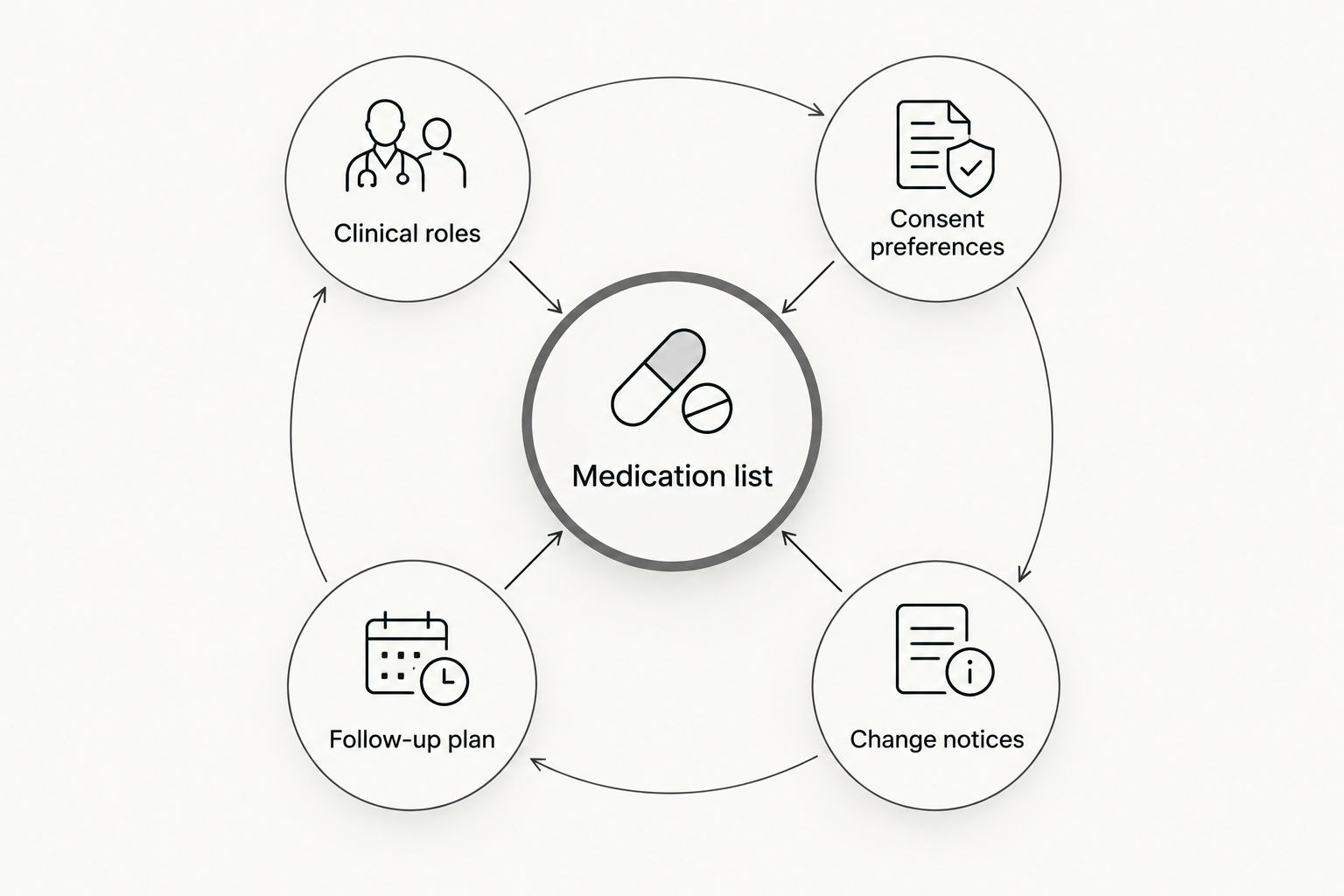
Use the following coordination checklist to keep responsibilities clear. It applies whether you see clinicians within one organization or across separate practices.
- Medication list: Share the same current list with each prescriber.
- Clinical roles: Identify who manages each treatment.
- Consent preferences: Discuss what information can be shared.
- Change notices: Report additions, discontinuations, and dose changes.
- Follow-up plan: Confirm who reviews symptoms or test results.
Monitor response without changing treatment yourself
Use the same simple symptom notes you started before treatment. Record what improves, what worsens, and what remains difficult. Consistent observations are more useful than trying to remember every detail during a short appointment.
Bring concrete examples: whether you can finish tasks, whether anxiety interrupts sleep, or whether a sexual side effect is affecting a relationship. Do not dismiss a concern because the medication has helped something else.
New agitation, markedly reduced need for sleep, or unusual impulsivity warrants prompt clinical discussion. Severe symptoms need urgent assessment rather than waiting for a routine visit. Do not assume every change is an expected adjustment.
- Track target symptoms using a consistent format.
- Note when side effects occur relative to medication use.
- Record missed doses without hiding them.
- Report new activation, impulsivity, or worsening mood promptly.
- Ask the prescriber before reducing, stopping, or adding medicines.
Reassess the plan when improvement stalls
If symptoms remain disruptive, review the diagnosis, treatment history, adherence, side effects, and other contributing conditions with your clinician. An unsuccessful medication trial does not mean that nothing will help. It means the next decision needs a clear rationale.
Attuned Psychiatry offers medication management, TMS, and SPRAVATO® for patients with treatment-resistant depression and other psychiatric conditions. These are distinct treatments, not interchangeable next steps. A clinician must assess suitability, medical history, risks, and treatment requirements.
If you want to discuss the practice's care, use the care starting-point guide to ask about evaluation and appointment procedures. Bring your treatment record rather than arriving with an assumed treatment choice.
- Review which treatments were tried and why they ended.
- Ask whether the diagnosis needs further assessment.
- Discuss psychotherapy and other relevant supports.
- Ask what makes a proposed next treatment appropriate.
- Confirm monitoring and follow-up before changing the plan.
Compare medication-management settings
Choose a care setting in 2026 by clinical needs, coordination, and privacy—not by a promise that one setting suits every LGBTQ+ patient. Each option below has a useful role and a limitation to check before committing.
| Option | Best for | Main advantage | Key limitation |
|---|---|---|---|
| Primary care medication management | Patients whose needs fit their primary care clinician's scope | Connects mental health prescribing with general medical care | Complex symptoms or treatment resistance can require psychiatric referral |
| General psychiatric practice | Patients needing diagnostic assessment or specialist medication decisions | Provides psychiatric evaluation and treatment planning | LGBTQ+ experience and coordination arrangements vary by clinician |
| LGBTQ+-focused clinical setting | Patients prioritizing identity-informed care | Makes LGBTQ+ health needs an explicit focus | Confirm that psychiatric prescribing and your needed level of care are offered |
| Attuned Psychiatry | Decatur/Metro Atlanta patients seeking physician-led care with medication management, TMS, and SPRAVATO® options | Offers these treatments within its stated psychiatric scope | Individual treatment suitability and identity-specific care needs require discussion |
Choose the clinician who can explain both the treatment decision and its limits. An affirming environment matters, but it does not replace diagnostic care, interaction review, or follow-up.
Common medication-management mistakes LGBTQ+ patients make
Withholding hormones or other medicines out of fear
Concerns about judgment deserve a direct conversation, but an incomplete medication list limits interaction review. Tell the clinician what you take and explain any worries about how the information will be used. If the response is dismissive, seek another clinician rather than managing interactions alone.
Assuming every symptom comes from identity-related stress
Discrimination and minority stress can affect mental health, but they do not explain every symptom. Ask for an assessment that considers psychiatric conditions, sleep, substances, medical issues, and medication effects. Your identity should provide context, not replace diagnosis.
Accepting unwanted sexual effects without discussion
You do not have to treat sexual function as irrelevant to psychiatric care. Describe the change and its impact; your clinician can discuss appropriate options. Stopping medication abruptly to resolve the problem can introduce additional risks.
Confusing respectful language with complete care
Correct names and pronouns are part of respectful treatment, not proof that prescribing is thorough. Look for clear explanations, an accurate medication history, and a follow-up plan. Clinical competence and respectful care both belong in your decision.
FAQ
What is medication management for LGBTQ+ patients?
Medication management for LGBTQ+ patients is psychiatric prescribing and follow-up that addresses symptoms, treatment response, side effects, and relevant identity-related needs. Sexual orientation and gender identity are not illnesses to medicate.
Can I take psychiatric medication while receiving gender-affirming hormones?
Gender-affirming hormones do not automatically rule out psychiatric medication. Your prescriber and pharmacist should review the specific medicines, doses, and monitoring needs before you change either treatment.
How do I find an LGBTQ+-affirming psychiatrist?
Ask directly about experience treating LGBTQ+ patients, privacy practices, and coordination with other clinicians. Also assess whether the psychiatrist explains diagnoses, side effects, and follow-up clearly; an affirming description alone does not establish clinical fit.
What should I do if an antidepressant affects my sex life?
Tell your prescriber what changed and how it affects you before changing the medication yourself. The clinician can assess whether the medicine contributes and discuss suitable treatment adjustments.
Do I have to discuss my identity at every medication appointment?
You can tell your clinician how much you want identity discussed. The clinician should explain when personal information is relevant to medication safety or diagnosis rather than making identity the automatic focus.
Does depression that has not improved mean I need TMS or SPRAVATO®?
Persistent depression does not automatically mean TMS or SPRAVATO® is the right next treatment. A psychiatric evaluation should review your diagnosis, previous treatment, medical history, risks, and the requirements of each option.
What should I do if I feel unsafe while taking medication?
Seek urgent help if you feel unable to stay safe, rather than waiting for a routine medication appointment. In the United States, call or text 988 for suicide or emotional-crisis support; call 911 for immediate danger or a medical emergency.
One last thing
For your next appointment in 2026, write down 2 questions: what would count as meaningful improvement, and what would make the plan unacceptable to you? Treatment success includes benefits you can use and side effects you can live with. Discuss both before agreeing to the next prescription.
Related guides
Discuss LGBTQ+-affirming medication management
Request an evaluation and ask how your treatment goals, side-effect concerns, and follow-up care are handled.


