

SPRAVATO can be used long-term for treatment-resistant depression when it continues to help and a clinician regularly reviews its risks; it is not risk-free or appropriate for everyone. Evidence available in 2026 supports supervised maintenance treatment, but each dose still requires monitoring for sedation, dissociation, breathing problems, and increased blood pressure.
- Is SPRAVATO safe long term? Maintenance treatment requires continued benefit, supervised dosing, and regular safety reviews.
- SPRAVATO long-term safety evidence includes an open-label study with treatment lasting up to 6.5 years.
- Every SPRAVATO treatment requires at least 2 hours of observation; feeling familiar with treatment does not remove this requirement.
- Attuned Psychiatry offers physician-led psychiatric care, including SPRAVATO, for patients with treatment-resistant depression in Decatur/Metro Atlanta.
Why this matters
Long-term depression treatment involves balancing the risks of treatment against the effects of persistent illness. The useful question is not whether a medicine has any risk. It is whether the benefit you receive continues to justify those risks and the demands of treatment.
For your 2026 treatment review, separate immediate side effects from problems that develop or persist between visits. A brief period of dizziness during a monitored session is different from worsening memory, urinary pain, or increasing alcohol use at home. Both belong in the discussion.
If you are comparing treatment approaches, review the practice’s psychiatric services and bring your treatment history to your clinician. Long-term treatment should have a documented purpose, not continue automatically.
Is SPRAVATO safe to use long-term?
Available evidence supports SPRAVATO as a maintenance treatment for selected adults with treatment-resistant depression. That does not establish lifelong safety or guarantee that a particular patient will tolerate continued treatment.
The FDA prescribing information and the required Risk Evaluation and Mitigation Strategy, or REMS, remain the central safety references for treatment decisions in 2026. The SUSTAIN-3 extension study, published in 2025, adds longer-term evidence from adults receiving intermittent esketamine treatment for treatment-resistant depression, with exposure lasting up to 6.5 years.
| Evidence or requirement | What it tells you | What it does not establish |
|---|---|---|
| SUSTAIN-3 long-term extension | Intermittent treatment was studied over several years without a new safety signal identified | Every possible rare harm or safety over a lifetime |
| Open-label study design | Participants and clinicians knew which treatment was being given | The same certainty as a blinded, long-term comparison |
| FDA prescribing information | Defines known risks, precautions, and monitoring requirements | That meeting eligibility criteria eliminates risk |
| Individual follow-up | Shows whether your symptoms, functioning, and tolerability justify continuation | That a good early response guarantees lasting benefit |
SUSTAIN-3 was not a lifelong study, and an extension study has selection limits: people who enter and remain in it do not necessarily represent everyone who starts treatment. No new safety signal is reassuring; it does not mean no side effects occurred.
What risks remain during maintenance treatment?
The same safety issues that matter at the beginning still matter during maintenance. Previous uneventful sessions do not replace the checks required at your next appointment.
Sedation, dissociation, and breathing problems
SPRAVATO can cause sleepiness and dissociation, including feeling detached from your body, surroundings, or sense of time. These effects often occur around dosing, which is one reason treatment takes place under supervision rather than at home.
Respiratory depression has also been reported after approval. The prescribing information requires monitoring of respiratory status, including pulse oximetry, during observation. Tell the treatment team about sleep medicines, opioids, benzodiazepines, alcohol, and other substances that affect alertness or breathing.
Blood pressure increases
SPRAVATO can raise blood pressure after a dose. The prescribing information calls for assessment before treatment and reassessment around 40 minutes after dosing, with further monitoring as clinically needed.
Certain vascular conditions make treatment unsafe because an increase in blood pressure could pose a serious risk. These include aneurysmal vascular disease, arteriovenous malformation, and a history of intracerebral hemorrhage. Your clinician needs your full medical history, not just a list of psychiatric diagnoses.
Abuse, misuse, and dependence
Esketamine is a controlled substance with abuse and misuse potential. A history of substance use problems requires careful assessment; it is not a detail to leave out because you fear losing access to care.
Supervised administration limits access outside the clinic, but it does not remove every risk. Report cravings, taking other substances to reproduce treatment effects, or using more sedating medication than prescribed. Do not change prescribed medicines on your own.
Urinary symptoms and thinking changes
Long-term ketamine misuse has been associated with serious urinary tract problems. Those findings cannot be directly equated with prescribed, supervised SPRAVATO treatment, but urinary symptoms still require attention. The prescribing information directs clinicians to monitor for urinary tract and bladder symptoms.
SPRAVATO can also temporarily impair attention, judgment, thinking, and motor skills. Persistent changes between sessions deserve assessment rather than an assumption that they are expected. Depression, sleep disruption, other medicines, and medical conditions can also affect cognition.
Why long-term SPRAVATO safety varies
A reassuring study result cannot substitute for your own health review. These factors change the risk-benefit discussion:
- Blood pressure and vascular history: Uncontrolled blood pressure or certain vascular conditions can change whether treatment is appropriate.
- Other medicines and substances: Central nervous system depressants can increase sedation; stimulants and some other medicines can increase blood pressure concerns.
- Substance use history: Past or current misuse affects the level of assessment and monitoring needed.
- Pregnancy and breastfeeding: SPRAVATO is not recommended during pregnancy, and breastfeeding is not recommended during treatment.
- Liver function: Moderate liver impairment can require longer observation; treatment is not recommended in severe liver impairment.
- Benefit and tolerability: Repeated difficult sessions or little sustained improvement can change whether continued treatment makes sense.
Bring these issues up even if they have not caused a problem before. A new prescription, pregnancy plan, or medical diagnosis can change an established treatment plan.
What should a long-term safety review include?
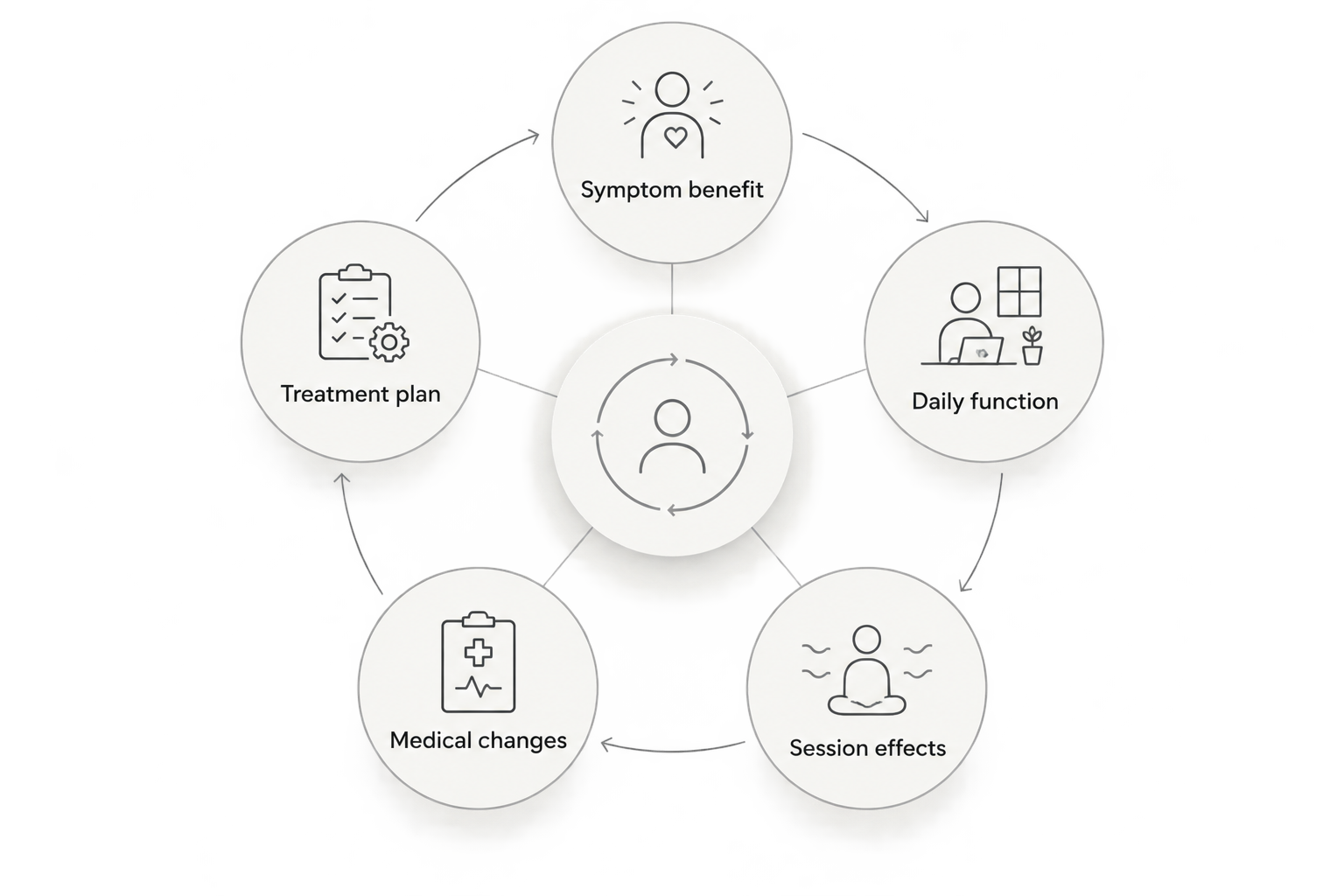
A useful review connects your experience during treatment with how you function between visits. In 2026, a maintenance appointment should address more than whether you can tolerate another dose.
- Symptom benefit: Review depression symptoms, suicidal thoughts, and whether improvement lasts between sessions. Use consistent symptom measures alongside your own account.
- Daily function: Discuss sleep, self-care, relationships, and work or household responsibilities. A symptom score alone does not describe your recovery.
- Session effects: Describe sedation, dissociation, nausea, dizziness, blood pressure changes, and how recovery affects the rest of your day.
- Medical changes: Review new medicines, substance use, urinary symptoms, cognitive concerns, pregnancy plans, and changes in physical health.
- Treatment plan: Decide whether to continue, adjust the schedule within prescribing guidance, investigate a concern, or discuss another approach.
Write down concerns before your visit, particularly symptoms that disappear before you reach the clinic. A short description of what happened, when it started, and whether it recurred gives your clinician more useful information than a general statement that treatment felt different.
Attuned Psychiatry is a fit for Decatur/Metro Atlanta patients seeking physician-led evaluation of SPRAVATO and other psychiatric treatment options. The practice offers medication management, TMS, and SPRAVATO; the appropriate choice depends on your clinical assessment, not a promise that one treatment is safest for everyone.
How long do you need monitoring after each dose?
At least 2 hours of observation are required after each SPRAVATO dose, including during maintenance treatment. Discharge also depends on a clinician determining that you are clinically stable and ready to leave.
The observation period is a minimum, not a guarantee of departure at an exact time. Sedation, blood pressure changes, breathing concerns, or other symptoms can require more assessment.
Do not drive, operate machinery, or perform activities requiring full alertness until the next day after a restful sleep. Arrange transportation home in advance. Feeling less dissociated than you did during an earlier appointment does not establish that driving is safe.
These requirements remain relevant in 2026 even after many familiar sessions. Plan around the whole treatment day rather than only the time spent receiving the medicine.
Can you take SPRAVATO for years?
Up to 6.5 years of treatment exposure was included in SUSTAIN-3, supporting the possibility of multi-year maintenance for selected patients. That study duration is neither a recommended treatment length nor a maximum treatment limit.
There is no single stopping date that suits every patient with treatment-resistant depression. Your clinician should weigh sustained benefit, recurrence of symptoms, adverse effects, and your preferences when reviewing continuation.
Do not interpret maintenance treatment as a commitment you cannot revisit. Ask what improvement supports continuing, what problems would trigger a change, and how your depression would be monitored if the plan changes.
Does SPRAVATO damage your bladder or memory?
SPRAVATO requires monitoring for urinary symptoms and can temporarily impair thinking; long-term damage is not an established outcome for every treated patient. Long-term study findings are reassuring, but they cannot rule out all uncommon or future risks.
Report pain with urination, urinary urgency, increased frequency, pelvic discomfort, or blood in the urine. These symptoms have multiple possible causes and need medical assessment rather than self-diagnosis.
For memory concerns, describe specific changes: missed appointments, difficulty following familiar tasks, or problems remembering conversations. Tell your clinician whether the difficulty occurs only on treatment days or continues between sessions. That distinction helps guide assessment without assuming SPRAVATO is the only possible cause.
When should you ask to change the treatment plan?
Ask for a review when treatment is no longer helping enough, side effects interfere with daily life, or your health circumstances change. Continuing solely because you have already invested time in treatment is not a clinical reason to continue.
A review does not always mean stopping. Your clinician might assess another cause of symptoms, review interacting medicines, reconsider the treatment schedule, or discuss alternatives. The goal is a plan with a clear benefit and an acceptable burden.
Attuned Psychiatry offers psychiatric treatment options beyond SPRAVATO, including medication management and TMS. Those options have different benefits, limitations, and eligibility considerations; none should be described as interchangeable or risk-free.
Discuss your treatment options
Schedule a discussion about treatment-resistant depression and your psychiatric treatment history.
Which symptoms need urgent help?
Chest pain, shortness of breath, a sudden severe headache, new weakness, or difficulty speaking need immediate medical attention. During a session, tell clinic staff immediately; outside the clinic, call 911 for a medical emergency.
Seek urgent help for suicidal thoughts with intent, a plan, or concern that you cannot stay safe. In the United States, call or text 988 for crisis support, and call 911 when there is immediate danger. Do not wait for your next SPRAVATO appointment.
FAQ
Is SPRAVATO safe long term if it keeps helping my depression?
SPRAVATO can be appropriate for long-term treatment when benefit continues and regular assessment supports its safety. Continued improvement does not remove the need for supervised dosing, observation, and review of new health concerns.
Does SPRAVATO have a maximum treatment duration?
SPRAVATO does not have one fixed maximum treatment duration for every patient with treatment-resistant depression. Your clinician should regularly reassess benefit, adverse effects, and whether maintenance treatment remains appropriate.
Do I still need observation after years of SPRAVATO treatment?
Yes, at least 2 hours of observation are required after every SPRAVATO dose. A clinician must also determine that you are clinically stable and ready to leave.
Can I drive home if I no longer feel dissociated?
No, you should not drive until the next day after a restful sleep. Feeling normal after a session does not override the prescribing information’s driving restriction.
Can long-term SPRAVATO treatment affect my bladder?
Urinary tract and bladder symptoms require monitoring during SPRAVATO treatment. Tell your clinician about urgency, painful urination, pelvic discomfort, or blood in the urine rather than assuming the symptoms are harmless.
Should I stop SPRAVATO if I am planning a pregnancy?
Discuss pregnancy plans with your prescriber before changing treatment because SPRAVATO is not recommended during pregnancy. Your clinician should review both medication risks and the risks of untreated depression.
Can I discuss alternatives at Attuned Psychiatry?
Attuned Psychiatry offers medication management, TMS, and SPRAVATO for patients with treatment-resistant depression and other psychiatric conditions. A clinical evaluation determines which options fit your diagnosis, treatment history, and safety needs.
One last thing
Being ready to leave the clinic is not the same as being ready to drive. The required observation period and the next-day driving restriction serve different purposes. Keep both in your 2026 maintenance plan, even when treatment feels routine.
The same principle applies to long-term safety: familiarity is not a substitute for reassessment. Ask your clinician to name the benefit supporting continued treatment and the specific changes that would prompt a different plan.


