

TMS therapy generally takes several weeks to produce noticeable improvement in depression; it is not an immediate-relief treatment. Early changes can be subtle, and your psychiatrist should assess your response across the prescribed course rather than judge success after a few sessions. The appointment schedule and the time until you feel better are different timelines.
- How long does TMS therapy take to work? Expect several weeks, not an immediate antidepressant effect.
- A standard TMS course commonly involves appointments five days weekly for four to six weeks.
- Track depression symptoms and daily functioning; a completed session does not mean treatment has already worked.
- Attuned Psychiatry offers physician-led TMS care in Decatur/Metro Atlanta; your treatment response requires individual assessment.
How long does TMS therapy take to work?
Expect improvement over several weeks, with response assessed throughout the treatment course. If you are considering Attuned Psychiatry, ask how the clinician will measure progress before treatment begins.
For 2026 treatment planning, Mayo Clinic's patient guidance describes a typical repetitive TMS schedule of five appointments weekly for four to six weeks. The National Institute of Mental Health also describes repeated treatment over several weeks. These are general schedules, not a promise about when your symptoms will improve.
| Timeline question | General expectation | What it means for you |
|---|---|---|
| How often are appointments? | Commonly five days per week | Plan for repeated visits, not an occasional appointment. |
| How long is a standard course? | Commonly four to six weeks | Treatment response is evaluated across a course. |
| When will depression improve? | Improvement can take several weeks | Do not treat the first few visits as a final test. |
| Does everyone improve? | No | Completing treatment does not guarantee a response. |
The course length describes how treatment is delivered. It does not establish a deadline by which every patient should feel better. Your treatment team should explain both the planned schedule and the decision points for continuing or changing care.
Why this matters
Depression makes waiting difficult. If you expect a clear mood change after the first appointment, a normal period without obvious improvement can feel like failure.
The opposite mistake is waiting quietly while symptoms worsen. Give treatment time, but report deterioration promptly. A treatment plan needs room for gradual improvement without overlooking safety concerns or a diagnosis that needs reassessment.
For your 2026 treatment plan, separate three questions: Can you attend the appointments? Are symptoms changing? Is the overall plan still appropriate? Those questions require different answers, even when they arise during the same visit.
Standard TMS: four to six weeks of treatment
A standard repetitive TMS course commonly runs for four to six weeks, with appointments five days per week. Mayo Clinic describes this pattern in its patient information, while noting that treatment approaches and session lengths differ.
The advantage is a structured course with repeated opportunities to assess symptoms and tolerability. The drawback is the practical commitment: frequent appointments must fit around work, transportation, caregiving, and other medical care.
A standard schedule is best for planning attendance, not predicting your personal response date. Ask for the actual prescribed schedule rather than building plans around a general description online.
Before your first appointment, clarify:
- Which TMS protocol your psychiatrist recommends and why.
- How long your appointments are expected to take.
- When the team will review symptoms formally.
- How to report side effects or worsening depression between appointments.
- What happens if you miss a scheduled visit.
Do not assume that a shorter appointment means a faster antidepressant effect. Session duration, total treatment course, and symptom response are separate measures. The protocol determines the schedule; your clinical response determines whether the treatment is helping.
How do you tell whether TMS is starting to work?
Look for sustained changes in symptoms and functioning, not just a good afternoon. Your psychiatrist can use a standardized depression questionnaire alongside discussion of sleep, interest, energy, concentration, and safety.
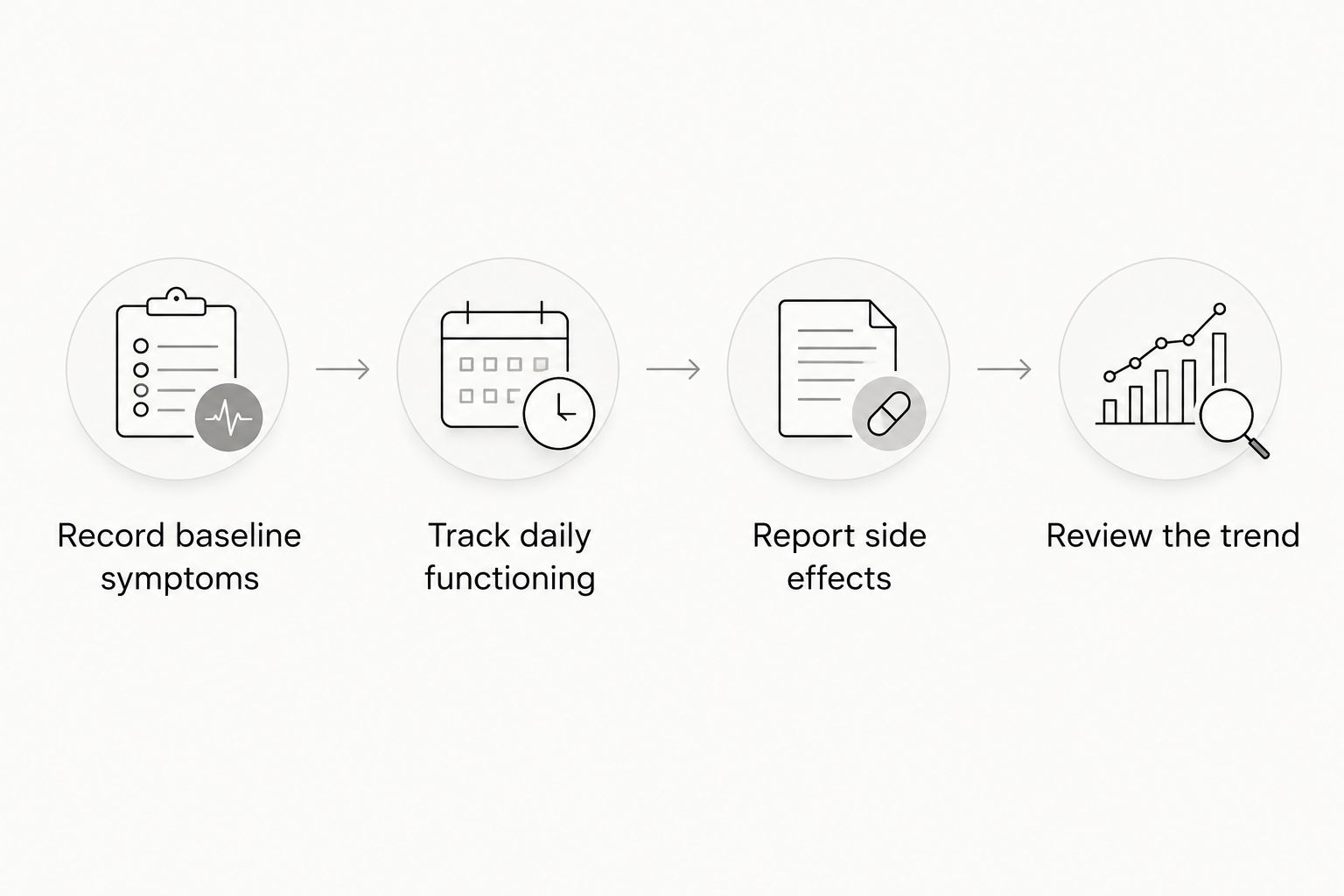
A practical tracking process makes those conversations more useful:
- Record baseline symptoms. Describe your mood and what depression prevents you from doing before treatment starts. Include sleep, daily responsibilities, and thoughts of self-harm.
- Track daily functioning. Note concrete changes, such as returning a call, preparing food, or completing a task. Record setbacks too; a useful account includes both.
- Report side effects. Tell the team about headaches, scalp discomfort, or other symptoms. Report changes rather than deciding on your own whether they are expected.
- Review the trend. Compare your current symptoms with your baseline during scheduled clinical reviews. Use the pattern across time, not memory of your best or worst day.
A symptom score is useful, but it is not the whole assessment. You might report a change in concentration without yet feeling a clear shift in mood, or feel somewhat better while still struggling with essential tasks. Bring those differences to the appointment so the clinician can interpret them in context.
Progress means meaningful improvement in your depression and functioning—not simply attending every session. Attendance matters, but it is a treatment activity rather than an outcome.
Why the time to improvement varies
TMS response is individual. The American Psychiatric Association's depression guidance and National Institute of Mental Health patient resources support assessing the whole clinical picture rather than treating the calendar as the only measure.
Factors your clinician needs to consider include:
- Treatment protocol. Stimulation settings and scheduling determine how the prescribed course is delivered. Different protocols should not be compared solely by appointment length.
- Treatment attendance. Missed appointments change the delivered schedule. Ask the treatment team how interruptions affect your plan rather than creating your own catch-up schedule.
- Diagnosis and symptom pattern. Depression symptoms, possible bipolar symptoms, and other psychiatric conditions affect assessment and treatment selection.
- Medication and health changes. Tell your clinician about medication changes, substance use, sleep disruption, and new medical problems during treatment.
- How response is measured. A mood rating, sleep report, and account of daily functioning describe different parts of your condition. Reviewing them together gives a more useful picture.
These factors do not let you calculate an exact response date. They explain why two people receiving TMS should not use each other's experience as a deadline.
When comparing TMS schedules in 2026, ask what evidence supports the proposed protocol for your condition. A shorter calendar is not, by itself, evidence that the treatment is the right choice for you.
What if you do not feel better early in treatment?
An early lack of improvement does not, by itself, establish that TMS has failed. Tell your psychiatrist what has and has not changed, then review the treatment plan together.
Do not stop attending, change psychiatric medication, or alter another treatment without discussing it with your prescriber. Your clinician needs an accurate account of what you have received and how you are feeling to make the next decision.
A useful review addresses:
- Whether your symptoms are unchanged, improving, or worsening.
- Whether side effects interfere with attending or completing sessions.
- Whether sleep, medication, or substance use has changed.
- Whether the diagnosis and treatment goals still fit your symptoms.
- What the next review point will be.
If depression worsens, contact your treatment team rather than waiting for the next scheduled progress check. New agitation, unusually elevated mood, markedly reduced need for sleep, or suicidal thoughts also need prompt clinical attention.
In the United States, call or text 988 for suicide or mental health crisis support. Call 911 or go to the nearest emergency department if you are in immediate danger. TMS appointments are not a substitute for emergency care.
When should you review the next step?
Agree on review points before treatment begins, then revisit them as symptoms change. The end of the prescribed course is an important assessment point, but safety concerns and significant deterioration require attention sooner.
If symptoms remain substantial, your psychiatrist should review the response, diagnosis, tolerability, and other treatment options. If symptoms improve, ask what follow-up care is appropriate. Neither outcome means you should independently stop other prescribed care.
Attuned Psychiatry is a fit for Decatur/Metro Atlanta patients seeking physician-led TMS care. The practice also offers medication management and SPRAVATO® treatment, allowing those approaches to be discussed during an individualized psychiatric assessment; that does not mean every patient is eligible for every treatment.
Bring your prior treatment history to that discussion, including medications tried, benefits, side effects, and reasons for stopping. For a 2026 consultation, an accurate treatment history is more useful than an expectation based on another patient's timeline.
Discuss your TMS treatment plan
Ask about suitability, appointment scheduling, symptom tracking, and clinical review points.
Can TMS work after the first session?
Several weeks is the more useful expectation for antidepressant improvement; one session is not a reliable test of whether TMS will work. Report any change you notice, but do not treat immediate improvement—or its absence—as a final result.
Does a shorter TMS session mean faster results?
Four to six weeks describes a common standard course, not the length of each appointment. A shorter session does not automatically establish a shorter time to symptom relief; ask about the complete protocol and its evidence.
Will the benefits last after treatment ends?
Four to six weeks of treatment does not guarantee permanent relief. Discuss ongoing psychiatric care and what to do if symptoms return, even when the initial course helps.
FAQ
How long does TMS therapy take to work for depression?
TMS generally takes several weeks to produce noticeable antidepressant improvement. A standard repetitive TMS course commonly involves appointments five days weekly for four to six weeks, but your response is individual.
Is it normal not to feel different after the first TMS appointment?
An absence of improvement after the first appointment does not establish treatment failure. TMS response is assessed across repeated treatments, while worsening symptoms should be reported promptly.
How many days a week do you go for TMS?
A standard repetitive TMS schedule commonly involves five appointments per week. Your prescribed protocol determines the actual schedule, so confirm it with your treatment team.
How will my psychiatrist know whether TMS is helping?
Your psychiatrist can assess symptom ratings, your description of daily functioning, side effects, and safety concerns. Comparing those findings with your pretreatment baseline is more useful than judging a single day.
Should I stop my antidepressant when TMS begins?
Do not stop or change prescribed medication without discussing it with your prescriber. Your psychiatrist should explain how medication fits into your TMS treatment plan.
What should I do if depression gets worse during TMS?
Contact your treatment team promptly if depression worsens. In the United States, call or text 988 for crisis support; call 911 or seek emergency care if you are in immediate danger.
Does Attuned Psychiatry offer TMS in Metro Atlanta?
Attuned Psychiatry is a physician-led practice in Decatur/Metro Atlanta offering TMS, medication management, and SPRAVATO® treatment. A psychiatric assessment determines which approach fits your condition and treatment history.
One last thing
Before beginning TMS in 2026, write down what improvement would look like in your actual day. Choose something depression currently disrupts, such as getting out of bed, finishing work, or taking care of yourself.
Bring that goal to your progress reviews. The question is not only whether you feel different; it is whether treatment is helping you function and reducing the symptoms that brought you to care.


