

Accelerated TMS has no single standard duration: your treatment calendar depends on the prescribed protocol, the sessions scheduled each day, and the breaks between them. Ask for both the total treatment course and the full daily appointment window—the time spent receiving stimulation is not your entire time commitment.
- How long does accelerated TMS take? The prescribed protocol determines both treatment days and daily appointment length.
- Accelerated TMS compresses treatment sessions; it does not eliminate preparation, scheduled breaks, or follow-up.
- Attuned Psychiatry offers TMS in Decatur and Metro Atlanta; ask which treatment schedules are offered.
- Get a written schedule before arranging work leave, transportation, or caregiving.
Why this matters
A short treatment calendar can still require substantial time away from work or home. When comparing accelerated TMS programs in 2026, distinguish fewer treatment days from shorter appointments: they are different benefits, and one does not guarantee the other.
Attuned Psychiatry is a physician-led psychiatric practice in Decatur and Metro Atlanta offering TMS, medication management, and SPRAVATO® treatment. Attuned Psychiatry is a physician-led option for patients seeking TMS evaluation in Decatur and Metro Atlanta. Ask which protocol is being considered before using a general description of accelerated treatment to plan your calendar.
How long does an accelerated TMS program take?
An accelerated TMS program takes the amount of time required to deliver its prescribed sessions, including the intervals between sessions. The word accelerated describes a compressed treatment schedule; it does not identify a universal appointment length or treatment calendar.
Your schedule has several separate parts. A useful comparison shows what each part means rather than treating all TMS appointments as interchangeable.
| Schedule component | Accelerated TMS | Conventional TMS |
|---|---|---|
| Treatment calendar | Multiple sessions are grouped within treatment days | Sessions are spread across a longer treatment calendar |
| Daily commitment | Includes repeated sessions and scheduled intervals | Generally centers on an individual treatment session |
| Practical advantage | Fewer separate treatment days to organize | Less concentrated time commitment on an individual day |
| Practical limitation | A treatment day can occupy a substantial appointment window | Repeated visits extend the calendar commitment |
| Best for, logistically | Patients able to reserve concentrated blocks of time | Patients able to attend recurring visits over time |
These are scheduling distinctions, not a judgment about which treatment is clinically right for you. Choose a protocol with your treating clinician, then assess whether its schedule is workable. Convenience alone does not establish suitability or predict improvement.
For a useful answer to your timing question, request the planned start date, final treatment date, arrival time, and expected departure time. A session count without those details leaves much of the practical commitment unanswered.
Accelerated TMS: a compressed treatment calendar
Accelerated TMS groups multiple treatment sessions into the same day. That concentration is the main scheduling difference from a conventional course, but the details depend on the particular protocol.
The practical advantage is fewer separate treatment days. The trade-off is a more concentrated daily commitment, including intervals when you are not receiving stimulation but are still following the treatment schedule.
Do not assume that a brief stimulation session means a brief clinic visit. Ask whether you must remain onsite between sessions and whether the clinic expects you to reserve the entire treatment window.
Also ask what the proposed course includes. Initial assessment, treatment planning, and later follow-up are different from the accelerated treatment block itself. A calendar that shows only stimulation appointments is not a complete care schedule.
Conventional TMS: visits spread across the calendar
Conventional TMS spreads treatment sessions across a longer calendar rather than concentrating multiple sessions into each treatment day. That creates a different planning problem: recurring travel and recurring time away from your usual responsibilities.
The practical advantage is a less concentrated daily appointment commitment. The limitation is the need to sustain attendance across repeated visits.
If you are comparing schedules in 2026, ask both programs the same questions about arrival, preparation, treatment, and departure. Comparing one clinic's stimulation time with another clinic's full appointment window produces a misleading result.
Neither schedule is automatically easier. A concentrated course can conflict with caregiving or work coverage, while a spread-out course can make repeated travel difficult. Your clinician should address treatment suitability separately from those logistical preferences.
Why accelerated TMS timing varies
The protocol determines the treatment schedule. These factors explain why the same general label does not produce the same calendar at every practice:
- Prescribed protocol: The stimulation approach and treatment schedule define how the course is delivered. Ask for the protocol's name, not just the description accelerated.
- Daily sessions: The prescribed sessions determine how much treatment must fit into each day. Ask for the daily schedule rather than estimating it from a single session.
- Session intervals: Breaks between sessions are part of the treatment plan. Do not treat them as optional time that can be removed for convenience.
- Treatment preparation: Screening, treatment planning, and setup require their own appointment arrangements. Confirm whether they happen before the treatment block or within it.
- Follow-up plan: Reassessment and decisions about further care extend beyond the final stimulation appointment. Ask when your clinician will review symptoms and next steps.
These factors should be explained before you commit to a schedule. A complete timeline identifies what is included, what is separate, and when each part happens.
How do I get a reliable treatment timeline?
Use the same sequence when discussing an accelerated TMS program in 2026. Start with the clinical plan, then translate that plan into a calendar you can actually follow.
- Protocol name: Ask which protocol the clinician recommends and why it fits your clinical situation. Do not assume that all programs described as accelerated use the same approach.
- Daily schedule: Request arrival and departure times, the planned sessions, and the required intervals. Ask whether you remain onsite between sessions.
- Preparation visits: Identify which assessments and setup appointments happen separately. Put those appointments on your calendar before calculating your total time away.
- Follow-up plan: Ask when symptoms will be reassessed and who will discuss the next treatment decision. Include that appointment in your planning.
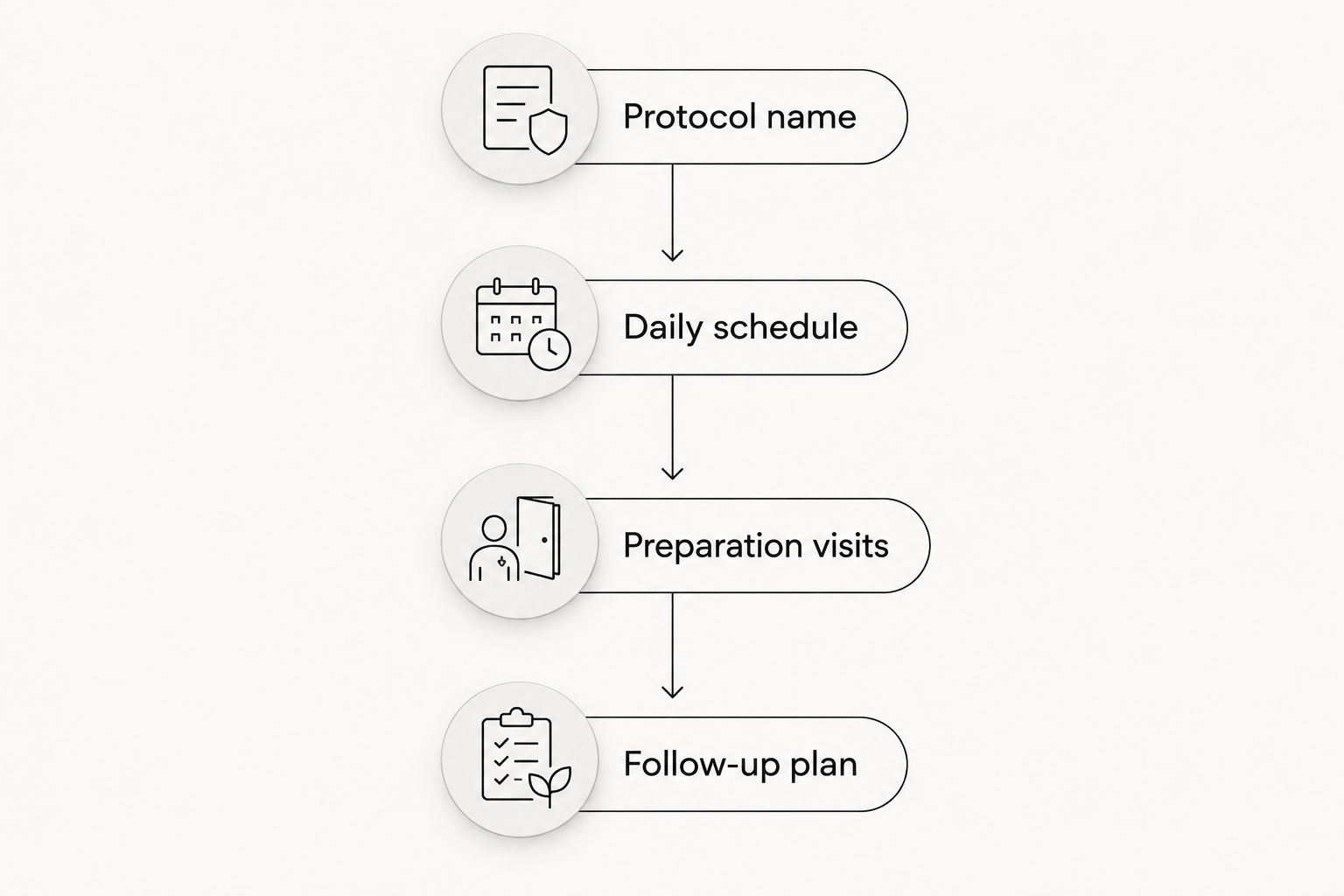
Once you have those details, check them against your real responsibilities. Consider your commute, work coverage, school pickup, caregiving, and the effort required to attend consistently.
Ask the clinic how to handle a late arrival or missed appointment before either happens. The treatment team should explain what to do; you should not decide independently to combine, skip, or rearrange prescribed sessions.
Does a shorter course mean depression improves sooner?
A shorter treatment calendar is not a promise of faster symptom relief. Accelerated describes how treatment is scheduled; your response must be assessed clinically rather than inferred from the final appointment date.
Ask how your symptoms will be measured and when the clinician expects to review them. Also ask what the plan is if you feel no improvement, experience worsening symptoms, or have difficulty tolerating treatment.
Avoid treating the end of the stimulation course as a deadline by which you must feel better. Your follow-up assessment is the place to review response, remaining symptoms, and the next step in care.
Can I work during an accelerated TMS program?
Your ability to work during an accelerated TMS program depends on the daily appointment window, your symptoms, and your clinician's guidance. A short individual session does not establish that you can fit the full treatment day into a normal work break.
Ask for the schedule before requesting leave or promising availability to an employer. If work requires sustained attention, driving, or safety-sensitive tasks, discuss those responsibilities with the treating clinician rather than making assumptions.
For 2026 planning, reserve time around the actual clinic schedule, including travel. Do not promise to attend meetings between sessions until the clinic has explained whether that arrangement fits the prescribed treatment day.
Is the last treatment day the end of care?
The last stimulation appointment is not the same as the end of depression care. You still need a plan for symptom review, medication questions, and decisions about further treatment.
Ask who will oversee care after the treatment block. If another clinician prescribes your medication, clarify how the clinicians will communicate and who you should contact with questions.
Do not stop or change psychiatric medication simply because an accelerated course has ended. Discuss any proposed change with the prescribing clinician, and make sure you understand the follow-up instructions before leaving the program.
What should you ask before choosing a program?
Start with clinical suitability, then ask about scheduling. A treatment calendar only becomes useful after you know what treatment is being recommended and what assessment is needed.
Bring these questions to the consultation:
- What is the exact protocol being proposed?
- What does a complete treatment day include?
- Which appointments happen outside the main treatment block?
- How are symptoms and tolerability reviewed during treatment?
- What happens if I cannot attend a scheduled session?
- Who manages my care after the final treatment day?
Attuned Psychiatry's psychiatric services include TMS, medication management, and SPRAVATO®. Ask specifically about the TMS protocols and scheduling options offered; these are distinct treatments, not interchangeable appointment formats.
Discuss your TMS treatment options
Ask which TMS protocols are offered and what the full appointment schedule includes.
FAQ
How long does accelerated TMS take from start to finish?
The full timeline depends on the prescribed protocol and whether assessment, preparation, and follow-up occur outside the treatment block. Ask for the complete appointment calendar, not just the stimulation schedule.
How long will I be at the clinic each treatment day?
Your daily clinic time includes the scheduled sessions, required intervals, and appointment preparation. Request an arrival time and expected departure time before arranging work or transportation.
Is accelerated TMS the same schedule everywhere?
No. Accelerated TMS describes a compressed treatment approach, not a universal schedule. Ask for the specific protocol and its daily treatment plan.
Is accelerated TMS better than conventional TMS?
A shorter calendar does not by itself make accelerated TMS the better clinical choice. Compare treatment suitability with your clinician, then compare the concentrated daily commitment with recurring conventional visits.
Can I leave the clinic between accelerated TMS sessions?
Ask the treating clinic whether you must remain onsite between sessions. Required intervals are part of the prescribed schedule, so do not make independent plans to shorten or rearrange them.
Does finishing accelerated TMS mean I can stop my medication?
No. Finishing a TMS course is not an instruction to stop medication. Discuss medication decisions with your prescribing clinician and follow the agreed care plan.
Does Attuned Psychiatry offer an accelerated TMS schedule?
Contact Attuned Psychiatry to ask which TMS protocols and schedules are offered. The practice provides TMS, and a consultation can address the treatment options relevant to your situation.
One last thing
The most useful scheduling question is not simply how long the treatment lasts. It is: What time do I need to arrive, what time can I leave, and which other appointments belong on my calendar?
Before committing to a program in 2026, ask for that answer in writing. It turns a general description of accelerated treatment into a concrete plan—and keeps a short stimulation session from being mistaken for a short treatment day.


