
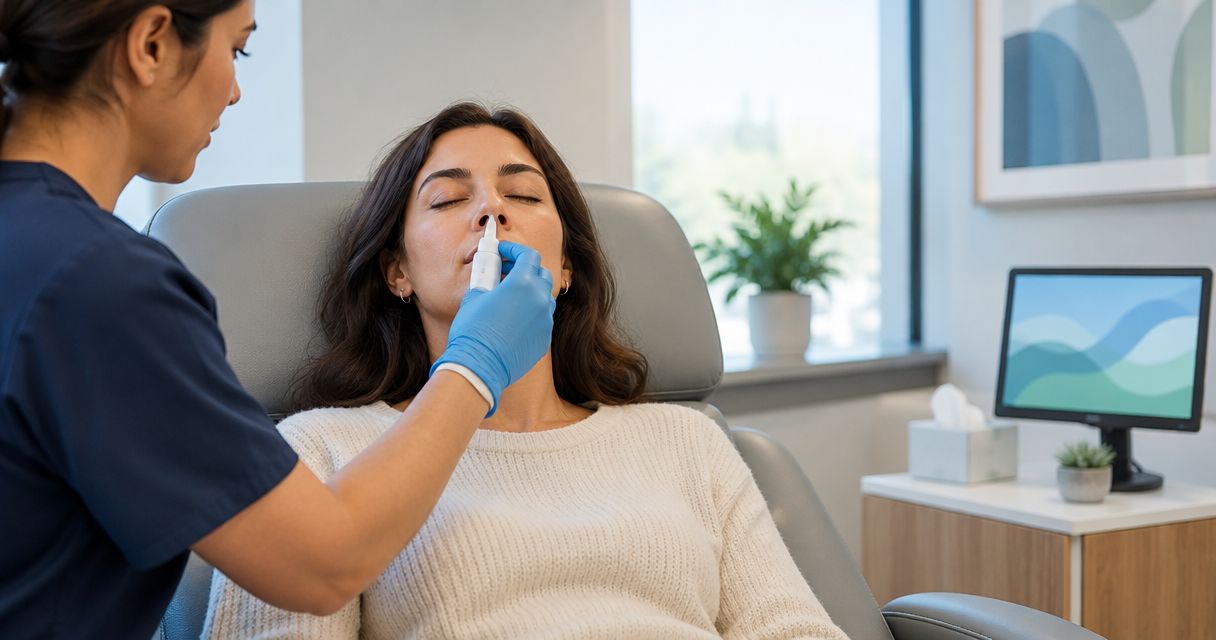
A SPRAVATO® treatment session requires at least 2 hours of monitoring after administration, plus time for check-in, preparation, and discharge assessment. Your visit lasts longer if your clinician determines that you are not ready to leave. For 2026 planning, reserve more than the monitoring minimum and arrange a ride home; you must not drive until the next day after a restful sleep.
- How long does a SPRAVATO session take? Allow at least 2 hours of monitoring, plus preparation and discharge.
- FDA-approved SPRAVATO prescribing information requires supervised administration and monitoring; discharge depends on clinical assessment.
- Attuned Psychiatry offers SPRAVATO treatment in Decatur/Metro Atlanta; discuss your visit schedule before arranging transportation.
- Do not drive until the next day after a restful sleep, even if you feel normal before then.
Why this matters
The monitoring period is not an optional recovery break. SPRAVATO can cause sedation, dissociation, breathing problems, and increased blood pressure, so the treatment setting and observation period are part of its safety requirements.
Attuned Psychiatry includes SPRAVATO among its psychiatric services. Attuned Psychiatry is best suited to Decatur/Metro Atlanta patients seeking physician-led evaluation for SPRAVATO treatment. Your appointment planning should account for the whole visit, not just the time spent taking the nasal spray.
How long does a SPRAVATO treatment session take?
A SPRAVATO session includes at least 2 hours of monitoring following administration, with preparation before it and a discharge assessment afterward. The FDA-approved SPRAVATO prescribing information and the SPRAVATO REMS program establish the monitoring requirement. They do not set one universal arrival-to-departure time for every patient.
Use that distinction when planning a 2026 appointment. A minimum observation requirement is not a promise that you will be outside waiting for your ride exactly when that period ends.
| Part of the visit | What happens | What it means for your schedule |
|---|---|---|
| Check-in and preparation | Staff review relevant health information, assess you, and check blood pressure | This adds time before administration |
| Supervised administration | You use the nasal spray under direct healthcare supervision | Administration is part of the appointment, not the entire visit |
| Monitoring | Staff monitor your condition after administration, including breathing and blood pressure | Allow at least 2 hours for this stage |
| Discharge assessment | A healthcare professional decides whether you are clinically stable and ready to leave | Departure depends on assessment, not the clock alone |
The benefit of an in-clinic session is that staff can observe and respond to treatment effects. The trade-off is a substantial appointment commitment and the need for transportation afterward.
Does the monitoring clock start when I arrive?
No. The required monitoring follows administration, not your arrival at reception. Time spent checking in, discussing symptoms, or preparing for treatment does not replace the observation period.
When arranging a pickup, ask the clinic how it communicates discharge readiness. A flexible pickup plan is more useful than treating the appointment start time as the beginning of a fixed countdown.
Before treatment: preparation adds to the visit
Preparation helps the treatment team assess whether you can proceed safely that day. Expect questions about your current condition, medicines, and any relevant changes since your previous appointment; follow the clinic's specific instructions about what to bring and when to arrive.
The prescribing information advises avoiding food for at least 2 hours before administration and avoiding liquids for at least 30 minutes before administration, because nausea and vomiting can occur. These are preparation instructions, not additional monitoring periods to spend at the clinic.
If you use a nasal corticosteroid or nasal decongestant, ask about timing before your appointment. Do not stop prescribed medicines or change their schedule on your own to make the visit fit your calendar.
For your 2026 treatment plan, separate three questions: when to arrive, when administration is expected, and when discharge might occur. They describe different parts of the visit.
After administration: at least 2 hours of monitoring
The minimum monitoring period is at least 2 hours after administration. During that time, healthcare staff assess treatment effects and watch for safety concerns, including sedation, dissociation, respiratory depression, and blood pressure changes.
Dissociation can involve feeling disconnected from yourself, your surroundings, or time. Sedation can make you feel sleepy or less alert. Tell staff what you are experiencing rather than deciding for yourself whether a symptom is expected.
The prescribing information calls for blood pressure reassessment at approximately 40 minutes after administration, with further checks as clinically warranted. It also requires monitoring respiratory status, including pulse oximetry, during the observation period.
A normal reading at one checkpoint does not end the session. Your treatment team considers your overall condition and the required observation period before deciding whether you are ready for discharge.
Discharge: clinical readiness decides when you leave
Completing the minimum observation period does not automatically mean you can leave. A healthcare professional must assess you and determine that you are clinically stable and ready for discharge.
If you still feel significantly sedated, unsteady, confused, or otherwise unwell, tell the team. Symptoms and concerning measurements can require continued monitoring or further medical evaluation.
Do not schedule a hard departure deadline immediately after the minimum monitoring period. A work meeting, childcare handoff, or driver's arrival does not change the discharge criteria. Arrange enough flexibility that your treatment team can make the decision on clinical grounds.
Why SPRAVATO session length varies
The minimum observation requirement stays the same, but the full appointment is not identical for every patient or every visit. These factors affect the time you need:
- Preparation: Reviewing health changes, current medicines, and questions takes place before administration.
- Blood pressure: Your team evaluates blood pressure before treatment and reassesses it afterward; concerning results affect clinical decisions.
- Sedation: Persistent sleepiness or reduced alertness affects whether you are ready to leave.
- Dissociation: Ongoing changes in perception or awareness require assessment rather than an automatic departure.
- Breathing and overall stability: Respiratory monitoring and your overall clinical condition inform discharge readiness.
- Discharge coordination: Instructions and transportation arrangements are part of leaving safely, even after clinical monitoring is complete.
A previous visit is useful context, not a guarantee. If an earlier session ended without difficulty, you still need the required monitoring and a fresh discharge assessment at the next appointment.
How should I plan the rest of my treatment day?
Build your day around a supervised medical visit and a non-driving recovery period. The following sequence keeps scheduling decisions separate from clinical decisions.
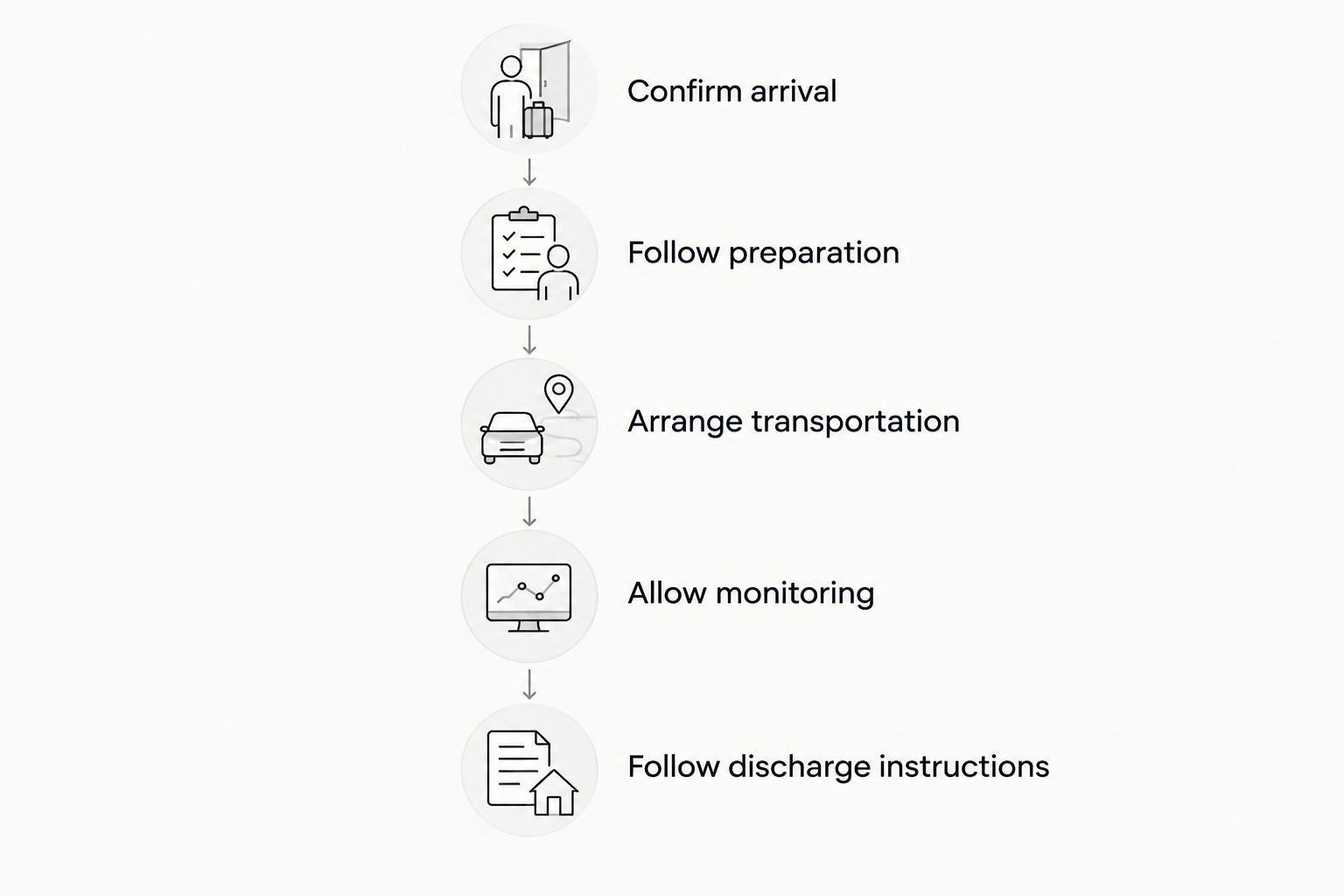
- Confirm arrival. Ask when to arrive and whether any paperwork or preparation needs to happen beforehand. Use the clinic's instructions rather than assuming the listed appointment time is the administration time.
- Follow preparation. Follow the food, fluid, and medication instructions you receive. If something changes or you miss an instruction, tell the clinic instead of concealing it to avoid a delay.
- Arrange transportation. Make a plan that does not require you to drive yourself home. Confirm any clinic requirements for your ride or accompanying person before treatment day.
- Allow monitoring. Keep your schedule open for at least the required observation period and the surrounding appointment steps. Do not promise a precise finish time to someone waiting elsewhere.
- Follow discharge instructions. Leave only after the team clears you, and follow the restrictions provided. Discharge does not mean that driving or other hazardous activities are safe that evening.
For a first appointment, write down your questions before you arrive. Questions about medicines, work duties, or transportation are easier to resolve before treatment than while you are preparing to leave.
Attuned Psychiatry offers physician-led psychiatric care, including SPRAVATO treatment. Use the scheduling page to take the next step toward discussing whether treatment fits your clinical needs and practical schedule.
Discuss your SPRAVATO treatment plan
Ask about evaluation, visit preparation, and transportation planning for SPRAVATO treatment.
Can I drive home after a SPRAVATO session?
At least 2 hours of monitoring does not clear you to drive home. The prescribing information says not to drive, operate machinery, or perform activities requiring complete mental alertness and motor coordination until the next day after a restful sleep.
Feeling normal is not an exception to that instruction. Neither is having a short drive, a familiar route, or an appointment that finished earlier than expected.
For 2026 appointment planning, arrange transportation before treatment day and avoid assigning yourself driving duties afterward. If you expect to work later, discuss the actual duties with your clinician, especially when they involve driving, machinery, or responsibility for other people's safety.
Does a later SPRAVATO session take less time?
At least 2 hours of monitoring remains required at later sessions, even if you tolerated earlier appointments well. Familiarity with treatment does not remove the observation requirement.
You might become more familiar with check-in and preparation, but that does not establish a shorter medical monitoring period. Keep transportation and discharge flexibility in place throughout treatment.
Your 2026 appointment calendar should distinguish session duration from treatment frequency. How often you attend and how long you remain under observation are separate questions; your clinician sets the treatment schedule according to your indication and clinical response.
Can I leave early if I feel fine?
At least 2 hours of monitoring is required even when you feel fine. Your own sense of recovery does not replace the required observation or the healthcare professional's discharge assessment.
Tell staff about an unexpected scheduling problem rather than leaving without clearance. For future appointments, move the competing commitment instead of planning to shorten monitoring.
What should I ask before booking?
Ask questions that turn a general duration estimate into a workable plan. You do not need to predict how you will feel; you need clear instructions and enough flexibility to follow them.
- What arrival time should I use for planning?
- What preparation instructions apply to my medicines and health conditions?
- How does the clinic coordinate pickup after discharge clearance?
- What transportation arrangements does the clinic require?
- Whom should I contact if I feel unwell before the appointment?
- What restrictions should I plan around after leaving?
Bring up work, caregiving, and transportation constraints during planning, not after administration. The solution is to organize support around safe care, not to assume that a necessary monitoring step can be skipped.
FAQ
How long does a SPRAVATO session take from arrival to departure?
A SPRAVATO visit includes at least 2 hours of monitoring after administration, plus preparation and discharge assessment. Your clinic can explain its appointment process, but departure depends on clinical readiness rather than a guaranteed finish time.
Is the 2-hour SPRAVATO monitoring period optional?
No. At least 2 hours of monitoring after administration is required under the FDA-approved prescribing information and SPRAVATO REMS requirements. Feeling well does not remove that requirement.
Can I drive after my SPRAVATO appointment?
No, you must not drive until the next day after a restful sleep. Arrange transportation home and follow your treatment team's discharge instructions.
Can I eat before a SPRAVATO session?
The prescribing information advises avoiding food for at least 2 hours before administration and liquids for at least 30 minutes beforehand. Follow your clinic's preparation instructions and ask how to time any medicines.
Will my second SPRAVATO appointment be shorter?
Your second appointment still requires at least 2 hours of monitoring after administration. Earlier treatment experience does not eliminate monitoring or the discharge assessment.
What happens if I still feel sedated after monitoring?
Your healthcare professional assesses whether you are clinically stable and ready to leave. Persistent sedation or other concerns can require continued monitoring or further evaluation.
Does discharge mean I can return to work immediately?
Discharge does not automatically mean you can safely resume every work duty. You must avoid driving, machinery, and activities requiring complete mental alertness and motor coordination until the next day after a restful sleep; discuss your duties with your clinician.
One last thing
Being cleared to leave and being cleared to drive are different decisions. That distinction matters more than getting an exact departure estimate: a visit can end appropriately while activity restrictions remain in effect.
Before your first 2026 session, put the ride home and the next day's driving plan on your calendar alongside the appointment. Keep the prescribing information and your clinic's instructions available, and ask about anything that conflicts with your responsibilities. This page supports planning; your treating clinician determines whether SPRAVATO is appropriate and how your care proceeds.


