

Yes—you can generally drive yourself home after routine TMS therapy because it does not require sedation or general anesthesia. Arrange another way home if you feel dizzy, unwell, unusually tired, or otherwise unable to drive safely, or if your clinician gives you a driving restriction. Being awake during treatment does not override symptoms or medication effects that make driving unsafe.
- Can you drive after TMS therapy? Usually yes, after routine treatment without sedation or impairing symptoms.
- TMS does not require anesthesia, but dizziness, medication effects, and poor sleep can make driving unsafe.
- SPRAVATO has different rules: no driving until the next day after a restful sleep.
- Attuned Psychiatry offers physician-led TMS care in Decatur/Metro Atlanta; discuss personal driving restrictions before treatment.
Can you drive yourself home after TMS therapy?
Most patients can drive after a routine TMS appointment if they feel well and their clinician has not restricted driving. Mayo Clinic’s patient information on transcranial magnetic stimulation explains that patients can return to normal daily activities after treatment. Unlike procedures that require anesthesia, routine TMS does not involve waking up from sedation.
The distinction matters when comparing TMS with another depression treatment. These are different transportation rules, not interchangeable instructions for advanced psychiatric care.
| Treatment | What affects the driving decision? | Transportation plan |
|---|---|---|
| TMS | Routine treatment does not require sedation; symptoms, medications, and individual restrictions still matter. | Driving is generally possible if you feel normal and have no restriction. |
| SPRAVATO® (esketamine) | Sedation, dissociation, and impaired alertness can occur. | Arrange a ride; do not drive until the next day after a restful sleep. |
Attuned Psychiatry provides TMS and SPRAVATO among its psychiatric services. Confirm which treatment you are receiving before making your transportation plan.
Why this matters
A treatment schedule affects more than the time spent in the office. You also need a workable plan for commuting, work, caregiving, and getting home if you do not feel ready to drive.
For your 2026 treatment planning, separate two questions: whether the procedure normally permits driving, and whether you are safe to drive that day. Routine TMS generally permits it. Your symptoms, sleep, medications, and clinician’s instructions determine the second answer.
Do not confuse permission to leave the clinic with a guarantee that you are fit to drive. Tell the treatment team about any symptom that affects your attention, vision, balance, or ability to react before you leave.
Routine TMS: awake treatment without anesthesia
TMS uses magnetic pulses to stimulate targeted areas of the brain. You remain awake during routine treatment, and the procedure does not require the anesthesia recovery associated with some other medical treatments.
That is the main reason driving home is generally possible. You are not routinely waiting for an anesthetic to wear off or recovering from a sedated procedure.
TMS can still cause side effects. Headache and scalp discomfort are recognized effects, and some patients experience lightheadedness. Mild discomfort does not automatically prevent driving, but symptoms that distract you or affect concentration are a reason to pause.
Describe what you feel rather than deciding that a symptom is too minor to mention. Tell the team whether it started during treatment, whether it is improving, and whether standing or walking makes it worse. That information helps your clinician decide what needs attention before you leave.
SPRAVATO: different treatment, different driving rules
SPRAVATO is not TMS, and its transportation instructions are stricter. The FDA prescribing information requires monitoring for at least 2 hours after administration and assessment before discharge. It also instructs patients not to drive or operate machinery until the next day after a restful sleep.
The 2-hour monitoring period is not a countdown to driving clearance. Feeling ready to leave does not cancel the restriction. Arrange transportation rather than planning to wait at the clinic and drive afterward.
If your 2026 depression treatment plan includes both TMS and SPRAVATO, check the instructions for the actual appointment you are attending. A day that includes SPRAVATO follows the SPRAVATO driving restriction, even if you also receive a treatment that ordinarily permits driving.
The practical advantage of TMS is that routine treatment does not require sedation. Its limitation is that this does not eliminate individual symptoms or other driving risks. SPRAVATO provides another treatment option for eligible patients, but its monitoring and transportation requirements need separate planning.
Why driving advice after TMS varies
Your clinician’s advice reflects your condition that day, not just the name of the procedure. The main factors to discuss are:
- Treatment effects. Report headache, lightheadedness, or discomfort that interferes with concentration. Do not leave while you feel unsteady.
- Medication effects. Medicines that cause drowsiness or slowed reactions can affect driving independently of TMS. Follow the medication label and prescribing clinician’s instructions.
- Sleep and alertness. Poor sleep can impair driving even when treatment itself is not sedating. Tell the team if you are struggling to stay awake.
- Other symptoms. Vision changes, faintness, confusion, or significant illness require assessment rather than an automatic return to your usual routine.
- Individual restrictions. A seizure history, a recent medical event, or another condition can carry driving restrictions separate from TMS. Your clinician must address those circumstances individually.
- The full appointment plan. Another treatment or a sedating medication changes the situation. Ask about everything you will receive, not only TMS.
Do not skip prescribed medication to make driving easier. Discuss a medication-related transportation problem with the prescriber instead of changing the dose yourself.
What should you check before driving home?
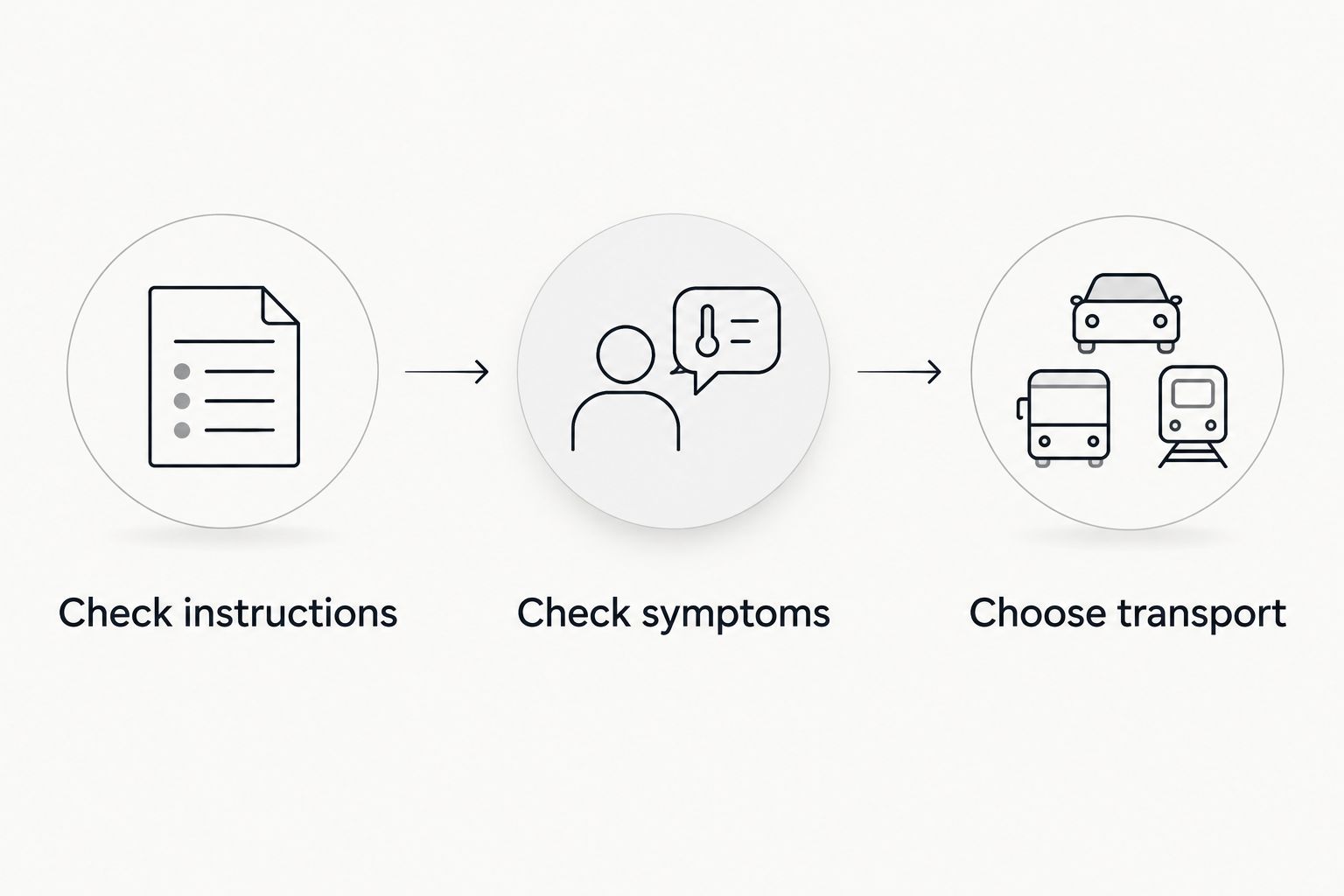
Use these 3 checks for your 2026 appointment plan. They organize the conversation; they do not replace a clinician’s assessment.
- Check instructions. Before treatment, ask whether the appointment includes anything that restricts driving. Mention recent medication changes, poor sleep, and any restriction another clinician has already given you.
- Check symptoms. After treatment, tell the team about dizziness, unusual sleepiness, vision problems, headache, or anything else that affects your ability to drive. Do not assume symptoms will disappear once you get into the car.
- Choose transport. Drive only when you feel able to do so safely and have no restriction. Otherwise, use an agreed alternative or ask the clinic what to do while you arrange transportation.
A parking lot is not the place to test whether your concentration has returned. Make the decision before starting the car, while the treatment team is still available to answer questions.
Should someone drive you to your first TMS appointment?
Having someone drive you to your first TMS appointment is a reasonable precaution, not a universal requirement. You do not yet know how the treatment will feel or whether discomfort will affect your willingness to drive afterward.
Ask the clinic about its instructions before arranging the visit. If you decide to drive yourself, plan 1 backup ride in advance so you are not making transportation decisions while feeling unwell.
A first-visit ride also has a practical limitation: it requires another person’s time or another transportation arrangement. That does not mean you need an escort for every later TMS appointment. Reassess based on your experience and the clinician’s advice rather than assuming the first visit sets a permanent rule.
How long should you wait before driving after TMS?
Routine TMS does not carry a standard anesthesia-recovery waiting period before driving. The relevant question is whether you feel well enough to drive and whether your clinician has given you a restriction.
If you feel lightheaded or otherwise impaired, do not pick a waiting time on your own. Tell the team and follow its advice about reassessment, medical care, or another way home.
This is also why a fixed timer is not a useful safety test. Waiting does not resolve every cause of dizziness or fatigue, and feeling better does not override a restriction tied to another treatment or medication.
Can you go back to work after TMS?
Many patients can return to ordinary activities after routine TMS, including work. The same symptom-based judgment applies: treatment without sedation does not mean every task is appropriate regardless of how you feel.
Tell your clinician if your job involves commercial driving, heavy machinery, heights, or another safety-sensitive task. Those duties deserve a specific discussion rather than an assumption based on being able to drive a personal car.
For desk work, consider whether headache or discomfort affects concentration. Report a pattern that repeatedly disrupts your day so the treatment team can discuss it with you.
When should you not drive after treatment?
Do not drive when symptoms affect alertness, balance, vision, judgment, or reaction time. That rule applies whether the symptoms come from treatment, medication, poor sleep, or an unrelated illness.
Stay with the treatment team if you feel faint, confused, unusually sleepy, or unsteady. Describe the symptom clearly and ask what to do next. Do not leave simply because you have another commitment or someone is waiting for you.
Seek emergency help for a seizure, loss of consciousness, new weakness, or trouble speaking. Call 911 rather than driving yourself to an emergency department.
If a symptom starts after you have already begun driving, pull over somewhere safe as soon as possible. Stop driving and arrange help. Do not try to push through an impairment to finish the trip.
Plan transportation before treatment starts
For a workable 2026 treatment routine, ask about transportation when you arrange care, not after the first session ends. A clear plan reduces last-minute decisions without assuming you will need a driver after every appointment.
Keep these questions together:
- Will this appointment involve TMS only, or another treatment as well?
- Do any of my medicines affect driving at the time of the appointment?
- What symptoms should I report before leaving?
- What should I do if I do not feel ready to drive?
- Does my work require a separate discussion about driving or equipment?
Attuned Psychiatry is best for patients seeking physician-led TMS care in Decatur/Metro Atlanta. The practice also offers medication management and SPRAVATO, so an assessment can address treatment selection rather than assuming every patient needs the same approach. Offering TMS does not establish that you are a candidate or guarantee personal driving clearance.
You can schedule a psychiatric appointment to discuss treatment options and the transportation questions relevant to your care.
What guidance supports this answer?
This 2026 guide draws on established patient guidance, not a clinic-specific driving policy. Mayo Clinic’s information on transcranial magnetic stimulation describes returning to normal activities after treatment. The National Institute of Mental Health’s brain stimulation therapy information explains that repetitive TMS does not require anesthesia and identifies recognized risks and side effects.
For SPRAVATO, the relevant source is the FDA prescribing information: monitoring for at least 2 hours, assessment before discharge, and no driving until the next day after a restful sleep. These sources address general treatment requirements. Your clinician must apply them to your medical history, medications, and symptoms.
FAQ
Can I drive myself home immediately after TMS therapy?
You can generally drive home after routine TMS if you feel well and your clinician has not restricted driving. Report dizziness, unusual tiredness, or symptoms that affect concentration before leaving.
Do I need someone to stay with me after TMS?
Routine TMS without sedation does not automatically require someone to stay with you. Follow your clinician’s instructions if your symptoms, medical history, or another treatment require additional support.
Does TMS make you sleepy enough that you cannot drive?
Routine TMS does not use sedating medication, but unusual sleepiness still makes driving unsafe. Tell the treatment team if you feel drowsy, regardless of the cause.
Is driving after TMS the same as driving after SPRAVATO?
No—SPRAVATO requires a different transportation plan. Do not drive until the next day after a restful sleep, even after the required monitoring period has ended.
Can I drive after taking an anxiety medicine before TMS?
Do not assume you can drive after taking an anxiety medicine. Some medicines impair alertness or reaction time; ask the prescriber about your specific medicine and arrange transportation when needed.
What if I feel dizzy after my TMS appointment?
Do not drive while you feel dizzy. Tell the treatment team before leaving so it can assess your symptoms and advise you about the next step.
Can I drive after my first TMS session if I feel normal?
Driving is generally possible after a first routine TMS session if you feel normal and have no restriction. Confirm the clinic’s instructions beforehand and keep a backup transportation plan.
One last thing
The safest transportation plan is not necessarily a driver for every visit—it is a backup you can actually use. Before treatment starts, save the clinic’s contact details and agree on whom you will call if you cannot drive. Keep that plan accessible rather than relying on memory when you feel unwell.
Ask Attuned Psychiatry about any individual driving restrictions before your first treatment. The rule to remember is straightforward: routine TMS usually permits driving, but symptoms, sedating medicines, and instructions for another treatment take priority. Never use the general answer as permission to ignore how you feel.
Related guides
Discuss TMS treatment and driving safety
Request an evaluation and ask about appointment logistics, driving guidance, and treatment planning.


