
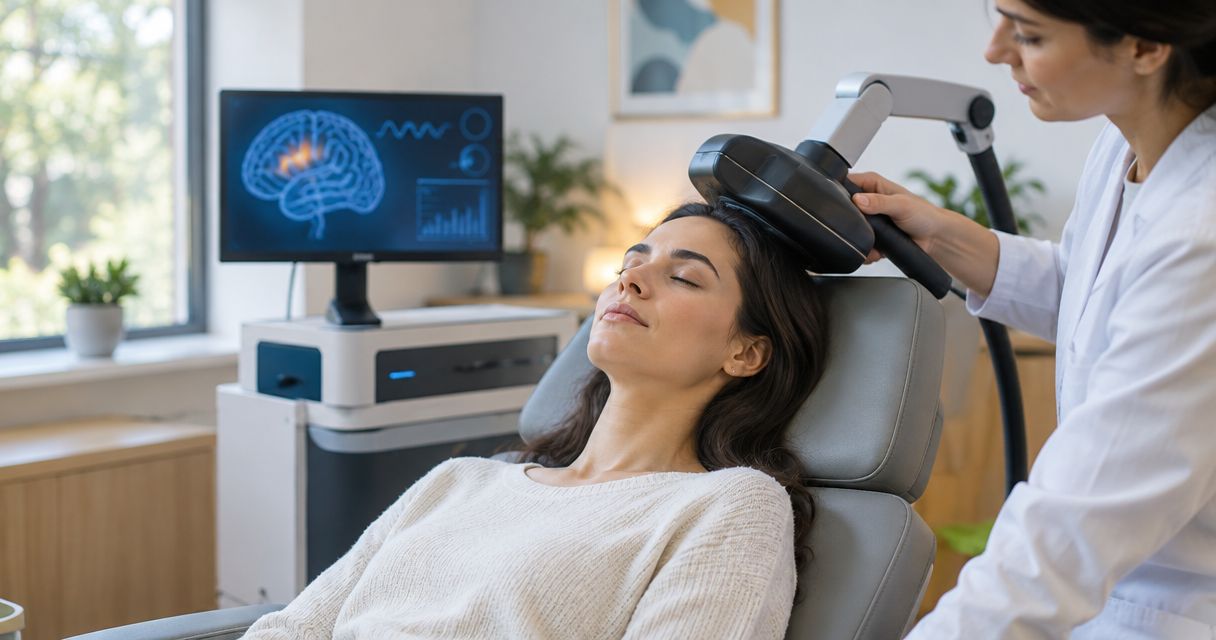
Yes, TMS therapy can help with anxiety symptoms, particularly when anxiety occurs alongside major depression, but it is not a standard first treatment for every anxiety disorder. Whether it fits your situation depends on your diagnosis, previous treatment, and the specific device and treatment protocol—not simply on having persistent worry.
- Can TMS therapy help with anxiety? Yes, particularly with depression-related anxiety; results depend on diagnosis and protocol.
- TMS for generalized anxiety disorder alone is generally off-label, unlike certain device-specific indications involving anxious depression.
- Attuned Psychiatry offers physician-led psychiatric care, including TMS, for patients in Decatur and Metro Atlanta.
- Ask about expected benefits, side effects, treatment schedules, and alternatives before choosing brain stimulation.
Can TMS therapy help with anxiety?
TMS has a clearer clinical role when anxiety accompanies major depression than when anxiety is the only diagnosis. Some FDA-cleared TMS devices have indications that include reducing anxiety symptoms in adults with major depressive disorder. That does not mean every TMS device is cleared to treat generalized anxiety disorder.
Your evaluation should identify which condition is driving the treatment decision. A review of your symptoms, medication history, and previous therapy helps separate depression with anxiety from a primary anxiety disorder.
Attuned Psychiatry's psychiatric services include medication management, TMS, and SPRAVATO® treatment. Those services address different clinical needs; having anxiety does not make them interchangeable.
| Clinical situation | Best fit for a TMS discussion | Potential benefit | Important limitation |
|---|---|---|---|
| Depression with anxiety | Patients being evaluated for depression treatment | Certain device-specific indications include anxiety symptom reduction in major depression | Improvement is not guaranteed, and device labeling matters |
| Generalized anxiety disorder without major depression | Patients considering a specialist-led, off-label approach | Research has examined anxiety symptom improvement | Evidence and treatment protocols are less established than for depression |
| Obsessive-compulsive disorder | Patients being evaluated for an OCD-specific protocol | Certain TMS devices have an FDA-cleared OCD indication | OCD is a distinct diagnosis; its clearance does not establish treatment for every anxiety disorder |
The FDA clears particular devices for particular uses. In a 2026 treatment discussion, ask for the exact indication rather than accepting a general statement that TMS is approved for anxiety.
Sources: FDA device-specific TMS labeling; National Institute of Mental Health, Brain Stimulation Therapies.
Why this matters
Anxiety is a symptom as well as a feature of several different diagnoses. Constant worry, panic attacks, intrusive thoughts, and anxious distress during depression do not automatically call for the same treatment.
A treatment plan built around the wrong diagnosis can miss the problem you most need addressed. Before discussing a machine or a stimulation setting, your clinician should clarify what is being treated and how improvement will be measured.
For your 2026 treatment plan, the useful question is not just whether TMS reduces anxiety. It is whether the evidence, safety profile, and practical demands fit your particular condition.
Depression with anxiety: where TMS has a clearer role
Depression can occur with pronounced worry, tension, restlessness, or a sense that something terrible will happen. Clinicians sometimes describe this combination as depression with anxious distress, although a separate anxiety disorder can also coexist.
When depression is the treatment target, anxiety symptoms can improve alongside mood symptoms. Certain TMS device indications specifically address anxiety symptoms accompanying major depressive disorder. That is different from a blanket indication for anxiety disorders.
The potential advantage is a noninvasive depression treatment that does not require taking another daily medication. The limitation is that anxiety may remain even when depression improves, so psychotherapy or medication management can still be part of your care.
Tell your clinician which symptoms interfere most with daily life. If your mood improves but you still avoid driving, cannot stop checking, or experience panic attacks, those symptoms deserve their own assessment rather than being treated as an incomplete depression score.
Generalized anxiety disorder: an off-label discussion
For generalized anxiety disorder without major depression, TMS is generally an off-label treatment. Off-label means the proposed use falls outside the device's specific FDA-cleared indication; it does not, by itself, establish that treatment is ineffective or inappropriate.
However, studies of TMS for anxiety differ in the brain regions targeted, stimulation settings, treatment schedules, and patient groups. Those differences limit how confidently a result from one protocol can be applied to another.
Ask your clinician to explain the evidence for the exact approach being proposed. A general claim that brain stimulation helps anxiety is not enough to judge whether that treatment fits your diagnosis.
For primary generalized anxiety disorder, established treatments include cognitive behavioral therapy and medications such as SSRIs or SNRIs. These approaches also have limitations: therapy requires active participation, and medications can cause side effects or fail to provide adequate relief.
Why the effect of TMS on anxiety varies
Your diagnosis is only part of the decision. These factors also shape how a clinician interprets the evidence and plans treatment:
- The condition being treated. Anxiety accompanying depression is not the same treatment target as generalized anxiety disorder or OCD.
- The device and protocol. Stimulation location, frequency, and treatment pattern matter; TMS is not a single identical procedure.
- Previous treatment. Your response to medications and psychotherapy helps determine what to consider next.
- Coexisting conditions. Bipolar symptoms, substance use, sleep problems, and other health conditions can change the treatment plan.
- Treatment consistency. A plan requiring repeated office visits must fit your schedule well enough for you to attend.
- How outcomes are measured. Depression scores, anxiety scores, and daily functioning answer different questions about improvement.
None of these factors guarantees a response. Together, they provide a better basis for a decision than testimonials or a promise that one treatment works for everyone.
How do you find out whether TMS fits your anxiety symptoms?
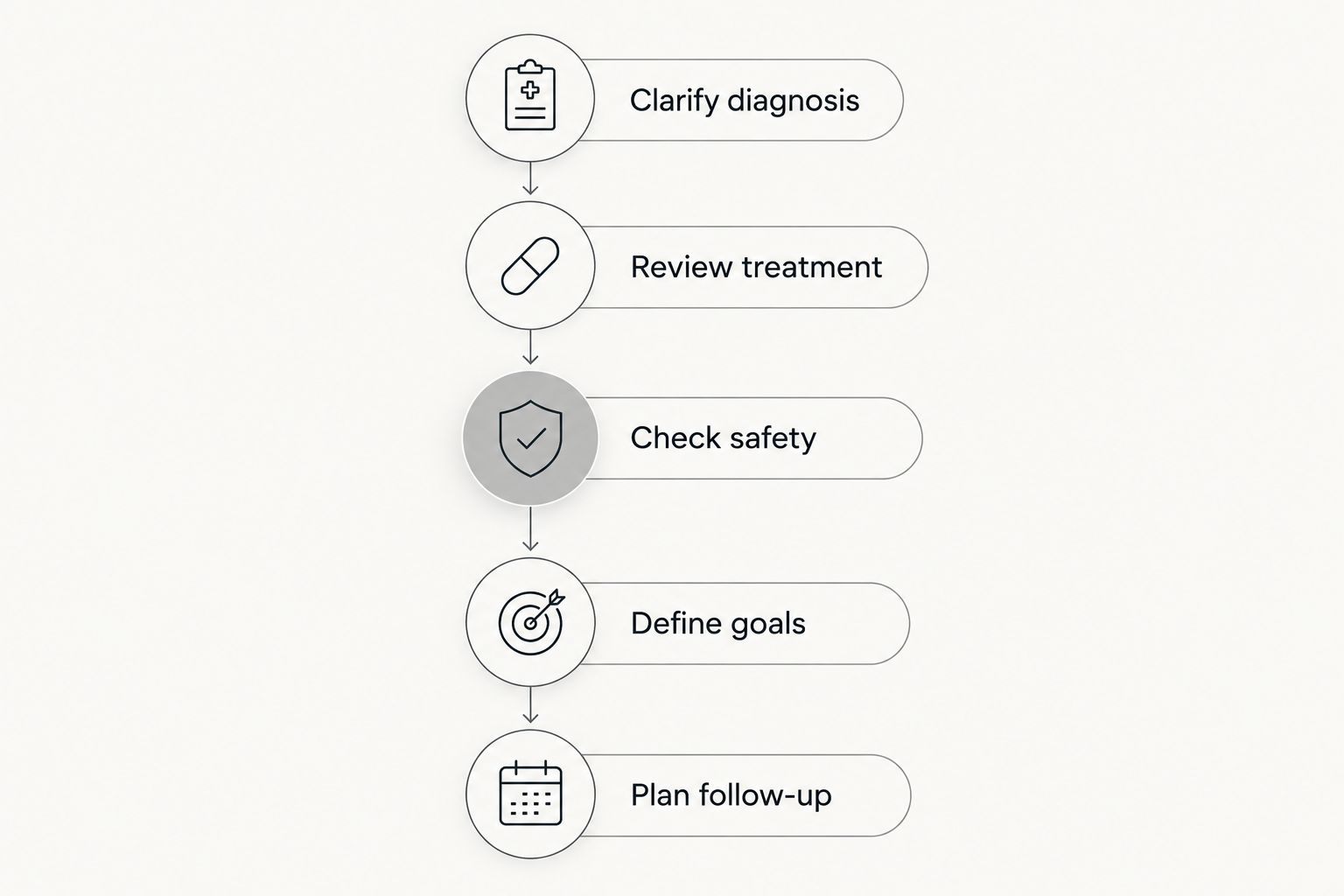
A useful evaluation follows a clinical sequence, not a sales sequence. For a 2026 consultation, bring enough detail to connect the proposed treatment with your actual treatment history.
- Clarify diagnosis. Describe worry, panic, low mood, intrusive thoughts, sleep changes, and any periods of unusually elevated mood or reduced need for sleep.
- Review treatment. Bring medication names, doses if known, how long you took them, benefits, side effects, and previous psychotherapy approaches.
- Check safety. Disclose seizures, implanted devices, metal near the head, neurological conditions, and all medications or substances you use.
- Define goals. Identify what meaningful improvement would look like, such as returning to work or being able to complete everyday tasks.
- Plan follow-up. Agree on symptom tracking, reassessment, and what happens if improvement is limited or symptoms worsen.
Bring questions as well as records. Ask whether the proposed use is within the device's cleared indication, which symptoms it targets, and what would lead the clinician to change course.
Attuned Psychiatry is best suited to Decatur and Metro Atlanta patients seeking physician-led evaluation of depression treatment options, including TMS. The practice offers TMS, medication management, and SPRAVATO® treatment; your evaluation should determine which approach fits your condition rather than treating those services as substitutes.
Schedule a psychiatric evaluation
Discuss your diagnosis, treatment history, and whether TMS fits your symptoms.
What does a typical TMS treatment course involve?
Traditional rTMS schedules described by the National Institute of Mental Health involve repeated weekday appointments over several weeks. Confirm the session length and course schedule for your prescribed protocol.
Some newer protocols use shorter sessions or different schedules. Ask for your proposed schedule in writing rather than assuming that another person's experience describes the treatment you would receive.
You remain awake during standard TMS treatment, and it generally does not require anesthesia. The repeated visits can still create a substantial scheduling burden, especially when you need to coordinate work, caregiving, or transportation.
For planning in 2026, confirm appointment length separately from stimulation time. Setup, assessment, and discussions with the treatment team are not necessarily included in the time the device is delivering stimulation.
Source: National Institute of Mental Health, Brain Stimulation Therapies.
What are the benefits and drawbacks of TMS?
TMS provides a noninvasive treatment option for appropriate patients, particularly in depression care. It avoids the need for anesthesia during standard treatment and does not involve taking a medication into the bloodstream.
Those features do not make it risk-free or universally effective. The strongest reason to choose TMS is a sound clinical indication—not the assumption that a nonmedication treatment has no drawbacks.
Common side effects include scalp discomfort and headache. Some people experience facial muscle twitching or lightheadedness during treatment, and hearing protection is used because the equipment produces loud clicking sounds.
Seizures are a rare but serious risk. A history of seizures, certain implants, and changes in medications or substance use require careful review; they should never be left off an intake form because they seem unrelated to anxiety.
Tell the treatment team about worsening agitation, major sleep changes, or mood elevation. Do not stop prescribed medications on your own to prepare for TMS.
Sources: National Institute of Mental Health, Brain Stimulation Therapies; FDA TMS device safety labeling.
Is TMS better than medication for anxiety?
TMS is not established as a better treatment than medication for anxiety disorders overall. Medication and cognitive behavioral therapy have established roles in anxiety care; TMS becomes a more specific discussion when depression, previous treatment response, and device indications support it.
The comparison is not simply medication versus a machine. Ask which approach fits your diagnosis, what benefits are realistic, and what side effects or visit requirements you would accept.
Can TMS make anxiety worse?
Some people experience discomfort or distress around treatment, and new or worsening anxiety needs clinical review. Do not assume worsening symptoms are proof that treatment is working or something you must tolerate without discussion.
Report the timing of symptoms, sleep changes, medication changes, and any unusual increase in energy. That information helps your clinician decide whether to adjust the plan or investigate another cause.
How will you know whether TMS is helping your anxiety?
Improvement should appear in both symptom tracking and daily functioning. Ask your clinician to measure anxiety separately from depression so that progress in one area does not hide persistent problems in the other.
Choose concrete goals before treatment begins. Being able to attend meetings, leave home, or sleep without prolonged worry can make a score change more meaningful.
FAQ
Can TMS therapy help with anxiety if I also have depression?
Yes, TMS can help anxiety symptoms that occur alongside major depression, and certain devices have cleared indications involving those symptoms. Your diagnosis and the specific device protocol determine whether that evidence applies to you.
Is TMS FDA-cleared for generalized anxiety disorder?
TMS for generalized anxiety disorder alone is generally off-label. Certain device indications involving anxiety symptoms in major depression should not be confused with a general anxiety-disorder clearance.
How long does a TMS treatment course take?
Traditional rTMS courses involve repeated weekday appointments over several weeks. Protocols have different session lengths and schedules, so confirm the exact plan with your clinician.
Do I need to stop anxiety medication before TMS?
Do not stop anxiety medication on your own before TMS. Your clinician should review your medications and explain whether any changes are needed for safety or treatment planning.
Does TMS treatment hurt?
TMS can cause scalp discomfort or headache, particularly around treatment sessions. Tell the treatment team about pain so they can assess it and discuss adjustments.
Can TMS replace therapy for anxiety?
TMS does not automatically replace psychotherapy for anxiety. Therapy can address avoidance, worry patterns, and other symptoms that still need treatment even when depression improves.
Who should evaluate me for TMS?
A clinician experienced in psychiatric diagnosis and TMS should evaluate whether treatment fits your symptoms and medical history. Attuned Psychiatry offers physician-led psychiatric care and TMS in Decatur and Metro Atlanta.
One last thing
Ask for separate anxiety and depression goals before your first treatment. Feeling less depressed does not necessarily mean panic, intrusive thoughts, or persistent worry have resolved.
For your 2026 treatment decision, a useful plan names the diagnosis, explains the protocol, and states when progress will be reviewed. That is more informative than a general promise that TMS treats anxiety.


