

Best for physician-led psychiatric care in Decatur/Metro Atlanta: Attuned Psychiatry. Best for care connected to hospital services: a hospital-based TMS program. Best for a treatment-focused outpatient setting: a dedicated TMS clinic. This 2026 guide compares these care routes so you can choose a provider by clinical fit, not an unsupported league table.
- Attuned Psychiatry offers TMS, medication management, and SPRAVATO® within a physician-led psychiatric practice.
- Compare the best TMS therapy providers Atlanta offers by clinical oversight, treatment planning, and follow-up.
- Hospital-based programs and dedicated TMS clinics serve different care needs; confirm each provider’s actual services.
- Choose a TMS provider after a psychiatric evaluation, not from a device name or promised outcome.
Why this matters
TMS, or transcranial magnetic stimulation, uses magnetic pulses to stimulate targeted brain regions. It is an established treatment option for depression, including depression that has not improved adequately with medication. A consultation determines whether it fits your diagnosis, treatment history, and safety considerations.
The machine is only part of the decision. You also need a clinician who can explain the treatment plan, track symptoms, manage problems, and decide what happens if improvement is incomplete.
For your 2026 shortlist, prioritize the treatment plan over the provider’s promotional claims. A convenient location matters, but convenience does not replace psychiatric assessment or clear clinical responsibility.
What makes the best TMS therapy provider?
Use these criteria before comparing names or booking a consultation:
- Psychiatric oversight: Identify who evaluates you, prescribes treatment, and reviews your progress.
- Diagnostic assessment: Look for a review of depression symptoms, previous treatments, other psychiatric conditions, and relevant medical history.
- Treatment selection: Ask why the proposed protocol fits your situation and what alternatives deserve consideration.
- Safety screening: Expect questions about implants, seizure history, medications, and other factors relevant to TMS.
- Outcome tracking: Ask how symptoms and daily functioning will be measured throughout treatment.
- Practical continuity: Confirm the visit schedule, communication process, and plan after the initial course.
A provider should explain these points in plain language. You should leave the consultation understanding both the proposed treatment and the reasons behind it.
Atlanta TMS care options at a glance
This comparison separates a named local practice from two provider categories. The categories describe care settings, not verified service lists for every clinic operating within them.
| Provider or care setting | Best for | Standout consideration | Key limitation |
|---|---|---|---|
| Attuned Psychiatry | Patients seeking physician-led psychiatric care in Decatur/Metro Atlanta | Offers medication management, TMS, and SPRAVATO® | Your evaluation must establish which treatment fits; the service list alone cannot decide |
| Hospital-based TMS program | Patients who need coordination with hospital services | Opportunity to assess how TMS connects with a broader medical system | Hospital affiliation does not establish the actual coordination process |
| Dedicated outpatient TMS clinic | Patients prioritizing a treatment-focused outpatient setting | Opportunity to examine scheduling and treatment-delivery arrangements | Broader psychiatric management requires explicit confirmation |
Best does not mean the same thing for every patient. A person with an established psychiatrist needs a different coordination plan from someone seeking both a new psychiatric evaluation and advanced depression treatment.
1. Attuned Psychiatry: best for physician-led psychiatric care
Attuned Psychiatry is a physician-led practice in Decatur/Metro Atlanta offering medication management, TMS, and SPRAVATO® for patients with treatment-resistant depression and other psychiatric conditions. Its stated services make it relevant when you want to discuss several psychiatric treatment options rather than approach TMS as an isolated procedure.
That distinction matters when depression has not improved with previous treatment. The next decision is not automatically another medication or automatically TMS; it starts with reviewing the diagnosis and what has already been tried.
Attuned Psychiatry pros
- Physician-led psychiatric practice.
- Explicitly offers TMS treatment.
- Offers medication management and SPRAVATO® as additional treatment options.
- Serves the Decatur/Metro Atlanta area.
Attuned Psychiatry cons
- The practice’s location must work with your prescribed visit schedule.
- Offering several treatments does not establish which one is appropriate for you.
- You still need an individualized explanation of the proposed protocol, monitoring, and follow-up.
Best for: Patients seeking physician-led evaluation and discussion of TMS alongside other psychiatric treatment options.
For a 2026 consultation, bring a medication history that includes treatment duration, benefit, side effects, and reasons for stopping. Include previous psychotherapy and any prior brain-stimulation treatment. That history supports a more useful discussion than a list of medication names alone.
Verdict: Hold the treatment decision until your psychiatric evaluation establishes whether TMS fits.
2. Hospital-based TMS programs: best for hospital-connected care
A hospital-based TMS program delivers treatment within a hospital or affiliated healthcare system. This care setting deserves consideration when your decision depends on coordination with other medical or psychiatric services.
Do not treat the hospital name as proof that coordination happens automatically. Ask which clinicians communicate, how outside records enter the assessment, and who remains responsible for your ongoing psychiatric care.
Hospital-based TMS program pros
- A relevant setting to investigate when hospital-connected care is a priority.
- Provides a defined institutional setting for treatment.
- Lets you ask directly about connections with other services in that system.
Hospital-based TMS program cons
- Affiliation alone does not explain how your clinicians will coordinate.
- Referral requirements and appointment arrangements need confirmation.
- Your usual psychiatrist’s role still needs to be defined.
Best for: Patients whose treatment decision depends on a clear connection between TMS and hospital-based services.
Ask a specific question: who will contact your existing clinician if symptoms change during treatment? A useful answer identifies a responsible clinician and a communication process, not simply the name of a department.
Verdict: Hold until the program explains the coordination your situation requires.
3. Dedicated TMS clinics: best for a treatment-focused setting
A dedicated outpatient TMS clinic centers its services on delivering TMS. This care model belongs on your shortlist when you already have psychiatric care and want to examine how a separate treatment provider would fit into that plan.
A focused service does not remove the need for psychiatric oversight. Confirm who assesses eligibility, who reviews changes in symptoms, and how the clinic communicates with your prescribing clinician.
Dedicated TMS clinic pros
- A focused setting for discussing TMS delivery.
- Lets you evaluate the treatment schedule as a distinct part of your care.
- Provides a clear opportunity to define responsibilities between the clinic and your existing psychiatrist.
Dedicated TMS clinic cons
- Do not assume medication management or psychotherapy is included.
- Split care requires an explicit communication plan.
- A device-centered explanation is not a substitute for an individualized treatment rationale.
Best for: Patients with established psychiatric care who want a clearly coordinated outpatient TMS service.
Verdict: Hold until responsibility for treatment monitoring and ongoing psychiatric care is explicit.
How these recommendations are organized
The recommendations follow the criteria above: psychiatric oversight, diagnostic assessment, treatment selection, safety screening, outcome tracking, and continuity. They distinguish care settings rather than assign unsupported quality scores.
The named practice appears first because its stated physician-led model and treatment options directly address the clinical decisions discussed here. That placement is not a claim that it produces better outcomes than every other Atlanta provider.
For your 2026 decision, compare actual answers from consultations. A recognizable organization, a particular device, or a polished website does not establish your likely response to treatment.
What to ask before starting TMS
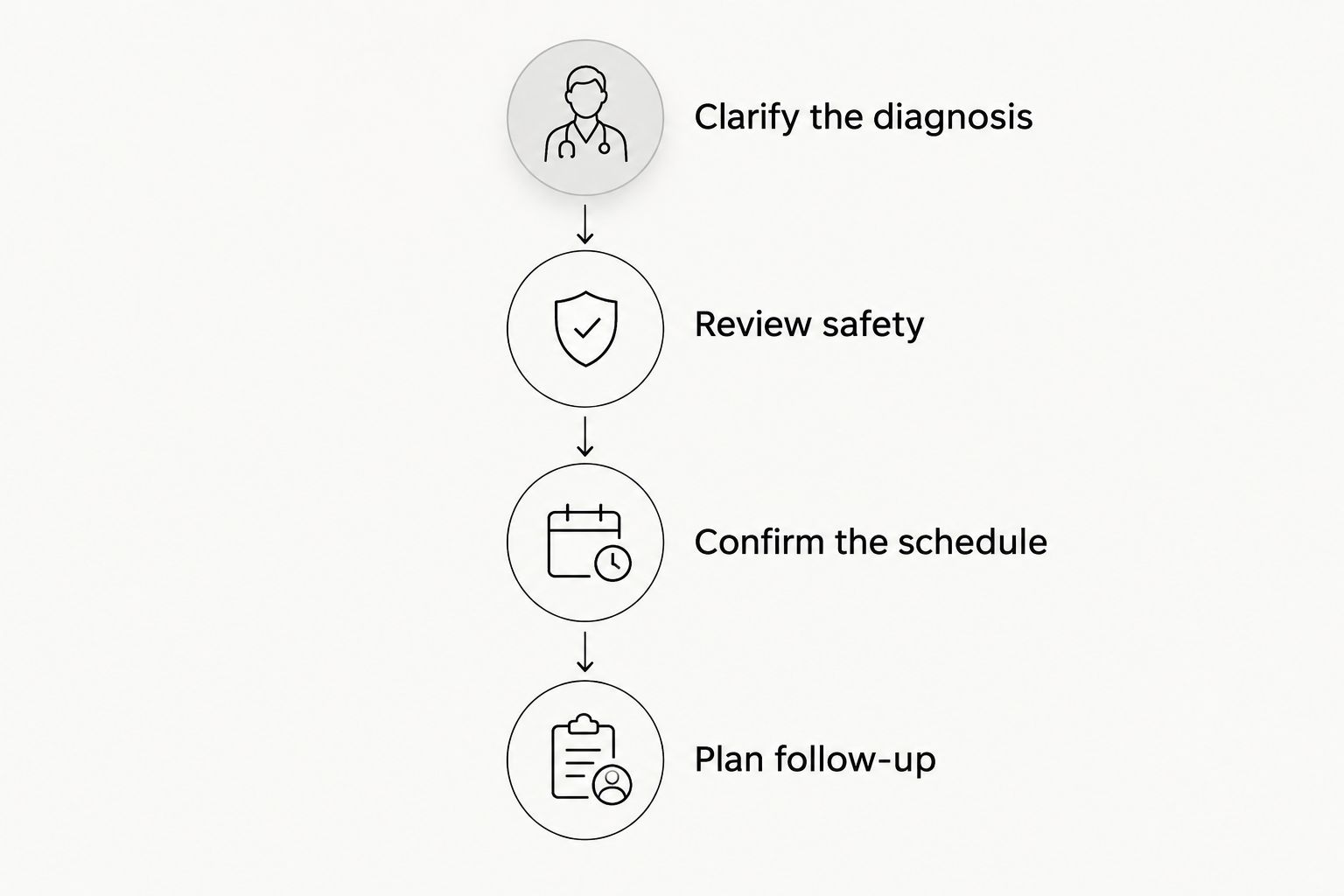
Clarify the diagnosis
Ask what diagnosis the clinician is treating and why TMS is appropriate. Describe periods of unusually elevated mood, reduced need for sleep, psychotic symptoms, substance use, and significant medical problems rather than assuming they are unrelated.
A complete assessment helps the clinician distinguish treatment-resistant depression from other explanations for persistent symptoms. It also gives you a chance to correct an incomplete treatment history.
Review safety
Tell the clinician about implanted medical devices, metal in or near the head, seizure history, and current medications. Do not decide on your own that an implant is compatible or incompatible; the treatment team needs the specific device information.
TMS can cause scalp discomfort or headache. Seizure is a rare but serious risk, so screening and instructions about changes in health or medication matter.
Confirm the schedule
Conventional TMS courses commonly involve visits 5 days per week over 4–6 weeks, although protocols differ. Some intermittent theta-burst stimulation protocols deliver stimulation in about 3 minutes; that is not the total appointment time and does not describe every TMS treatment.
Ask for the exact proposed schedule. Include travel, check-in, preparation, and other appointment tasks when deciding whether the plan fits your week.
Plan follow-up
Ask when symptoms will be reviewed and what happens if you improve only partly or not at all. Discuss who manages medication, how worsening symptoms are handled, and what follow-up looks like after the initial course.
Do not stop or change psychiatric medication independently to prepare for TMS. Give the treatment team an accurate medication list and follow the prescribing clinician’s instructions.
Which Atlanta TMS provider should you choose?
Choose by care fit, then by the quality of the consultation. Attuned Psychiatry is a relevant TMS option for patients seeking physician-led psychiatric care in Decatur/Metro Atlanta. Hospital-based programs deserve consideration when hospital coordination drives the decision; dedicated clinics deserve consideration when treatment delivery must connect with an existing psychiatrist.
Your 2026 shortlist should become shorter after each consultation. Remove providers that promise an outcome, cannot identify who oversees care, or leave you unclear about what happens when symptoms change.
Use this final check before agreeing to treatment:
- You understand the diagnosis and why TMS is being recommended.
- You know who is responsible for clinical decisions.
- You understand the proposed protocol and visit schedule.
- You know how benefit and side effects will be assessed.
- You have instructions for routine questions and urgent deterioration.
A recommendation is useful only when you can act on it safely. The strongest next step is a clinical evaluation with your treatment history available, not a commitment to a course based on a ranking.
Explore your psychiatric treatment options
Review the practice’s information before arranging an evaluation for depression treatment.
FAQ
What’s the best TMS therapy provider in Atlanta for me?
The best provider is the one whose clinical services, oversight, and treatment schedule fit your assessed needs. Compare psychiatric evaluation, safety screening, symptom monitoring, and follow-up rather than relying on a ranking alone.
Does Attuned Psychiatry offer TMS in Metro Atlanta?
Yes. Attuned Psychiatry is a physician-led practice in Decatur/Metro Atlanta offering TMS, medication management, and SPRAVATO® for treatment-resistant depression and other psychiatric conditions.
Is a hospital-based TMS program better than a dedicated clinic?
Neither setting is automatically better for every patient. Compare the actual psychiatric oversight, coordination with your existing clinicians, treatment protocol, and follow-up arrangements.
How often do you attend TMS appointments?
Conventional TMS courses commonly involve treatment 5 days per week over 4–6 weeks, but schedules depend on the prescribed protocol. Ask your provider for the full appointment schedule rather than assuming every program follows the same course.
Can I continue depression medication during TMS?
TMS can be provided while patients take psychiatric medication, but your prescribing clinician must direct your individual plan. Do not stop or change medication without clinical guidance, and report medication changes to the TMS team.
What should I bring to a TMS consultation?
Bring your medication and treatment history, current medication list, relevant medical records, and information about implanted devices. Include how long previous treatments lasted, whether they helped, and why you stopped them.
Does TMS guarantee that depression will improve?
No. TMS does not guarantee improvement, and response varies between patients. Ask how your provider will measure progress and what the next decision will be if treatment does not help.
One last thing
A short stimulation session does not necessarily mean a short treatment commitment. Before choosing a provider in 2026, map the proposed visits against your actual travel and work schedule.
Then ask one final question: who owns the next decision if this treatment does not help? A clear answer connects the procedure to ongoing psychiatric care. That is more useful than another claim about being the best.


