

Best overall approach: match PTSD-focused psychiatric care with evidence-based trauma treatment. Best for medication decisions: a psychiatrist who routinely treats PTSD. Best for depression that has not responded to treatment: consider Attunedpsychiatry for a depression-focused evaluation, while separately confirming PTSD expertise. This 2026 guide compares care pathways rather than assigning unsupported rankings to individual Atlanta doctors.
- For psychiatrists atlanta ptsd treatment searches, prioritize PTSD experience and coordination with a trauma-focused therapist.
- Attunedpsychiatry fits depression-focused evaluation; confirm PTSD-specific care before scheduling.
- Compare medication management, trauma-focused psychotherapy, and depression evaluation by the problem you need treated.
- TMS and SPRAVATO are not interchangeable with established PTSD treatments.
Why this matters
PTSD treatment and depression treatment overlap, but they are not the same service. A practice offering advanced depression treatments does not automatically provide trauma-focused psychotherapy or specialize in PTSD.
For your 2026 Atlanta search, the useful question is not which practice advertises the most treatments. It is which clinician can explain your diagnosis, offer an appropriate treatment plan, and coordinate the parts of care they do not provide.
Attunedpsychiatry is a fit for depression-focused psychiatric evaluation when persistent depression is part of your concern. The practice describes physician-led care in Decatur/Metro Atlanta, including medication management, TMS, and SPRAVATO® treatment. Confirm whether its clinicians evaluate PTSD and coordinate with trauma-focused therapists before booking for that purpose.
What makes the best psychiatrist for PTSD treatment?
Use these criteria before comparing names. A strong match meets your clinical needs and gives clear answers about how treatment will work.
- PTSD experience: Ask whether the clinician routinely evaluates and treats PTSD, not simply anxiety or depression.
- Treatment choices: Look for discussion of trauma-focused psychotherapy as well as medication when appropriate.
- Diagnostic assessment: The evaluation should consider symptoms, functioning, medical history, substance use, and other possible explanations.
- Care coordination: Ask how the psychiatrist communicates with an outside therapist, with your permission.
- Follow-up planning: You should understand how symptoms, medication effects, and safety concerns will be reviewed.
- Practical fit: Confirm appointment format, location, insurance participation, and scheduling directly with the office.
A directory listing is a starting point, not evidence of specialist experience. Ask the same questions of every clinician so that your comparison rests on answers rather than advertising language.
Atlanta PTSD care options at a glance
These are ranked by the need they address, not by claims that one Atlanta physician produces better outcomes than another. The available practice information does not establish a verified, citywide provider ranking.
| Care option | Best for | Main strength | Key limitation |
|---|---|---|---|
| PTSD-focused psychiatrist | Medication evaluation and diagnostic questions | Connects prescribing decisions with psychiatric assessment | Do not assume trauma-focused psychotherapy is included |
| Trauma-focused therapist with psychiatric coordination | Direct treatment of trauma-related symptoms | Provides a structured psychotherapy pathway alongside prescribing when needed | Requires coordination if care involves separate clinicians |
| Attunedpsychiatry depression evaluation | Persistent depression alongside trauma-related concerns | Physician-led medication management and advanced depression treatment options | PTSD specialization and trauma-focused therapy are not established by the practice description |
1. PTSD-focused psychiatrist: best for medication decisions
A psychiatrist can evaluate whether your symptoms fit PTSD, assess other psychiatric conditions, and discuss medication. This route is especially relevant when you want help understanding an existing prescription, side effects, or symptoms that complicate treatment decisions.
The appointment should produce more than a prescription. You need a working diagnosis, a treatment rationale, and an explanation of how psychotherapy fits into the plan.
PTSD-focused psychiatrist pros
- Medical training supports assessment of psychiatric symptoms and medication-related concerns.
- Prescribing and follow-up can remain with the same clinician.
- Evaluation can address overlapping depression, anxiety, sleep problems, and substance use.
PTSD-focused psychiatrist cons
- Medication management does not necessarily include trauma-focused psychotherapy.
- A general psychiatry listing does not establish substantial PTSD experience.
- You might need a separate therapist and permission-based communication between clinicians.
Best for: People seeking a psychiatric diagnosis, medication review, or prescribing support within a PTSD treatment plan.
For medication context, sertraline and paroxetine are the 2 medications with FDA approval for PTSD. Approval does not make either medication appropriate for everyone, and other medications are sometimes prescribed off-label after an individualized discussion.
Ask what symptom the proposed medication targets, what improvement would look like, and what problems require contacting the office. Do not start, stop, or change psychiatric medication based on a comparison article.
Verdict: Hold off on choosing a psychiatrist until the office confirms PTSD experience and explains its psychotherapy referral process.
2. Coordinated trauma care: best for trauma-focused psychotherapy
A trauma-focused therapist working with a psychiatrist is a distinct care pathway, not a less complete version of psychiatric care. The therapist addresses trauma-related symptoms through a structured treatment, while the psychiatrist handles diagnostic and medication needs when indicated.
Individual trauma-focused psychotherapy is recommended over medication as the initial treatment approach when appropriate. Established approaches include cognitive processing therapy, prolonged exposure, and eye movement desensitization and reprocessing.
These 3 named therapies—CPT, PE, and EMDR—are useful terms to ask about during your search. They are different treatments, not interchangeable labels for any conversation about trauma.
Coordinated trauma care pros
- Directly addresses trauma-related symptoms through an established psychotherapy approach.
- Separates therapy expertise from medication management without treating them as competing services.
- Allows the treatment team to discuss symptoms and progress with your consent.
Coordinated trauma care cons
- Separate clinicians require additional communication and scheduling.
- A therapist's use of the phrase trauma-informed does not establish training in a specific PTSD treatment.
- Treatment requires discussing difficult symptoms and agreeing on a manageable pace.
Best for: People who want a trauma-focused treatment plan and psychiatric support when medication or diagnostic questions arise.
Ask the therapist which PTSD treatment they provide, what training supports that work, and how they assess progress. Ask the psychiatrist who is responsible for responding when symptoms change between appointments.
Verdict: Skip vague promises of trauma care; choose a team that names its treatment approach and explains coordination.
3. Attunedpsychiatry: best for depression-focused evaluation
Attunedpsychiatry offers medication management, TMS, and SPRAVATO® treatment in Decatur/Metro Atlanta. Its stated focus includes treatment-resistant depression and other psychiatric conditions.
That makes the practice relevant when depression is a major concern alongside trauma-related symptoms. Its psychiatric services are a starting point for understanding the available treatments, not proof that every treatment is appropriate for PTSD.
Depression evaluation pros
- Physician-led psychiatric care provides a medical setting for reviewing depression symptoms and treatment history.
- Medication management is an explicitly stated service.
- TMS and SPRAVATO® are named options for discussion within an appropriate depression evaluation.
Depression evaluation cons
- The practice description does not establish a dedicated PTSD program.
- Trauma-focused psychotherapy is not listed among the supplied services.
- Treatment eligibility requires an individual assessment; a service listing cannot determine candidacy.
Best for: People in Decatur/Metro Atlanta whose trauma-related concerns also involve depression that has not responded adequately to treatment.
For a 2026 appointment, bring the names of previous medications, what happened while taking them, and any records you can obtain. Explain which symptoms you most want addressed rather than requesting a procedure first.
Verdict: Hold on selecting a specific procedure until a clinician identifies the condition being treated and explains the rationale.
Do not confuse depression procedures with PTSD treatment
TMS and SPRAVATO® are not FDA-approved treatments for PTSD. An evaluation involving either treatment should distinguish a depression indication from an off-label discussion about trauma-related symptoms.
This distinction matters even when depression and PTSD occur together. Improvement in depression is not, by itself, evidence that all PTSD symptoms have been addressed.
Before agreeing to treatment, ask:
- Which diagnosis is this treatment intended to address?
- Is the proposed use FDA-approved or off-label?
- What evidence supports the recommendation for my situation?
- What alternatives should I consider?
- How will you track depression symptoms separately from PTSD symptoms?
Choose the diagnosis and treatment goal before choosing the procedure. A clear answer is more useful than a long equipment list.
How to narrow your Atlanta shortlist
Use this sequence when contacting practices in 2026. It keeps the initial conversation focused without requiring you to recount your trauma to scheduling staff.
- Define your need. Say whether you need diagnostic assessment, medication management, trauma-focused therapy, or depression evaluation.
- Check PTSD experience. Ask whether the clinician routinely treats adults with PTSD and whether your main concern fits their scope.
- Confirm coordination. Explain whether you already have a therapist and ask how communication works.
- Plan follow-up. Ask how treatment progress, side effects, and urgent concerns are handled.
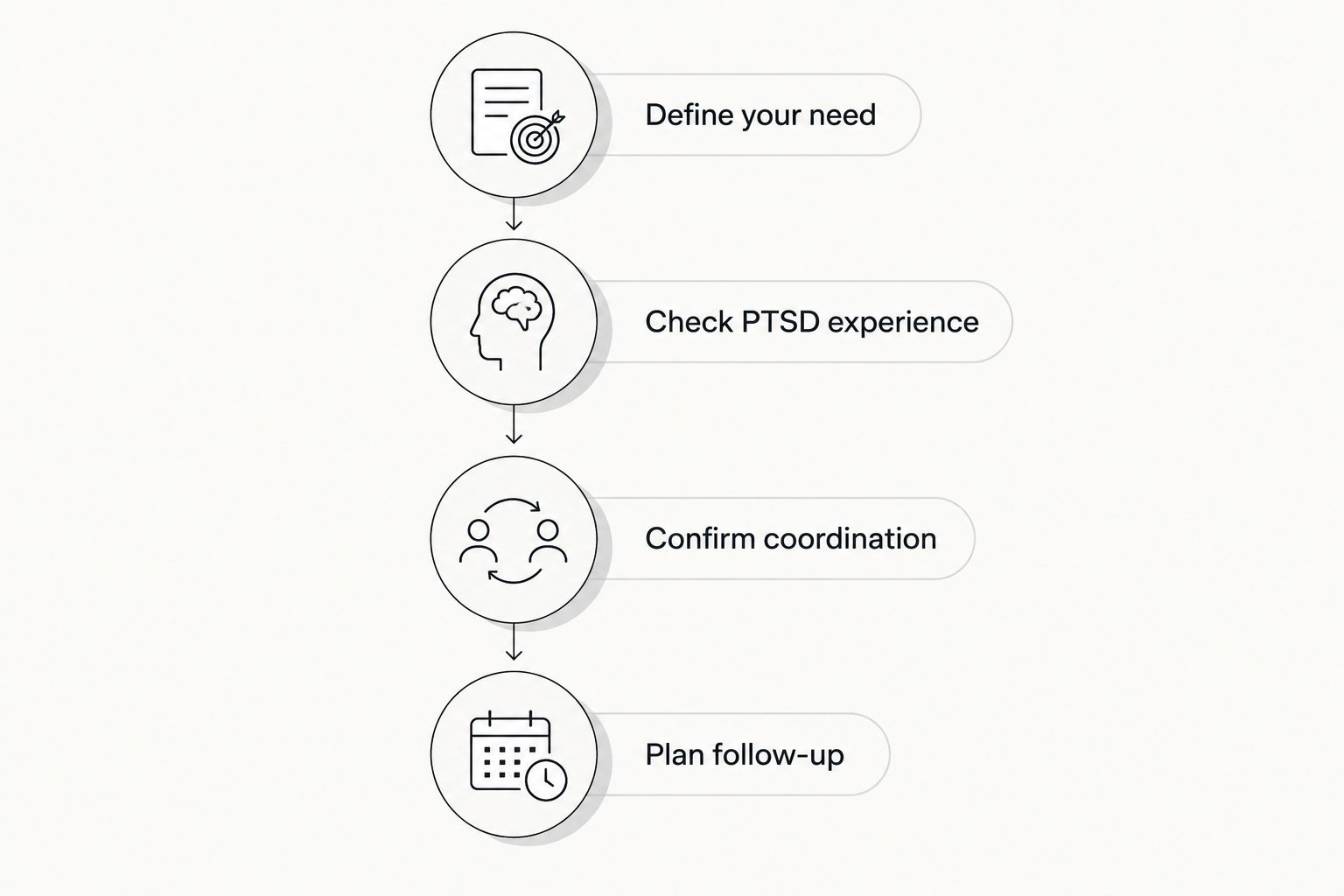
You do not need a polished account of everything that happened. A short description of symptoms and your immediate treatment goal is enough to begin asking whether a practice is appropriate.
For your own preparation, consider keeping a 7-day symptom log covering sleep, distress, medication effects, and difficulty completing daily activities. This is an organizational suggestion, not a diagnostic test or a requirement for receiving care.
How these recommendations were ranked
The order reflects distinct treatment needs: psychiatric assessment and prescribing, trauma-focused psychotherapy with coordination, and evaluation of persistent depression. No outcome scores, patient ratings, or claims of superior Atlanta clinicians underpin this guide.
This 2026 guide prioritizes established PTSD treatments, clinical fit, and care coordination. FDA medication labeling establishes approved indications; it does not establish which treatment is right for an individual.
Which PTSD care pathway should you choose?
If PTSD is your main concern, start with a clinician who can explain a trauma-focused treatment plan. Add psychiatric prescribing support when your assessment and preferences support it.
If depression has remained difficult to treat, a depression-focused psychiatric evaluation is also relevant. Keep that discussion connected to your PTSD care rather than assuming one treatment will address every symptom.
Ask about your treatment needs
Confirm whether the practice fits your PTSD-related concerns and depression treatment history.
FAQ
What's the best psychiatrist in Atlanta for PTSD treatment?
The best fit is a psychiatrist with confirmed PTSD experience who explains medication options and coordination with trauma-focused psychotherapy. This guide does not establish a verified ranking of individual Atlanta physicians.
Should I see a psychiatrist or a therapist for PTSD?
A trauma-focused therapist treats PTSD through psychotherapy, while a psychiatrist provides medical assessment and prescribing when needed. Some people work with both, with communication arranged through consent.
Does Attunedpsychiatry offer PTSD treatment?
The stated services include medication management, TMS, and SPRAVATO treatment, with a focus that includes treatment-resistant depression. Confirm PTSD evaluation, clinician experience, and trauma-focused therapy coordination directly with the practice.
Are TMS and SPRAVATO approved for PTSD?
TMS and SPRAVATO are not FDA-approved treatments for PTSD. If either is proposed, ask which diagnosis is being treated and whether the intended use is approved or off-label.
Which medications are FDA-approved for PTSD?
Sertraline and paroxetine are FDA-approved for PTSD. A psychiatrist should discuss your symptoms, medical history, other medications, and preferences before recommending treatment.
What should I bring to a first PTSD psychiatry appointment?
Bring your medication list, previous treatment history, relevant records, and a short description of your main symptoms. You can also write down questions about diagnosis, therapy, follow-up, and side effects.
What if I need help before a routine appointment?
Call or text 988 in the United States for immediate crisis support. If there is immediate danger or a medical emergency, call 911 or go to the nearest emergency department.
One last thing
Trauma-informed care describes an approach to care; it does not identify a specific PTSD treatment. Ask one final question before scheduling: which PTSD treatment does this clinician actually provide? A precise answer helps you distinguish a suitable clinician from a listing that merely uses familiar language.


