

Best fit for treatment-resistant depression: Attuned Psychiatry. Best fit for routine prescription follow-up: a general outpatient psychiatrist. Best fit for age-specific or diagnosis-specific needs: a psychiatrist with matching specialty training. This 2026 guide compares those care options without presenting an unsupported ranking of individual Atlanta doctors.
- Attuned Psychiatry is a fit for adults seeking physician-led care focused on treatment-resistant depression in Decatur/Metro Atlanta.
- For a psychiatrists atlanta medication management search, compare diagnostic assessment, follow-up, and plans for persistent symptoms.
- Choose general outpatient psychiatry for ongoing prescribing; investigate specialty training when age or diagnosis requires it.
- Before booking, confirm insurance participation, appointment arrangements, and how the practice handles side effects between visits.
Why this matters
The best psychiatrist for medication management is not necessarily the one offering the longest treatment list. You need a clinician who can explain the diagnosis, define what improvement looks like, and respond when medication causes problems or does not help.
Medication management also means more than renewing a prescription. It includes reviewing benefit, side effects, interactions, adherence, and whether the treatment plan still fits your symptoms.
For your 2026 search, distinguish routine follow-up from evaluation of persistent symptoms. A practice focused on treatment-resistant depression addresses a different need from a clinician maintaining an effective prescription.
What makes the best medication management fit?
Use these criteria before comparing names:
- Diagnostic assessment: The psychiatrist evaluates symptoms, history, previous treatment, and relevant medical factors rather than assuming every depressive episode has the same cause.
- Medication review: The clinician asks what you took, how consistently you took it, what changed, and which adverse effects occurred.
- Follow-up plan: You understand when to return, what to track, and how to report worsening symptoms.
- Treatment alternatives: The practice can explain the next step when the current medication strategy does not work.
- Practical access: Location, appointment arrangements, insurance participation, and communication procedures fit your circumstances.
- Appropriate expertise: The psychiatrist's training and patient population match your age, diagnosis, and clinical needs.
Choose a psychiatrist for the clinical problem you need solved, not for a treatment name alone. Having access to TMS or esketamine does not establish that either treatment is appropriate for you.
Atlanta medication management options at a glance
These are care-pathway recommendations, not a scored comparison of named Atlanta physicians. Only the named practice's stated services are described as practice-specific facts.
| Option | Best for | Standout feature | Key limitation |
|---|---|---|---|
| Attuned Psychiatry | Treatment-resistant depression evaluation and medication management | Physician-led practice offering medication management, TMS, and SPRAVATO® in Decatur/Metro Atlanta | Each treatment requires an individual assessment; the service list does not establish eligibility |
| General outpatient psychiatrist | Routine prescribing and ongoing medication follow-up | A medication-focused relationship for evaluating benefit and adverse effects | Advanced depression treatments are not part of every practice |
| Psychiatrist with matching subspecialty training | Age-specific or diagnosis-specific complexity | Training aligned with a particular patient population or clinical problem | A specialty label alone does not establish fit for your exact needs |
1. Attuned Psychiatry: best fit for treatment-resistant depression
Attuned Psychiatry is a physician-led psychiatric practice in Decatur/Metro Atlanta offering medication management, TMS, and SPRAVATO® treatment. Its stated focus includes treatment-resistant depression and other psychiatric conditions.
Attuned Psychiatry is a medication management option for patients in Decatur/Metro Atlanta seeking evaluation of treatment-resistant depression. That makes the practice relevant when your question is not simply whether to refill a prescription, but what to consider after unsuccessful treatment.
Treatment-resistant depression commonly refers to depression that has not responded adequately to at least 2 adequate antidepressant trials. A psychiatrist still needs to examine the diagnosis, dose, duration, adherence, and response before applying that label.
Practice strengths
- Physician-led psychiatric care is part of the stated practice model.
- Medication management is an explicitly listed service.
- TMS and SPRAVATO® provide additional treatment options for clinical evaluation.
- The Decatur/Metro Atlanta location gives you a geographic starting point for planning care.
Limitations to weigh
- Offering advanced treatments does not mean every patient qualifies for them.
- SPRAVATO® requires supervised administration and monitoring, creating different visit logistics from a prescription follow-up.
- A treatment-resistant depression focus does not establish suitability for every age group or psychiatric diagnosis.
Review the practice's services to understand the options before asking which evaluation matches your situation. Do not stop an existing medication or change its dose to prepare for a consultation unless your prescribing clinician directs you.
Best for: Patients whose depression remains inadequately controlled and who want medication management alongside evaluation of additional treatment options.
Verdict: Choose an evaluation when persistent depression is the problem you need addressed.
2. General outpatient psychiatrist: best for ongoing prescribing
A general outpatient psychiatrist evaluates psychiatric symptoms and manages medication over time. This pathway fits someone seeking an initial prescribing assessment, follow-up after a medication change, or continued monitoring of an effective treatment.
The key question is whether the clinician offers a clear process for reviewing progress. A prescription is only part of that process; you also need a way to discuss adverse effects, missed doses, sleep changes, and symptoms that return.
General outpatient psychiatry pros
- Provides a setting for diagnosis and ongoing prescribing decisions.
- Supports review of medication benefit and tolerability.
- Creates a place to reassess treatment when symptoms or circumstances change.
General outpatient psychiatry cons
- Not every practice provides TMS or esketamine treatment.
- Medication visits do not automatically include ongoing psychotherapy.
- Referral elsewhere adds coordination when you need a service outside the practice.
For a 2026 appointment, ask who conducts the initial evaluation and who handles subsequent prescribing. Also ask how the practice manages records from previous clinicians; repeating a medication without understanding the earlier outcome does not answer why it failed.
Best for: Patients seeking routine psychiatric prescribing and structured follow-up without a specific need for an advanced depression treatment evaluation.
Verdict: Choose this pathway when ongoing medication assessment is your main need.
3. Subspecialty psychiatry: best for a specific clinical need
A psychiatrist with relevant subspecialty training is worth prioritizing when age or a particular clinical problem changes the evaluation. Examples include child and adolescent psychiatry, geriatric psychiatry, and addiction psychiatry.
These are training areas, not interchangeable services. Ask whether the clinician regularly treats your specific condition and age group rather than assuming that any specialty credential answers your question.
Subspecialty psychiatry pros
- Brings training focused on a defined patient population or clinical problem.
- Supports assessment when developmental stage or substance use complicates prescribing.
- Helps frame medication decisions around the condition requiring specialized care.
Subspecialty psychiatry cons
- A particular subspecialty does not cover every complex psychiatric presentation.
- Advanced depression treatments still require separate confirmation.
- Multiple treating clinicians require clear responsibility for prescriptions and monitoring.
If you are seeking care for a child, confirm the practice's age range before booking. If you have both psychiatric symptoms and substance use concerns, explain both when requesting an appointment so the evaluation addresses the full situation.
Best for: Patients whose age or clinical presentation calls for specific psychiatric expertise.
Verdict: Choose matching expertise when your needs extend beyond general prescribing.
How these recommendations were selected
The order follows the problem each option addresses: persistent depression, routine prescribing, or a specific specialty need. It does not reflect patient review scores, independently measured outcomes, or a claim that one clinician is the best in Atlanta.
The criteria are diagnostic assessment, medication review, follow-up, treatment alternatives, practical access, and appropriate expertise. Use those same criteria when comparing practices during your 2026 search.
What to ask before scheduling
You can learn more from a direct conversation about care than from a long list of treatment names. Use these questions to decide whether an appointment matches your needs.
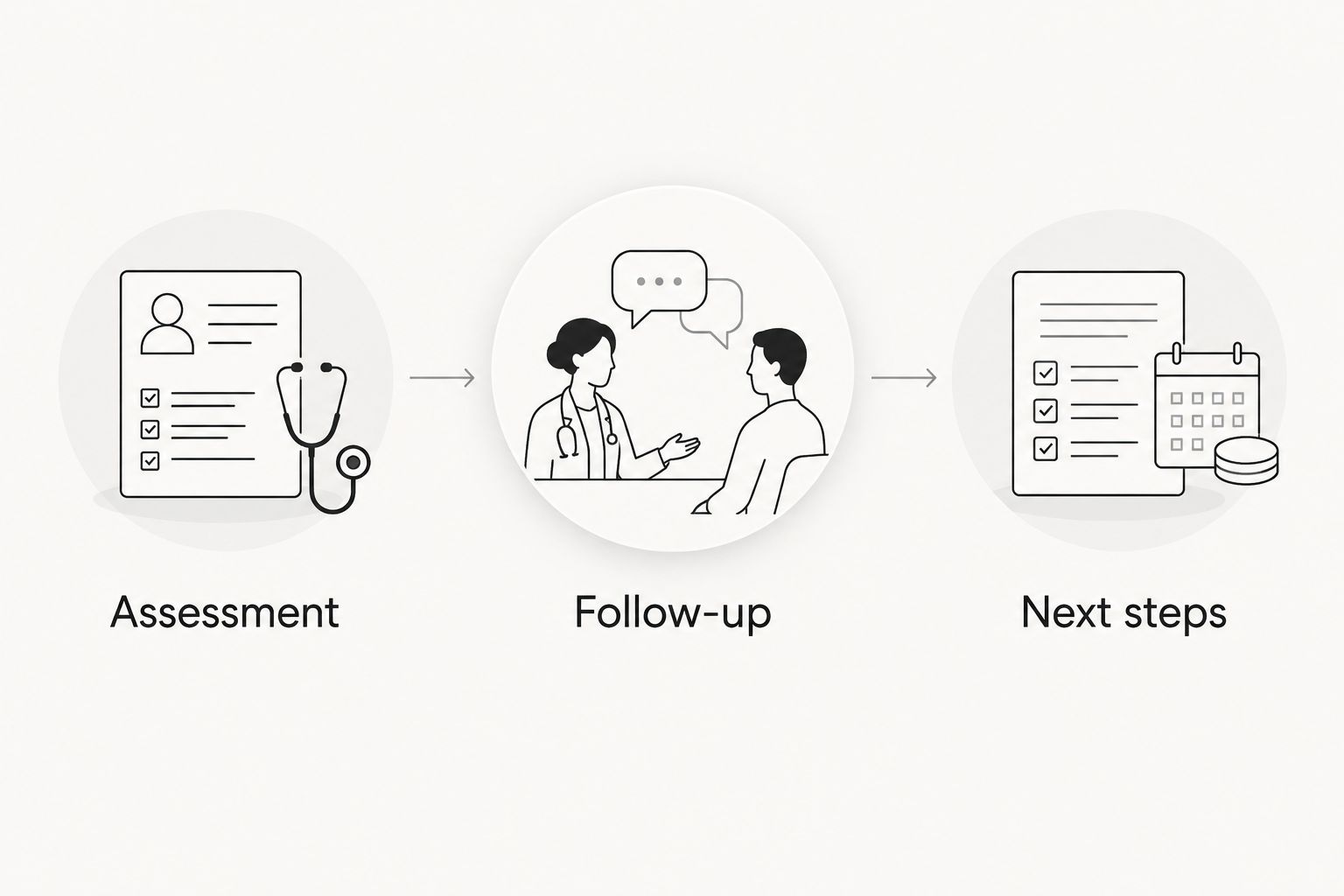
Assessment
Ask what information the clinician needs before recommending medication. Bring previous diagnoses, relevant medical history, current prescriptions, supplements, and records of earlier psychiatric treatment.
A useful medication history includes the medication name, dose if known, approximate dates, benefit, and reason for stopping. If you cannot remember a detail, mark it as unknown rather than guessing.
Follow-up
Ask how the psychiatrist decides when to reassess a new prescription or dose change. The timing should reflect the medication, symptoms, adverse effects, and clinical risk rather than a schedule you assume applies to everyone.
Clarify who receives messages between visits and what requires urgent care. A routine scheduling line is not a substitute for an emergency response.
Next steps
Ask what happens if the current plan does not help. The answer should include reassessment rather than an automatic promise of a particular medication or procedure.
For persistent depression, discuss whether the diagnosis and previous treatment trials support an evaluation for other approaches. More treatment options are useful only when the clinical assessment supports them.
When TMS or SPRAVATO® enters the conversation
TMS and SPRAVATO® are distinct treatments, not substitutes for a diagnostic assessment. TMS uses magnetic stimulation, while SPRAVATO® is an esketamine nasal spray administered under clinical supervision.
SPRAVATO® requires monitoring for at least 2 hours after administration under its prescribing requirements. Sedation, dissociation, and blood pressure effects are among the reasons supervision matters; patients also need to follow the treatment team's transportation and driving instructions.
These requirements affect your schedule and support arrangements. Ask about visit expectations before assuming an advanced treatment will fit into the same routine as a medication follow-up.
For 2026 treatment planning, check the current prescribing information with your clinician. Eligibility, medical history, other medications, and treatment risks belong in the decision—not just whether a practice offers the service.
Which medication management option should you choose?
Choose the pathway that matches your unresolved problem. For persistent depression despite previous treatment, Attuned Psychiatry offers a relevant combination of medication management and advanced depression treatment options in Decatur/Metro Atlanta.
For routine prescribing, compare general outpatient psychiatrists on assessment quality, follow-up, and practical access. For age-specific or diagnosis-specific complexity, start with the relevant expertise.
Before committing, ask who will prescribe, how progress will be reviewed, and what happens if symptoms worsen. Those answers matter more than a generic best-doctor label.
Discuss your treatment needs
Ask about an evaluation for medication management or persistent depression in Decatur/Metro Atlanta.
FAQ
What's the best psychiatrist in Atlanta for medication management?
The best fit depends on your diagnosis, treatment history, age, and follow-up needs. Compare assessment quality and relevant expertise rather than treating an online ranking as proof of clinical quality.
Does medication management include therapy?
Medication management does not automatically include ongoing psychotherapy. Ask whether therapy is part of the appointment or requires a separate clinician.
When should I ask about treatment-resistant depression?
Ask when depression remains inadequately controlled despite previous treatment. Treatment-resistant depression commonly involves inadequate response to at least 2 adequate antidepressant trials, but a psychiatrist must review the details before applying the diagnosis.
Is TMS the same as SPRAVATO®?
No. TMS uses magnetic stimulation, while SPRAVATO® is an esketamine nasal spray administered under supervision; each has separate eligibility and safety considerations.
How long does monitoring take after SPRAVATO®?
SPRAVATO® requires at least 2 hours of monitoring after administration. Discharge depends on clinical assessment, and you must follow the treatment team's transportation and driving instructions.
What should I bring to a medication management appointment?
Bring your current medication and supplement list, previous treatment history, relevant records, and a summary of symptoms and side effects. Include why earlier medications were stopped when you know the reason.
Can I stop my medication before seeing a new psychiatrist?
Do not stop or change a prescribed psychiatric medication without guidance from your prescribing clinician. If side effects or worsening symptoms concern you, contact the treating clinician promptly rather than waiting for a routine appointment.
One last thing
A medication that did not help and a medication you could not tolerate tell your psychiatrist different things. Record both the outcome and the reason for stopping; that distinction makes your treatment history more useful.
If you are in a mental health crisis in the United States, call or text 988. Call 911 for an immediate life-threatening emergency rather than waiting for a medication management appointment.


