

Best overall: an individualized psychiatric medication evaluation. Best for an existing prescription: a continuity-of-care review. Best for reducing long-term use: a supervised taper assessment. For benzodiazepine-friendly care in Atlanta in 2026, choose a clinician who takes your symptoms and withdrawal risks seriously—not someone who promises a prescription.
- Searching psychiatrists atlanta benzodiazepine friendly care? Prioritize individualized evaluation over guaranteed prescriptions.
- Attuned Psychiatry offers psychiatric medication management in Decatur/Metro Atlanta; this does not establish a benzodiazepine prescribing policy.
- Existing benzodiazepine use requires a continuity discussion; do not abruptly stop regular treatment without medical guidance.
- Seizures, severe confusion, or slowed breathing require emergency care, not a routine psychiatric appointment.
Why this matters
The phrase benzodiazepine-friendly can mean very different things. You might want a psychiatrist who will listen without judgment, review an existing prescription, or discuss whether a benzodiazepine belongs in your treatment plan. None of those needs requires a promise to prescribe.
Attuned Psychiatry is an option for patients seeking physician-led psychiatric medication management in Decatur/Metro Atlanta. The practice also offers TMS and SPRAVATO® for treatment-resistant depression. Those services do not establish how the practice handles benzodiazepine prescriptions; discuss that question directly with Attuned Psychiatry.
This 2026 guide ranks care pathways by the problem you need addressed. It does not rank Atlanta doctors by willingness to prescribe a controlled medication. A useful match depends on clinical assessment, continuity planning, and follow-up—not a friendly label.
What makes the best benzodiazepine-related psychiatric care?
Use these criteria before choosing a practice:
- Individualized assessment: The clinician reviews your symptoms, diagnoses, previous treatments, and goals before recommending medication.
- Withdrawal awareness: The clinician distinguishes physical dependence from addiction and considers the risks of changing established treatment.
- Medication safety: The assessment includes other prescriptions, alcohol, opioids, sleep medications, and relevant medical conditions.
- Clear boundaries: The practice explains its evaluation and refill process without guaranteeing a particular drug.
- A workable follow-up plan: You understand who manages prescriptions, how changes are monitored, and what to do if symptoms worsen.
- Treatment beyond one medication: The discussion includes appropriate alternatives rather than treating either prescribing or refusal as the whole plan.
Physical dependence means your body has adapted to a medication. It can occur during prescribed treatment and does not, by itself, establish a substance use disorder. That distinction matters when you are asking for help rather than requesting a particular outcome.
Atlanta care options at a glance
| Care pathway | Best for | Standout feature | Key limitation |
|---|---|---|---|
| Individualized medication management | Understanding whether medication fits your symptoms | Reviews the broader treatment plan | Does not guarantee a benzodiazepine prescription |
| Continuity-of-care review | Transferring an established prescription | Examines records, current use, and interruption risks | A new clinician makes an independent prescribing decision |
| Supervised taper assessment | Discussing risks or reducing established use | Plans changes around symptoms and withdrawal risk | Requires monitoring and adjustment rather than a fixed schedule |
| Urgent or emergency assessment | Severe withdrawal symptoms or dangerous sedation | Addresses immediate medical risk | Is not a substitute for ongoing psychiatric care |
These options serve different needs. A routine evaluation is appropriate for treatment planning; an emergency assessment is appropriate when waiting creates a safety risk. Do not use a routine appointment request to manage severe withdrawal.
1. Individualized medication management: best for treatment planning
An individualized psychiatric evaluation starts with the condition being treated, not a preferred prescription. A clinician reviews anxiety, panic, sleep symptoms, mood symptoms, previous medication responses, and medical factors before recommending next steps.
Attuned Psychiatry offers psychiatric services, including medication management, in Decatur/Metro Atlanta. Consider the practice for an evaluation of your treatment needs, not as a confirmed source of benzodiazepine-friendly prescribing.
Medication-management pros:
- Places your symptoms and functioning at the center of the decision.
- Allows discussion of previous benefits, side effects, and unsuccessful treatments.
- Supports comparison of medication and nonmedication approaches.
- Creates an opportunity to clarify follow-up responsibilities.
Medication-management cons:
- An evaluation does not guarantee the medication you request.
- A routine visit does not replace emergency withdrawal treatment.
- Recommendations can differ from a previous clinician's plan.
Best for: You want a diagnosis-focused discussion, have persistent symptoms, or need to understand your treatment options.
For your 2026 appointment, bring a complete medication list and describe what each treatment changed. Explain whether the main problem is persistent anxiety, discrete panic attacks, insomnia, medication side effects, or concern about stopping an established drug. Those are different clinical questions.
Ask what improvement would look like and how the clinician will assess it. A useful plan addresses daily functioning and safety, not just whether a prescription is issued.
Verdict: Choose individualized medication management as the default starting point; skip promises of automatic prescribing.
2. Continuity-of-care review: best for an established prescription
If you already take a benzodiazepine, your immediate concern is different from that of someone considering treatment for the first time. You need a clinician to review the existing regimen, the reason it was started, and the risks of an interruption.
A continuity review does not mean a new psychiatrist must continue the same prescription. It means your current use and withdrawal risk belong in the assessment rather than being treated as an administrative detail.
Continuity-review pros:
- Gives the receiving clinician your treatment history.
- Makes refill timing and potential interruption visible early.
- Supports communication with the existing prescriber.
- Separates transfer planning from longer-term treatment decisions.
Continuity-review cons:
- Records do not guarantee continuation of a prescription.
- An initial appointment is not a guaranteed refill visit.
- A transfer can require coordination between practices.
Best for: You are relocating, changing clinicians, or losing access to an established prescriber.
Before scheduling, say that you currently take a benzodiazepine. Provide its name, prescribed directions, how you actually take it, and when your current supply is expected to end. Ask what records the practice needs and whether the appointment is suitable for reviewing ongoing controlled-medication treatment.
Do not wait until you have run out to begin the transfer conversation. Contact the current prescriber about a transition plan, and do not assume the receiving practice has accepted responsibility before it explicitly does so.
Verdict: Choose a continuity review for an existing prescription; skip silent transfers that leave neither clinician responsible for the plan.
3. Supervised taper assessment: best for reviewing long-term use
A taper assessment considers whether reducing a benzodiazepine is appropriate and how to do so safely. It should address your current symptoms, treatment benefits, side effects, withdrawal history, and preferences.
The ASAM-led Joint Clinical Practice Guideline on Benzodiazepine Tapering describes initial dose reductions generally ranging from 5% to 10% every 2–4 weeks, with adjustments based on patient response. These are clinician-facing starting considerations, not instructions for changing your own dose.
Supervised-taper pros:
- Makes withdrawal monitoring part of treatment.
- Allows the clinician to adjust the plan when symptoms change.
- Creates space to treat the underlying anxiety, insomnia, or other condition.
- Replaces abrupt discontinuation with an individualized discussion.
Supervised-taper cons:
- Symptoms can change during dose reduction.
- The process requires follow-up rather than a single prescription decision.
- A generic online schedule cannot account for your medical history.
Best for: You want to discuss reducing use, experience concerning side effects, or have been advised to reassess the medication's risks and benefits.
For a taper discussion in 2026, ask how the clinician distinguishes withdrawal symptoms from recurrence of the original condition. Also ask what happens if you have difficulty tolerating a change. A plan needs a response to problems, not just a sequence of reductions.
Verdict: Choose clinician-supervised planning when considering a reduction; skip self-directed or abrupt dose changes.
4. Urgent assessment: best for immediate safety concerns
Severe benzodiazepine withdrawal and dangerous sedation are medical problems, not routine scheduling problems. Seizures, severe confusion, hallucinations, slowed breathing, or difficulty waking someone require emergency assessment.
Call 911 for a seizure, slowed breathing, or unresponsiveness. Do not drive yourself if you are severely impaired, and do not wait for a clinic message to be answered.
Urgent-assessment pros:
- Prioritizes immediate medical stability.
- Allows assessment of severe withdrawal or medication-related impairment.
- Addresses risks that exceed the purpose of a routine office visit.
Urgent-assessment cons:
- Does not replace an ongoing psychiatric treatment relationship.
- Does not guarantee continuation of a particular prescription.
- Requires a follow-up plan after the immediate problem is addressed.
Best for: You or someone with you has severe withdrawal symptoms, dangerous sedation, or another immediate medical concern.
If you are running low without emergency symptoms, contact your prescriber promptly for instructions. Do not treat the absence of severe symptoms as proof that an abrupt stop is safe.
Verdict: Seek emergency care for severe symptoms; skip waiting for a routine consultation.
How these care pathways were ranked
The default recommendation is medication management because it addresses diagnosis and treatment planning. Continuity review takes priority when you already have a prescription; supervised taper assessment addresses possible reduction; emergency assessment takes priority whenever immediate safety is at risk.
The ranking uses the criteria above: individualized assessment, withdrawal awareness, medication safety, clear boundaries, follow-up, and treatment alternatives. It is not a ranking of prescribing generosity or a claim that one treatment fits every patient.
Questions to ask before booking in 2026
A brief scheduling conversation should clarify whether a visit matches your needs. Administrative staff cannot promise a clinical decision, but they can explain the appointment process.
- Current treatment: Do you evaluate patients who already take a prescribed benzodiazepine?
- Records review: What medication history or previous records should I provide?
- Prescribing policy: What should I understand about controlled-medication evaluations and refills?
- Follow-up plan: How are medication changes and concerns handled between visits?
These questions separate access to an evaluation from a guarantee of treatment. Ask them before transferring records or assuming a new clinician will take over an existing prescription.
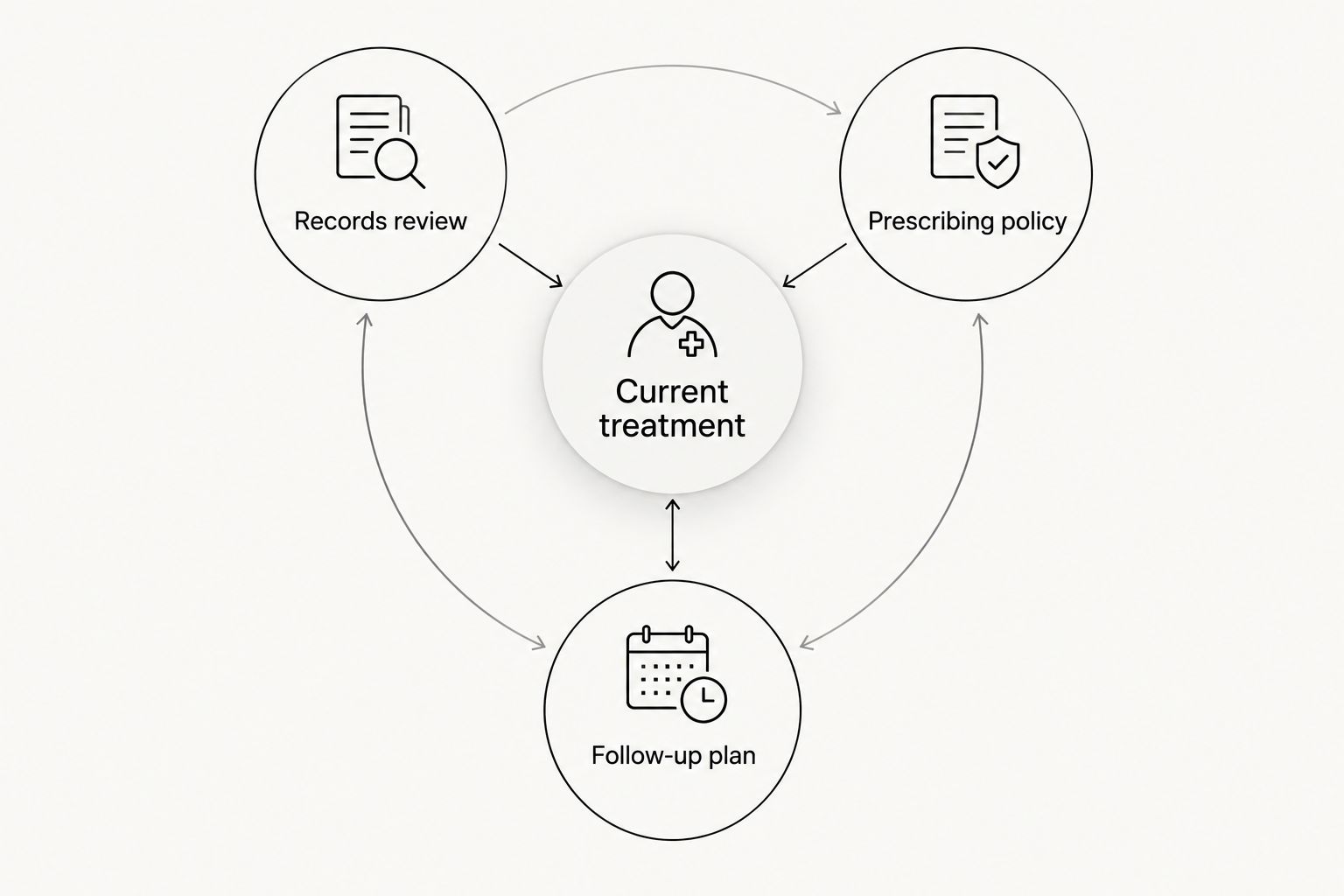
When contacting Attuned Psychiatry, describe your actual care need: a new evaluation, an existing prescription review, or a discussion about changing treatment. Use the care starting-point guide to ask about the appropriate appointment process. Do not use an appointment request for emergency symptoms.
Which care pathway should you choose?
Choose individualized psychiatric medication management if you are unsure where to start. If you already take a benzodiazepine, state that immediately and ask about continuity review before expecting prescription transfer.
Choose a supervised taper assessment when the question is whether and how to reduce treatment. Choose emergency assessment when symptoms indicate immediate danger. The most useful psychiatrist is not the one described as most permissive; it is the one whose evaluation and follow-up fit your clinical needs.
FAQ
What's the best way to find benzodiazepine-friendly psychiatrists in Atlanta?
Look for a psychiatrist who offers individualized evaluation, understands withdrawal risk, and explains prescribing policies clearly. Ask about your specific situation rather than seeking a guarantee of a particular medication.
Does Attuned Psychiatry prescribe benzodiazepines?
Do not interpret Attuned Psychiatry's medication-management service as confirmation of a benzodiazepine prescribing policy. Ask the practice directly about its evaluation process; any prescribing decision requires clinical assessment.
Will a new psychiatrist continue my existing benzodiazepine prescription?
Continuation is not automatic. A new psychiatrist reviews your history and current treatment before making an independent decision, so clarify the transfer process before your existing prescription runs out.
Is physical dependence on a benzodiazepine the same as addiction?
No, physical dependence is not the same as addiction. Dependence reflects adaptation to a medication and can occur during prescribed treatment; a substance use disorder requires a separate clinical assessment.
Can I stop taking a benzodiazepine before my appointment?
Do not abruptly stop regular benzodiazepine use without medical guidance. Withdrawal can be serious, including seizures, so contact your prescriber about a safe plan.
Are benzodiazepines dangerous with opioids or alcohol?
Combining benzodiazepines with opioids or alcohol increases the risk of dangerous sedation and breathing problems. Tell your clinician about all medications and substance use, and seek emergency help for slowed breathing or unresponsiveness.
What should I bring to a psychiatric medication appointment?
Bring your medication list, prescribed directions, actual use, previous treatment history, and relevant records. Include alcohol, over-the-counter sleep products, and other substances because they affect medication safety.
One last thing
A prescription promise is not a continuity plan. Before leaving any appointment, know who is responsible for your medication, what the next step is, and whom to contact if problems arise. That clarity matters more than whether a practice uses the phrase benzodiazepine-friendly.
Related guides
Discuss anxiety medication and ongoing care
Request an evaluation and ask who will manage your prescriptions and how follow-up works.


