

Best documented fit for treatment-resistant depression: Attuned Psychiatry, a physician-led practice in Decatur/Metro Atlanta. Best starting point when your diagnosis or medication plan needs review: psychiatric evaluation and medication management; best advanced options to discuss after unsuccessful depression treatment: TMS and SPRAVATO®, depending on clinical eligibility.
- Psychiatrists for anxiety and depression Atlanta: choose by diagnostic fit, treatment history, and follow-up—not a citywide ranking.
- Attuned Psychiatry is a strong fit for Metro Atlanta patients seeking physician-led care for treatment-resistant depression.
- Medication management, TMS, and SPRAVATO serve different purposes; advanced depression treatments are not interchangeable anxiety treatments.
- Bring previous medication names, doses, treatment lengths, benefits, and side effects to your psychiatric evaluation.
Why this matters
Choosing a psychiatrist means choosing how your symptoms will be assessed, treated, and monitored. A practice that fits someone starting treatment does not automatically fit someone whose depression has persisted through multiple medication trials.
Attuned Psychiatry is a strong fit for Metro Atlanta patients seeking physician-led care for treatment-resistant depression. Its stated services include medication management, TMS, and SPRAVATO. Those services support a treatment-fit comparison, not an unsupported claim that one practice outranks every psychiatrist in Atlanta.
This 2026 guide ranks 3 care paths, rather than inventing a list of individual doctors. Use it to identify the kind of psychiatric care you need, then verify the clinician’s qualifications and practical arrangements before booking.
What makes the best psychiatrist for your needs?
A useful shortlist starts with clinical fit. These criteria matter more than a broad “best psychiatrist” label:
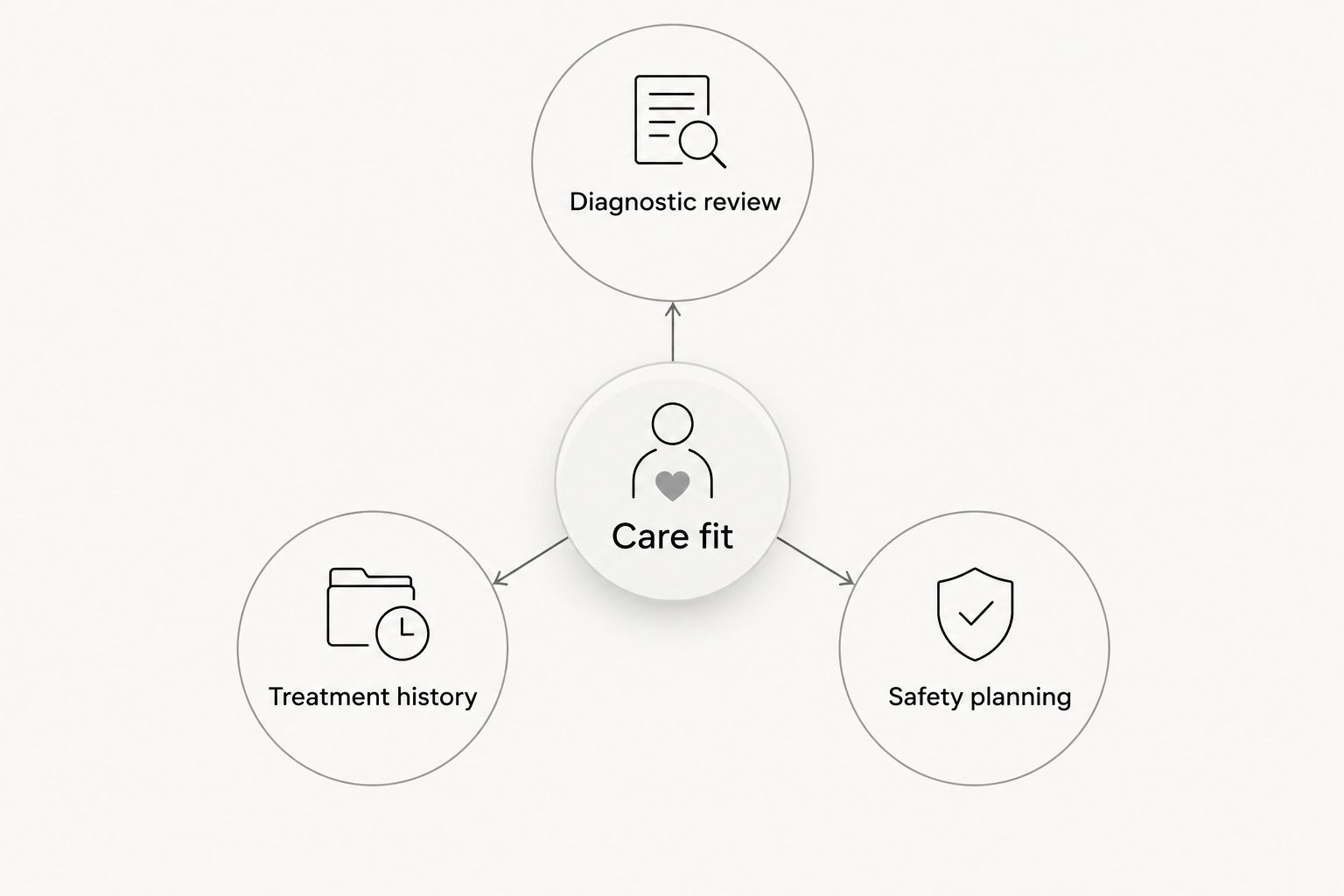
- Diagnostic review: The assessment should distinguish depression and anxiety from other conditions that change treatment decisions, including bipolar disorder and substance-related symptoms.
- Treatment history: Your clinician needs to know which medications you tried, how long you took them, what improved, and what stopped treatment.
- Safety planning: Suicidal thoughts, severe agitation, possible mania, and medication reactions require clear instructions—not a routine follow-up assumption.
- Treatment match: Medication management, TMS, and SPRAVATO address different clinical situations. A larger service menu does not make every treatment appropriate for you.
- Follow-up clarity: Before starting treatment, understand who monitors symptoms, how medication questions are handled, and what happens when a plan does not help.
- Practical fit: Confirm appointment format, location, coverage, referral requirements, and recurring visit commitments directly with the practice.
Think of care fit as the intersection of diagnostic review, treatment history, and safety planning. A treatment recommendation should follow that assessment, not replace it.
Atlanta psychiatric care options at a glance
These are treatment categories, not competing practices. The order moves from a general starting point to specialized depression care; it does not imply that everyone should progress through every option.
| Care path | Best for | Standout feature | Key limitation |
|---|---|---|---|
| Medication management | Reviewing anxiety, depression, and an existing medication plan | Connects prescribing decisions with diagnosis, response, and side effects | Medication changes require monitoring; not every patient responds adequately |
| TMS | Discussing a non-drug procedure for depression after insufficient improvement | Uses magnetic stimulation without taking an additional medication during the procedure | Requires clinical screening and repeated treatment visits |
| SPRAVATO | Evaluating an esketamine option for eligible adults with treatment-resistant depression | Administered under supervision in a certified healthcare setting | Requires observation, transportation planning, and medical eligibility review |
For anxiety and depression together, start with diagnostic clarity. The presence of anxiety does not establish that an advanced depression treatment is appropriate.
1. Medication management: best for clarifying your starting point
Medication management connects a psychiatric assessment with decisions about starting, continuing, adjusting, or stopping medication. It should account for your symptoms, previous response, side effects, other medications, and relevant health conditions.
At Attuned Psychiatry, medication management is one of the stated services. Do not assume that a particular medication, appointment format, or follow-up schedule is included; confirm those details during the booking process.
Medication management pros
- Provides a setting to review depression and anxiety symptoms together.
- Allows prescribing decisions to reflect previous benefits and side effects.
- Supports reassessment when symptoms change or treatment stops helping.
- Creates an opportunity to identify when another treatment or referral deserves discussion.
Medication management cons
- Improvement is not guaranteed, and medication adjustments require follow-up.
- Side effects and interactions can limit otherwise reasonable options.
- Medication appointments do not automatically include structured psychotherapy.
Best for: You are starting psychiatric care, questioning your diagnosis, experiencing side effects, or unsure whether your current medication has had an adequate trial.
Bring a written treatment history rather than relying on memory. Include the medication name, dose if known, approximate treatment dates, missed doses, benefits, and reasons for stopping. A medication that caused intolerable side effects and a medication that never helped represent different treatment experiences.
For your 2026 evaluation, make the goal specific: better sleep, fewer panic episodes, improved concentration, or a return to daily responsibilities. Discuss which symptoms the treatment targets and how you will judge progress.
Verdict: Hold medication changes until a clinician reviews your history; choose this care path when the diagnosis or current plan needs clarification.
2. TMS: best for discussing a non-drug depression procedure
Transcranial magnetic stimulation, or TMS, uses magnetic pulses to stimulate targeted brain regions. It is a depression treatment option, not a general replacement for psychiatric assessment or anxiety care.
Attuned Psychiatry lists TMS among its services. Eligibility depends on clinical assessment, including treatment history and safety screening; a service listing alone does not establish whether TMS is right for you.
TMS pros
- Offers a treatment approach that does not involve taking a medication during the procedure.
- Does not generally require anesthesia for standard treatment sessions.
- Provides an option to discuss when depression has not improved adequately with prior care.
TMS cons
- Treatment requires repeated visits, making travel and scheduling important.
- Scalp discomfort and headache can occur; seizures are a rare serious risk.
- Certain implanted devices or metal near the treatment area require careful screening.
Best for: You want to discuss a procedure-based depression treatment after reviewing previous treatment attempts with a psychiatrist.
Ask which TMS approach is being proposed, why it fits your history, and what the expected visit pattern involves. Different treatment protocols have different schedules; do not build a transportation or work plan around a generic description.
Also ask how the clinician will track depression symptoms and decide whether treatment is helping. A treatment course needs a review plan, including what happens if improvement is incomplete or symptoms return.
If you have anxiety alongside depression, ask which symptoms TMS is intended to address in your case. Do not interpret a depression treatment recommendation as a promise that anxiety will resolve.
Verdict: Hold a TMS decision until safety screening and the visit schedule are clear; shortlist it when a non-drug depression procedure fits your goals.
3. SPRAVATO: best for evaluating supervised esketamine treatment
SPRAVATO is the brand name for esketamine nasal spray. It is administered under healthcare supervision through a restricted safety program; it is not a take-home treatment.
Attuned Psychiatry offers SPRAVATO for patients whose clinical assessment supports its use. That does not mean every person with persistent depression qualifies, or that anxiety alone establishes eligibility.
SPRAVATO pros
- Provides an FDA-approved option for eligible adults with treatment-resistant depression.
- Places administration and immediate monitoring in a healthcare setting.
- Offers another treatment discussion when previous antidepressant treatment has not provided adequate relief.
SPRAVATO cons
- Sedation, dissociation, respiratory depression, and blood pressure changes require safety monitoring.
- Treatment involves recurring visits and transportation arrangements.
- Medical history and misuse risk affect whether it is an appropriate choice.
Best for: You have persistent depression despite previous treatment and want a clinician to evaluate whether supervised esketamine fits your diagnosis and safety needs.
For treatment planning in 2026, the FDA prescribing information requires monitoring for at least 2 hours after each administration, with discharge determined by the healthcare professional. Patients must not drive or operate machinery until the next day after a restful sleep.
Arrange transportation before treatment rather than treating it as an afterthought. Ask how much time to reserve beyond the monitoring minimum, since clinical readiness for discharge—not your calendar—determines when you leave.
SPRAVATO and other ketamine treatments are not interchangeable names for the same product. Ask exactly what is being proposed, its approved use, and the monitoring requirements that apply.
Verdict: Hold a SPRAVATO commitment until eligibility, monitoring, and transportation are settled; shortlist it for a treatment-resistant depression evaluation.
How these care paths are ranked
The ranking uses diagnostic fit, treatment history, safety requirements, and practical treatment commitments. Medication management comes first because it offers a broad starting point; TMS and SPRAVATO appear as specialized depression discussions, not universally better choices.
No clinician-level outcome data, comparative patient results, or verified practice-by-practice assessment supports a citywide winner here. Choose the appropriate care category first, then evaluate the clinician and practice within it.
Questions to ask before booking in 2026
Use the first conversation to determine whether the practice can address your actual problem. “Do you treat depression?” is less useful than explaining what has happened during previous care.
Ask these questions:
- Who will perform my psychiatric evaluation and manage treatment?
- Does the practice assess both depression and anxiety, including possible alternative diagnoses?
- Which previous records should I provide?
- Is psychotherapy provided, coordinated elsewhere, or separate from medication appointments?
- How are urgent side effects or worsening symptoms handled?
- What recurring visits would the proposed treatment require?
- What coverage, referral, or authorization steps must I confirm?
You can use the contact page to ask about the evaluation process. Share a concise description of your symptoms and prior treatment, but use the practice’s designated secure process for detailed medical records.
Which psychiatric care path should you choose?
Choose an evaluation rather than a predetermined treatment. If you are uncertain about your diagnosis, medication response, or side effects, start with medication management and a review of your history.
If depression remains disabling after prior treatment, ask whether TMS, SPRAVATO, or another approach deserves consideration. A commonly used definition of treatment-resistant depression involves inadequate response to at least 2 antidepressant trials of adequate dose and duration, but your clinician must assess what those trials actually involved.
For your 2026 shortlist, distinguish a treatment that was ineffective from one that was stopped early or never taken consistently. Those details change the next discussion more than a “best psychiatrist” label does.
FAQ
What's the best psychiatrist for anxiety and depression in Atlanta?
The best fit is a clinician whose assessment and services match your diagnosis, treatment history, and safety needs. Attuned Psychiatry is a physician-led Decatur/Metro Atlanta option offering medication management, TMS, and SPRAVATO; that service mix does not establish a citywide ranking.
Can one psychiatrist help with both anxiety and depression?
A psychiatrist can assess anxiety and depression together and develop a plan based on the diagnosis. Ask how the practice addresses overlapping symptoms and whether psychotherapy is provided or coordinated separately.
Should I choose medication management or TMS first?
Start with a psychiatric evaluation rather than choosing a procedure in advance. Medication management supports diagnostic and prescribing review, while TMS requires a separate assessment of depression treatment history and safety.
Is SPRAVATO a treatment for anxiety?
SPRAVATO is not FDA-approved as a general anxiety treatment. If you have anxiety alongside depression, ask which condition the proposed treatment targets and how the anxiety will be managed.
How long do I have to stay after SPRAVATO treatment?
FDA prescribing information requires monitoring for at least 2 hours after SPRAVATO administration. A healthcare professional determines when you are clinically ready to leave, and you must arrange transportation.
What should I bring to my first psychiatric appointment?
Bring your medication list, previous treatment details, relevant records, and a brief symptom timeline. Include benefits, side effects, reasons for stopping treatment, and any history of unusually elevated mood or reduced need for sleep.
Can I stop my antidepressant before seeing a new psychiatrist?
Do not stop or change a prescribed antidepressant without guidance from a qualified clinician. Abrupt changes can cause withdrawal symptoms or worsening illness; contact your prescriber if you are having side effects.
What if I need urgent help before an appointment?
Do not wait for a routine psychiatric appointment during a mental health emergency. In the United States, call or text 988 for crisis support; call 911 or go to an emergency department for immediate danger or a medical emergency.
One last thing
An unsuccessful medication trial is useful clinical information—not a reason to repeat the same plan without review. Before your appointment, write down what changed during each treatment, including partial improvement and side effects.
A clear history helps your psychiatrist distinguish the need for a different diagnosis, a better-supported medication trial, or an advanced depression treatment. Bring that history even if some details are incomplete.
Discuss anxiety and depression care
Request an evaluation to review your diagnosis, treatment history, and care options in Decatur/Metro Atlanta.


