

Best overall fit: a psychiatrist with documented bipolar-disorder experience. Best for diagnostic uncertainty: an academic mood-disorders service. Best for coordinated support: a psychiatry-and-psychotherapy team. When comparing bipolar disorder specialists in Metro Atlanta in 2026, choose by clinical experience, follow-up, and crisis planning—not a directory position.
- For bipolar disorder specialists Metro Atlanta patients can evaluate, prioritize bipolar experience, medication monitoring, and clear crisis coverage.
- Attuned Psychiatry offers physician-led psychiatric care in Decatur; ask directly about bipolar-disorder treatment experience and eligibility.
- Academic mood-disorders services are a useful route for diagnostic uncertainty or a second opinion.
- Severe mania, psychosis, or immediate danger requires urgent assessment, not a routine specialist search.
Why this matters
Bipolar treatment involves more than relieving depression. Your clinician must also evaluate episodes of elevated or irritable mood, changes in sleep, medication effects, and the pattern between episodes. A depression-focused service is not automatically a bipolar-specialty service.
Attuned Psychiatry is a physician-led psychiatric practice in Decatur serving Metro Atlanta. Its stated services include medication management, TMS, and SPRAVATO® for treatment-resistant depression and other psychiatric conditions. Those services alone do not establish bipolar-disorder expertise. Ask about that experience before scheduling.
This 2026 guide ranks care settings by the problem you need solved. It is a selection guide, not a verified league table of individual doctors. The right starting point depends on whether you need ongoing treatment, diagnostic clarification, coordinated therapy, or help accessing community care.
What makes the best bipolar disorder specialist?
Use these criteria before comparing names or appointment locations:
- Bipolar-specific experience: Ask whether the clinician regularly treats bipolar I, bipolar II, and episodes with mixed features.
- Diagnostic depth: A useful assessment reviews your lifetime mood history, sleep, substance use, previous medications, and relevant medical conditions.
- Medication monitoring: Ask who orders necessary laboratory tests, reviews results, and responds to side effects.
- Continuity: Establish who manages treatment between appointments and what happens when your usual clinician is unavailable.
- Crisis planning: Know where to seek help for escalating mania, psychosis, suicidal thoughts, or inability to care for yourself.
- Practical access: Confirm referral requirements, insurance participation, visit format, and whether the service treats your age group.
For your 2026 search, treat these as screening questions rather than assumptions. A practice's treatment menu does not answer them, and a strong general psychiatric background does not replace a direct conversation about bipolar care.
Metro Atlanta care options at a glance
| Ranked care option | Best for | Main strength | Key limitation |
|---|---|---|---|
| Bipolar-experienced outpatient psychiatrist | Ongoing medication management | Continuity across depressive, manic, and stable periods | Therapy and after-hours coverage require separate confirmation |
| Academic mood-disorders service | Diagnostic uncertainty or a second opinion | Focused assessment of complicated mood histories | Referral processes and ongoing-care arrangements vary |
| Coordinated psychiatry-and-psychotherapy team | Medication care plus structured psychological support | Prescribing and therapy can work toward a shared plan | Coordination is not guaranteed just because services share an address |
| Community mental health clinic | Connection to local support and public-service pathways | A route to assessment and community resources | Eligibility, clinical scope, and service arrangements vary |
These are care categories, not endorsements of unnamed providers. Confirm the actual clinician, treatment scope, and follow-up arrangements before committing to a service.
1. Bipolar-experienced psychiatrist: best for ongoing treatment
An outpatient psychiatrist with bipolar-disorder experience is the strongest default when you need a long-term treatment relationship. The work includes assessing mood episodes, selecting medication, monitoring adverse effects, and adjusting care as your condition changes.
Ask how the psychiatrist distinguishes bipolar depression from unipolar depression. A careful evaluation considers past elevated or irritable states, reduced need for sleep, impulsive behavior, hospitalization, family history, and responses to previous treatments—not just today's symptoms.
Outpatient psychiatrist pros:
- One clinician can follow your mood pattern over time.
- Medication decisions can incorporate previous benefits and adverse effects.
- A continuing relationship supports an individualized relapse plan.
Outpatient psychiatrist cons:
- Psychotherapy is not necessarily included.
- Urgent access and after-hours coverage differ between practices.
- A psychiatry credential alone does not establish bipolar-specific experience.
Best for: You have an established or suspected bipolar diagnosis and need continuing prescribing and monitoring.
For a local starting point, Attuned Psychiatry lists medication management among its services. Ask whether its clinicians manage your specific bipolar presentation, including any history of mania, psychosis, or hospitalization. Do not assume a treatment-resistant-depression program is the right pathway for bipolar depression.
Verdict: Choose this route for ongoing care after confirming bipolar experience and follow-up coverage.
2. Academic mood-disorders service: best for diagnostic uncertainty
An academic mood-disorders service is a useful option when the diagnosis remains unclear or previous treatment has not resolved the central question. Ask whether the service evaluates bipolar-spectrum conditions and whether the appointment is a consultation or the start of continuing care.
Diagnostic clarification matters when depression, attention difficulties, trauma symptoms, substance use, or medication effects complicate the history. These conditions can overlap; a specialist assessment should examine timing and episodes rather than decide from a symptom checklist alone.
Academic mood-disorders service pros:
- A focused consultation can examine a complicated treatment history.
- The setting provides a route for questions about diagnosis and treatment planning.
- A second opinion can help you and your current prescriber reassess the plan.
Academic mood-disorders service cons:
- A consultation does not necessarily include long-term prescribing.
- Referral requirements differ between services.
- You must establish who implements recommendations afterward.
Best for: You have conflicting diagnoses, an unclear episode history, or unresolved questions after previous treatment.
Before booking, ask what records the clinician needs. Prior psychiatric assessments, hospital discharge summaries, and medication histories help make the consultation about your actual course of illness rather than reconstructing it from memory.
Verdict: Choose this route for diagnostic clarification; confirm who provides continuing care.
3. Coordinated psychiatry and therapy: best for shared treatment planning
A coordinated psychiatry-and-psychotherapy team combines prescribing with psychological treatment. For bipolar disorder, psychotherapy can support routines, recognition of warning signs, coping strategies, and relationships; it does not replace indicated medication treatment.
The important distinction is communication. A prescriber and therapist who share a building are not necessarily working from the same plan. Ask how they exchange information with your consent and who responds when your mood changes.
Coordinated-care pros:
- Therapy can address daily functioning alongside medication treatment.
- A shared plan helps clarify each clinician's responsibilities.
- Family involvement can support recognition of warning signs when you consent.
Coordinated-care cons:
- You must confirm both clinicians have relevant bipolar experience.
- Separate appointments create additional scheduling demands.
- Poor communication can leave you carrying messages between clinicians.
Best for: You need medication management plus structured help with routines, relationships, or recognizing relapse.
Ask for a concrete explanation of coordination. Who receives the medication list? How does the therapist communicate concerns about reduced sleep or escalating activity? Your care plan should answer those questions before a crisis develops.
Verdict: Choose this route when both treatment roles and communication responsibilities are clear.
4. Community mental health clinic: best for connecting to local support
A community mental health clinic is a route to psychiatric assessment and community-based services. Contact the service responsible for your area and ask about eligibility, intake requirements, bipolar treatment, and connections to additional support.
Do not assume every clinic offers the same services. Confirm whether the clinic provides ongoing prescribing, therapy, case management, or referrals, and identify which services require a separate assessment.
Community clinic pros:
- It provides an entry point into local mental health services.
- Intake can help identify relevant community resources.
- A clinic can explain its referral and eligibility pathways.
Community clinic cons:
- Service scope differs by location and program.
- Eligibility requirements can affect which pathway applies to you.
- You must verify continuity and urgent-care arrangements.
Best for: You need help identifying an appropriate local service pathway alongside psychiatric care.
Ask what to bring to intake and whether a current referral is required. If you already have a prescriber, clarify how care will transfer before changing appointments or medication arrangements.
Verdict: Choose this route for community-service connections after confirming eligibility and treatment scope.
Prepare a history that helps the specialist decide
For a bipolar assessment in 2026, bring a timeline rather than only a list of current symptoms. The National Institute of Mental Health describes bipolar I mania as lasting at least 7 days, or being severe enough to require hospital care; hypomania lasts at least 4 consecutive days, and depressive episodes typically last at least 2 weeks. Duration alone does not establish a diagnosis.
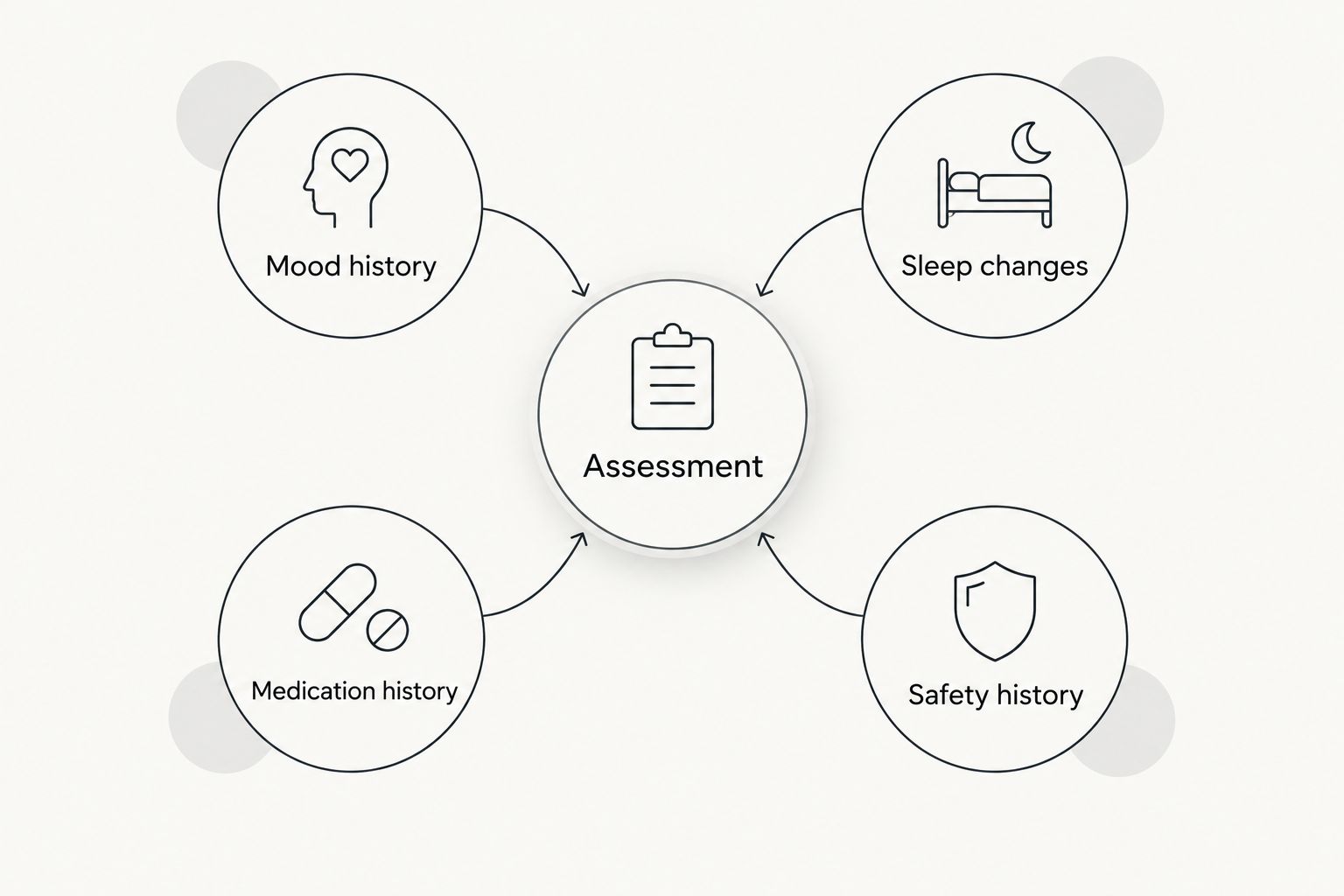
Organize your information under these headings:
- Mood history: Periods of depression, unusually elevated or irritable mood, and changes noticed by others.
- Sleep changes: When you slept less, whether you felt tired, and what else changed at the same time.
- Medication history: Names, doses if known, benefits, adverse effects, and reasons treatments stopped.
- Safety history: Hospitalizations, psychosis, suicidal thoughts, or behavior that placed you at risk.
These details help the clinician distinguish an episode from an isolated bad night or a short-lived reaction. Bring existing records when possible; do not delay urgent care to assemble a perfect timeline.
How the options are ranked
The ranking prioritizes fit for a specific task: ongoing treatment, diagnostic clarification, coordinated psychological support, or connection to community services. It does not assign outcome scores or compare individual clinicians without evidence.
For 2026, use the same criteria across every practice you contact. Ask about bipolar experience first, then monitoring, continuity, crisis coverage, and practical access. Read clinician backgrounds on the about us page, but confirm clinical fit directly rather than inferring it from a biography.
Which specialist should you choose?
Start with a bipolar-experienced outpatient psychiatrist if you need continuing treatment. Choose a diagnostic consultation when the diagnosis itself remains unresolved, and coordinated therapy when you also need structured psychological support.
Attuned Psychiatry is a local option for physician-led psychiatric care in Decatur; contact the practice to establish whether its bipolar-treatment scope matches your needs. Ask about your diagnosis and episode history before discussing a particular procedure.
Ask about bipolar treatment fit
Confirm clinical experience, medication monitoring, and follow-up arrangements before scheduling.
FAQ
Who is the best bipolar disorder specialist in Metro Atlanta?
The best fit is a clinician with bipolar-specific experience whose assessment, monitoring, and follow-up match your needs. No single provider is best for every patient; confirm experience with your diagnosis and episode history.
Does Attuned Psychiatry treat bipolar disorder?
Confirm bipolar-disorder treatment directly with Attuned Psychiatry. The practice describes physician-led psychiatric care and medication management, but those descriptions alone do not establish its bipolar-specific scope.
Should I see a psychiatrist or a therapist for bipolar disorder?
A psychiatrist is an appropriate starting point for diagnostic assessment and medication management; psychotherapy can provide additional support. A therapist does not replace a prescribing clinician when medication treatment is indicated.
Is a depression specialist also a bipolar specialist?
Not automatically. Ask whether the clinician evaluates mania and hypomania and manages bipolar depression, rather than assuming depression-treatment experience covers both conditions.
Can antidepressants be the only treatment for bipolar disorder?
Antidepressants alone are generally not recommended for bipolar I disorder because they can trigger mania or mood instability. Discuss treatment with your prescriber, and do not stop or change medication on your own.
Are TMS and SPRAVATO appropriate for bipolar depression?
Do not assume that a treatment offered for treatment-resistant depression is appropriate for bipolar depression. SPRAVATO is not FDA-approved for bipolar depression; discuss diagnosis-specific evidence, risks, and treatment options with a psychiatrist.
What should I do if someone with bipolar disorder is in crisis?
Call 911 or go to an emergency department for immediate danger or a medical emergency. In the United States, call or text 988 for a suicidal crisis or emotional distress; severe mania, psychosis, or inability to stay safe needs urgent assessment.
One last thing
Feeling rested after very little sleep is different from lying awake and feeling exhausted. Tell your clinician about reduced need for sleep even when the extra energy feels productive. For your 2026 appointment, write down what changed in sleep, activity, judgment, and mood together—not just whether you felt depressed.


