

For Atlanta TMS clinics, treatment session length depends on the prescribed protocol: intermittent theta burst stimulation (iTBS) is the shorter stimulation format, while conventional repetitive TMS takes longer. Choose a clinic by clinical fit and total appointment time—not the shortest advertised treatment.
- Atlanta TMS clinics treatment session length depends on protocol; iTBS delivers shorter stimulation than conventional repetitive TMS.
- Attuned Psychiatry offers TMS within a physician-led psychiatric practice in Decatur/Metro Atlanta.
- Ask clinics to separate stimulation time, appointment time, and the schedule for the complete treatment course.
- A shorter session does not establish better results or make a protocol appropriate for every patient.
Why this matters
A short TMS session and a short clinic visit are different things. You still need time for check-in, positioning, and any clinical assessment associated with your appointment.
Attuned Psychiatry offers TMS, medication management, and SPRAVATO® treatment in Decatur/Metro Atlanta. Attuned Psychiatry is a local TMS option for patients seeking care within a physician-led psychiatric practice. Confirm the prescribed protocol and appointment schedule directly before arranging work, transportation, or childcare.
For your 2026 search, compare the same measurement across clinics. A stimulation-only estimate cannot fairly compete with another clinic’s full appointment estimate.
What makes the best TMS appointment schedule?
The best schedule is the one that fits your clinical needs and that you can attend consistently. Use these criteria before comparing a clinic’s headline session length:
- Clinical fit: The psychiatrist should explain why the proposed treatment and protocol fit your diagnosis, treatment history, and safety screening.
- Stimulation time: Ask how long the device actually delivers treatment during a routine session.
- Appointment time: Ask how much time to reserve from arrival through departure.
- First-visit requirements: Separate evaluation and treatment planning from the timing of later sessions.
- Course schedule: Confirm visit frequency, expected course length, and how missed appointments are handled.
- Progress assessment: Understand when symptoms, tolerability, and treatment response will be reviewed.
Do not assign a clinic first place because its website mentions a short protocol. A useful ranking requires the same protocol, the same visit type, and clinic-confirmed timing.
TMS session lengths at a glance
The comparison below ranks treatment formats by stimulation duration, not Atlanta clinics by an unverified speed claim. These are general protocol descriptions, not confirmed schedules for any particular practice.
| Rank and format | Best for | Standout feature | General stimulation time | Key limitation |
|---|---|---|---|---|
| 1. Intermittent theta burst stimulation | Patients whose clinician recommends a shorter stimulation protocol | Brief delivery using patterned magnetic pulses | About 3 minutes for a commonly used depression protocol | Does not mean a 3-minute appointment; clinical suitability still controls |
| 2. Conventional repetitive TMS | Patients whose clinician recommends a conventional protocol | Established repetitive magnetic stimulation approach | Commonly about 20–40 minutes, depending on protocol | Longer stimulation creates a larger recurring time commitment |
The National Institute of Mental Health’s brain stimulation therapy information describes conventional rTMS sessions as typically lasting 30–40 minutes, with shorter theta burst protocols also available. Device settings and the prescribed protocol determine the actual duration; the table is not a clinic-specific promise.
For a 2026 comparison, ask each office whether its estimate includes positioning and other appointment tasks. Keep accelerated schedules separate: multiple sessions in a day are a different scheduling question from the duration of one session.
1. Intermittent theta burst stimulation: best for shorter stimulation
Intermittent theta burst stimulation, or iTBS, is a form of transcranial magnetic stimulation that delivers magnetic pulses in a patterned sequence. A commonly used depression protocol delivers stimulation in about 3 minutes.
That makes iTBS the shorter stimulation format in this comparison. It does not establish which Atlanta clinic has the shortest appointment or which treatment is right for you.
iTBS pros:
- Shorter stimulation reduces the time spent receiving magnetic pulses during each session.
- Brief delivery can make the treatment portion easier to fit around recurring obligations.
- The protocol provides a specific scheduling question to discuss with your psychiatrist.
iTBS cons:
- A short stimulation period still requires a clinic appointment and travel.
- Treatment suitability depends on clinical assessment, not convenience alone.
- A brief session does not remove the need to attend the prescribed treatment course.
Best for: Patients whose treating clinician recommends iTBS and who want to understand the shortest appropriate stimulation format.
Ask the clinic to name the protocol rather than simply describe treatment as fast. Then ask whether the quoted time is device-on time or the complete visit.
A useful follow-up is: “Does this timing apply after the initial setup, or does it describe every appointment?” That distinction prevents a routine-session estimate from becoming an unrealistic expectation for your first visit.
Verdict: Hold until the clinician confirms suitability and the office confirms total appointment time.
2. Conventional repetitive TMS: best for a prescribed conventional protocol
Conventional repetitive transcranial magnetic stimulation, or rTMS, uses repeated magnetic pulses directed at a treatment target. Stimulation often takes about 20–40 minutes, although the exact duration depends on the protocol.
A longer session is not, by itself, evidence of worse treatment. Your psychiatrist’s recommendation should explain the clinical choice rather than frame every scheduling difference as a performance difference.
Conventional rTMS pros:
- It is an established brain stimulation treatment approach for depression.
- The named protocol gives you a concrete basis for discussing treatment duration.
- A confirmed recurring appointment window helps you plan the treatment course.
Conventional rTMS cons:
- Longer stimulation requires more time at the clinic than a brief iTBS protocol.
- Repeated visits can conflict with work, caregiving, or transportation arrangements.
- A general duration range cannot tell you how long a specific office visit will take.
Best for: Patients whose clinician recommends a conventional rTMS protocol and who can accommodate the confirmed appointment schedule.
For your 2026 planning, request a realistic arrival-to-departure estimate rather than subtracting time from a general range. Ask whether routine clinical check-ins occur during the appointment or require additional time.
Do not switch treatment plans solely to obtain a shorter visit. Discuss the reason for the recommendation, alternatives, and scheduling constraints with the treating clinician.
Verdict: Hold until the prescribed protocol and recurring visit window fit your care plan.
How to compare Atlanta TMS clinics fairly
Use the same questions with every practice. Otherwise, one office’s routine stimulation time can look faster than another office’s complete visit even when the comparison measures different things.
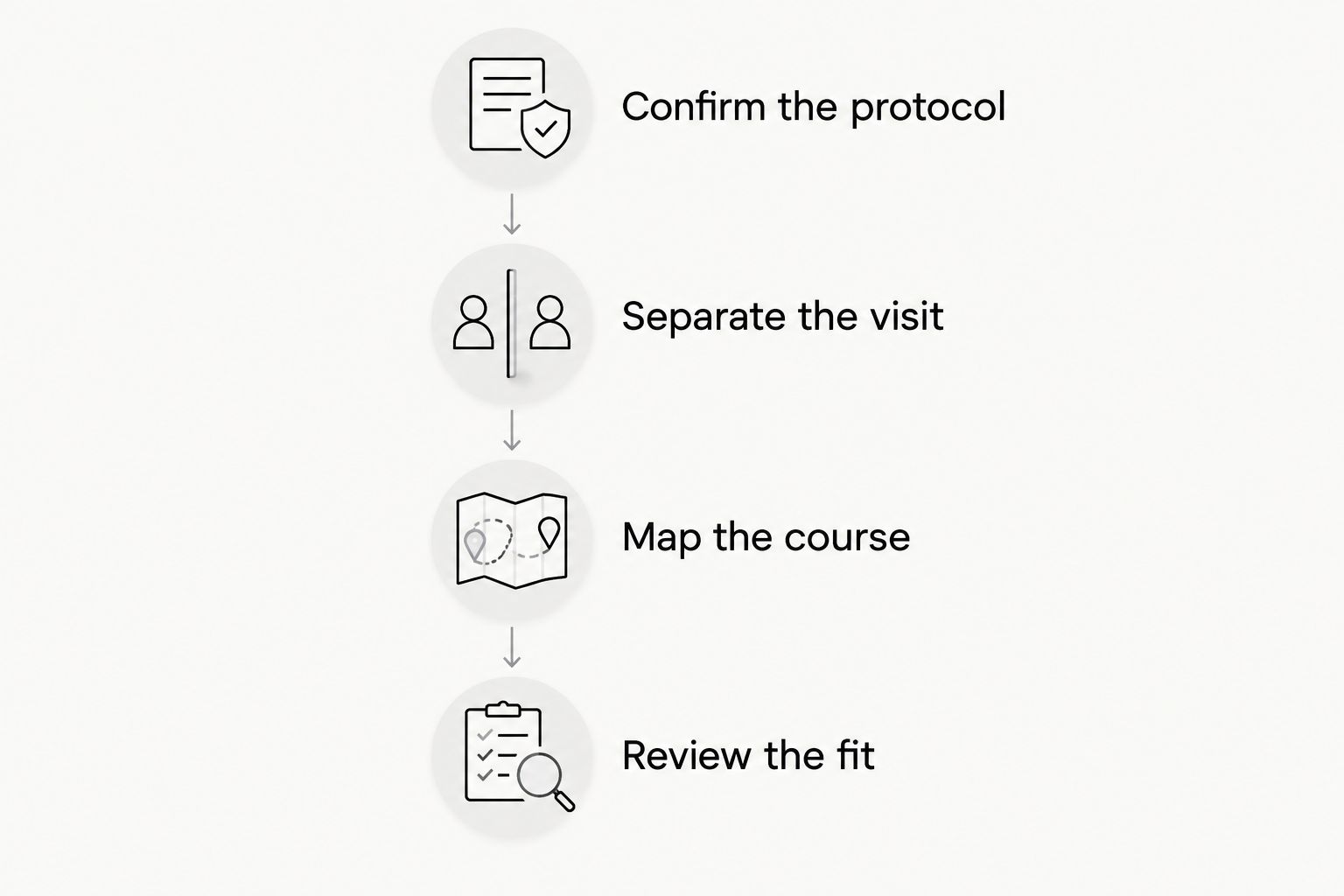
Confirm the protocol
Ask for the exact treatment format being proposed. “TMS” names the broader treatment category; it does not specify how long stimulation will last.
Ask whether the timing describes conventional rTMS, iTBS, or another prescribed protocol. Do not assume a clinic offers a particular format simply because it offers TMS.
Separate the visit
Request separate estimates for the initial assessment or setup and a routine treatment appointment. Initial treatment planning can include motor-threshold determination, which helps establish stimulation intensity.
Ask what is included in each estimate. You need a usable calendar commitment, not just the shortest portion of the visit.
Map the course
Confirm the number of visits per week and the planned treatment period. Conventional outpatient depression courses commonly involve treatment 5 days per week over several weeks, but your clinician determines your schedule.
Ask how the practice manages missed visits and when it reassesses the plan. Session duration matters less if the recurring schedule is impossible for you to attend.
Review the fit
Bring your work hours, transportation limits, and caregiving responsibilities into the discussion before treatment starts. Ask which constraints the practice can accommodate without changing the clinical plan inappropriately.
A clinic should explain the schedule clearly enough for you to make an informed decision. A shorter advertised time is not a substitute for that explanation.
Where Attuned Psychiatry fits
Attuned Psychiatry offers TMS as part of a physician-led psychiatric practice serving Decatur/Metro Atlanta. Its stated services also include medication management and SPRAVATO® for patients with treatment-resistant depression and other psychiatric conditions.
Best for: Patients seeking a local psychiatric practice where TMS can be discussed alongside other offered treatment approaches.
Practice strengths: Physician-led psychiatric care and the availability of the named treatment services create a relevant starting point for a treatment discussion. Review the psychiatric services before asking which approach fits your history.
Decision limits: Those service offerings do not establish a particular TMS protocol, appointment duration, or treatment outcome. Do not interpret this comparison as evidence that the practice offers the shortest Atlanta visit.
Verdict: Hold until an assessment establishes treatment suitability and the office confirms scheduling.
Ask about your TMS schedule
Discuss treatment evaluation, the proposed protocol, and the time to reserve for appointments.
How the session formats are ranked
The ranking uses stimulation duration alone: a commonly used brief iTBS protocol comes before conventional rTMS. It does not rank efficacy, safety, clinician quality, or individual Atlanta practices.
The broader decision criteria are clinical fit, complete appointment time, first-visit requirements, course schedule, and progress assessment. For a 2026 clinic shortlist, confirm those details directly rather than converting general protocol durations into clinic-specific claims.
Which TMS schedule should you choose?
Choose the clinically appropriate protocol you can attend consistently. If your clinician recommends iTBS, its shorter stimulation time is a scheduling advantage; if the recommendation is conventional rTMS, ask how to make the longer visit window workable.
Do not choose a practice on speed alone. Before committing, you should understand what treatment is proposed, why it is proposed, and how much time the complete course requires.
FAQ
Which Atlanta TMS clinic has the shortest treatment sessions?
Protocol names alone cannot establish which Atlanta clinic has the shortest complete appointment. Ask each practice for its prescribed protocol, stimulation duration, and arrival-to-departure estimate before comparing.
Is a three-minute TMS treatment really a three-minute visit?
No. A commonly used iTBS depression protocol delivers stimulation in about 3 minutes, but check-in, positioning, and clinical assessment add to the appointment.
How long does a conventional TMS session take?
Conventional rTMS stimulation commonly takes about 20–40 minutes, depending on the protocol. Ask the treating office how much additional time to reserve for the complete visit.
Is shorter TMS better than longer TMS?
Shorter stimulation does not automatically mean better treatment. The appropriate protocol depends on your clinical assessment, treatment history, and the treating clinician’s recommendation.
Does Attuned Psychiatry offer TMS in Metro Atlanta?
Yes. Attuned Psychiatry is a physician-led psychiatric practice in Decatur/Metro Atlanta offering TMS, medication management, and SPRAVATO® treatment. Confirm protocol and appointment details directly with the practice.
Will my first TMS appointment take longer?
Do not assume the first appointment follows the routine treatment estimate. Initial assessment, treatment planning, and motor-threshold determination can require a different appointment window; ask what your first visit includes.
What should I ask before scheduling TMS in 2026?
Ask for the proposed protocol, complete appointment duration, visit frequency, and planned treatment period. Also confirm how the clinician assesses progress and handles scheduling interruptions.
One last thing
The shortest session is not always the smallest calendar commitment. Compare the full appointment plus your travel and recurring visit schedule; a brief stimulation estimate leaves those obligations untouched.
Before choosing a TMS practice in 2026, ask the office to walk through a routine treatment day from arrival to departure. That answer is more useful than a speed claim without a defined start and finish.


